



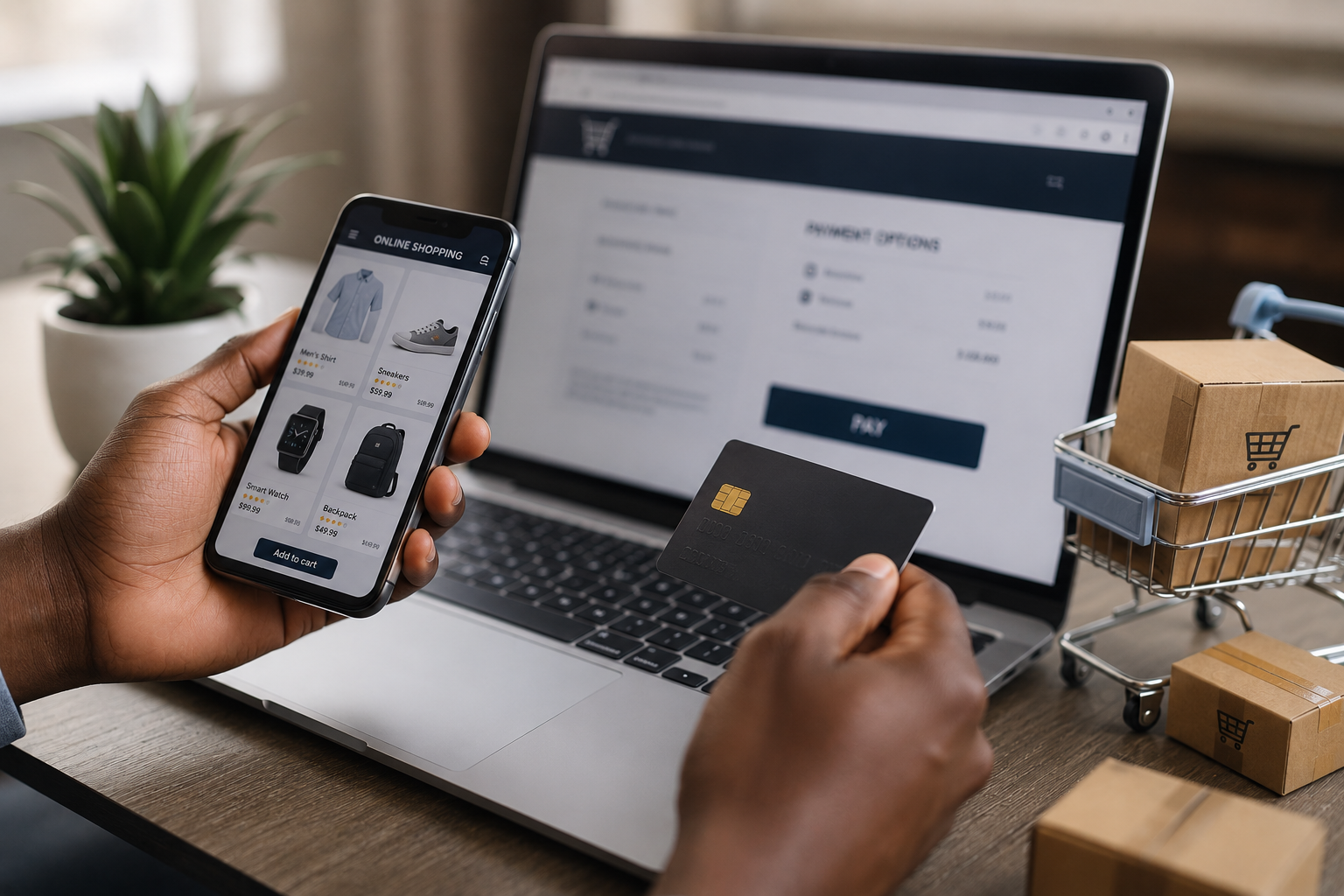
When Konga announced its partnership with Nigerian Buy Now, Pay Later (BNPL) fintech Klump, the update appeared, at first glance, to be another feature rollout. Eligible customers can now spread payments for selected purchases instead of paying the full amount upfront, giving shoppers greater flexibility at checkout.
The partnership is another signal that African e-commerce is evolving beyond the traditional business of selling products online. Across the continent, retailers are increasingly embedding financial services into the shopping journey, transforming online marketplaces into platforms that combine commerce, payments and credit. In doing so, they are responding to one of the biggest constraints facing digital commerce today: affordability.
For much of the past decade, the industry’s biggest questions centred on trust, payments and logistics. Today, the conversation is shifting towards purchasing power. Consumers may be willing to shop online and have access to digital payment methods, but many still struggle to pay upfront for higher-value products. That challenge is giving rise to a new era of embedded finance, one where the ability to finance purchases may become as important as the products themselves.
The Fourth Phase of African E-commerce
African e-commerce has undergone a steady transformation over the last decade. The first phase focused on trust, with retailers introducing measures such as cash-on-delivery and stronger buyer protections to reassure consumers that online shopping was safe. As confidence grew, the industry’s attention shifted to digital payments, driven by fintech innovations that made online transactions faster, simpler and more secure.
The next battleground was logistics. Companies invested heavily in warehouses, fulfilment centres, merchant networks and last-mile delivery infrastructure to improve delivery times and customer experience. These investments laid the foundation for the continent’s digital commerce ecosystem and enabled millions of consumers to access goods more efficiently.
Today, however, the industry’s biggest challenge is no longer whether consumers trust online shopping or whether products can be delivered. It is whether consumers can realistically afford what they want to buy. Inflation, currency depreciation and rising living costs have weakened purchasing power across many African markets, making affordability one of the defining issues for retailers. That reality is pushing e-commerce companies to look beyond transactions and towards financial solutions that enable more purchases.
Why Buy Now, Pay Later Matters
Konga‘s partnership with Klump illustrates this transition. Through the integration, eligible shoppers can spread payments across instalments through approved lending partners instead of paying the full amount upfront. While Buy Now, Pay Later is often described as a payment method, its significance extends much further.
Rather than changing how customers pay, BNPL changes when they pay. That distinction allows retailers to address affordability without lowering prices, while giving consumers greater flexibility to purchase products that may otherwise remain financially out of reach. In economies where disposable incomes are under pressure, that flexibility can significantly influence purchasing decisions.
The value of BNPL therefore lies not only in convenience but in its ability to unlock demand that already exists but cannot always be converted into completed purchases.
Commerce Is Becoming Finance
The Konga–Klump partnership is part of a broader global movement known as embedded finance—the integration of financial services such as lending, payments and insurance directly into non-financial platforms. Instead of requiring customers to seek financing elsewhere, retailers increasingly provide financial products within the shopping experience itself.
Globally, embedded finance has become an important growth strategy because it reduces friction during checkout while improving customer conversion and average order values. Africa is following the same trajectory, although the underlying drivers differ. In many developed markets, Buy Now, Pay Later is positioned primarily as a convenience. Across much of Africa, it increasingly serves as a tool for expanding access to products by easing the burden of upfront payments.
The result is a gradual convergence between retail and financial services. E-commerce platforms are becoming financial platforms, while fintech companies are becoming essential infrastructure for digital commerce.
The Numbers Behind the Shift
The market data reinforces this direction.
Research projects Nigeria’s embedded finance market to reach approximately US$5.55 billion by 2030, fuelled by increasing adoption across digital payments, lending, insurance and retail platforms. Industry forecasts also estimate that Nigeria’s Buy Now, Pay Later market will surpass US$1.6 billion in transaction value in 2025, reflecting growing consumer demand, merchant partnerships and broader financial inclusion initiatives.
Earlier market research similarly projected long-term growth in Nigeria’s BNPL sector, driven by increased smartphone adoption, expanding e-commerce activity and improved access to digital financial services. While the pace of growth will depend on consumer confidence, regulation and credit performance, the direction of travel is becoming increasingly clear: embedded finance is evolving from a niche offering into an essential part of Africa’s digital economy.
A Pattern Emerging Across Africa
Konga is not alone in this transition.
Across the continent, digital commerce companies are embedding financial services into their platforms to deepen customer relationships and unlock new revenue streams. Business-to-business marketplace OmniRetail, for example, has increasingly combined payments, merchant credit and working-capital financing with its commerce operations, demonstrating how financial services can become a core driver of platform growth.
This pattern reflects a broader shift in strategy. Rather than competing solely on product selection, pricing or delivery speed, digital commerce platforms are increasingly competing on their ability to remove financial barriers to purchasing. In doing so, they are blurring the traditional boundaries between retailers, fintech companies and financial institutions.
Why This Matters
The implications extend across the digital economy.
For consumers, embedded finance makes it easier to access products that may otherwise remain unaffordable, particularly high-value items such as smartphones, laptops, household appliances and business equipment. For merchants, flexible financing can improve conversion rates, increase average basket sizes and reduce abandoned shopping carts by lowering the immediate financial burden on customers.
Fintech companies benefit by reaching customers at the precise moment purchasing decisions are made, while banks and lending institutions gain scalable digital channels for distributing credit. As these relationships deepen, commerce and finance become increasingly interconnected, creating an ecosystem in which each participant strengthens the others.
The Intelligence
Viewed in isolation, Konga’s partnership with Klump is a product announcement, and viewed alongside broader market developments, it becomes a signal of structural change.
African e-commerce is gradually evolving from a marketplace model centred on transactions to one built around financial infrastructure. Payments, lending and retail are no longer operating as separate industries; they are becoming part of a single digital ecosystem designed to reduce friction, expand purchasing power and support economic activity.
The platforms that succeed in the coming years are unlikely to differentiate themselves through logistics alone. Their competitive advantage will increasingly depend on how effectively they integrate financial services into the customer journey.
Villpress Verdict
Konga’s partnership with Klump is unlikely to be the last of its kind. As economic pressures continue to influence consumer spending across Africa, embedded finance is moving from a competitive advantage to a strategic necessity.
The next chapter of African e-commerce will not be defined solely by faster deliveries or larger product catalogues. It will be defined by the platforms that make buying financially possible.
In the years ahead, the checkout page may become one of the most important points of financial interaction in Africa’s digital economy, not simply because it completes a sale, but because it increasingly determines whether that sale happens at all.