


JB Straubel built Redwood Materials on a thesis that seemed almost self-evidently correct: the electric vehicle revolution would generate mountains of spent batteries, and someone needed to close the loop. For years, investors poured money into that vision. Now, with EV adoption slowing and the battery supply chain looking considerably less certain than it did in 2021, Straubel is cutting staff, losing executives, and telling employees the company expanded faster than it should have.
Redwood’s chief operating officer Chris Lister is leaving the company to retire. Lister, a former vice president who led operations at Tesla’s Nevada Gigafactory, joined Redwood in late 2023, started as chief supply chain officer, and was quickly promoted to COO in 2024, putting him closer in the org chart to Straubel. The company confirmed his departure but offered only a brief spokesperson statement wishing him well.
The timing is not great. Redwood laid off around 135 employees, roughly 10% of its workforce, just days earlier, cutting across multiple divisions including engineering and operations. In an all-staff email viewed by TechCrunch, Straubel acknowledged that parts of the company had expanded faster than needed to support the direction of the business, adding that he was confident Redwood could deliver on its critical projects with a smaller, more focused team. He framed the cuts as evidence of adaptability, noting that Redwood had navigated market shifts that pushed several competitors into bankruptcy.
That is technically true, and it is not nothing. But losing a COO and a string of vice presidents in the same window as a 10% workforce reduction is the kind of organizational turbulence that tends to reveal itself as either a controlled burn or something more structural, and it is too early to know which.
Lister is not the only executive to have left in recent months. Bradley Mayhew, vice president of integrated supply chain and a former Tesla employee, departed earlier this month. Guillermo Urquiza, vice president of mechanical engineering, left in March. And Carlos Lozano, vice president of manufacturing, left earlier in 2026 for a leadership role at Panasonic. That is four senior operational leaders gone in a compressed period, and the overlap between their roles and the areas being cut, engineering and operations, is hard to read as coincidence.
The strategic context matters here. Redwood was originally built around battery recycling, extracting lithium, cobalt, nickel, and copper from spent EV packs and feeding those materials back into new battery production. It was a compelling circular economy story and attracted serious institutional capital. As recently as October 2025, Redwood raised $350 million in a Series E round led by Eclipse Ventures and including a strategic investment from Nvidia’s venture arm NVentures, pushing the company’s valuation to approximately $6 billion. The pitch at that point had already begun to shift: the new money was explicitly tied to expanding an energy storage business aimed at powering AI data centers with repurposed EV batteries.
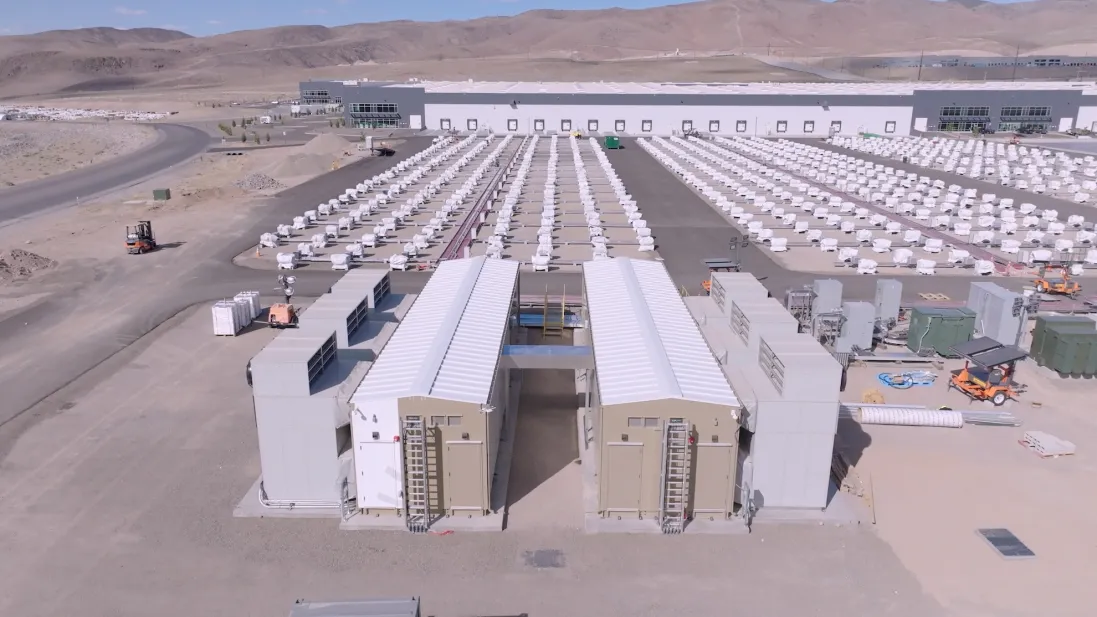
That business, operating under the Redwood Energy banner, launched in mid-2025 and deploys retired EV batteries as grid-scale storage systems serving AI data centers and industrial facilities. The initial deployment with AI infrastructure company Crusoe was described by Straubel as revenue-generating and profitable. The company has since signed deals with Rivian and Crusoe to provide refurbished batteries for grid storage. Straubel is betting that the pivot from recycler to energy storage company is not a retreat but a refinement, and structurally there is logic to it. AI data centers are consuming electricity at a rate the grid was not built to absorb, and repurposed EV batteries offer a faster path to storage capacity than new battery manufacturing.
The problem is that executing a strategic pivot while simultaneously cutting 10% of staff and watching your operational leadership walk out the door is a genuinely difficult thing to do. Lister, Mayhew, Urquiza, and Lozano all came out of Tesla’s operational machine, which is well-regarded for building manufacturing processes under pressure. Replacing that institutional knowledge while restructuring is not impossible, but it adds friction to a transition that already requires significant technical and operational capability to pull off.
Workers who were laid off were told by Redwood’s chief HR officer that the cuts were made to sharpen focus and align the size of teams to the company’s future direction. Affected employees are receiving severance, paid health benefits, and career transition assistance, according to Straubel’s email.
The broader cleantech context is worth understanding. The optimism that drove EV-related investment in 2021 and 2022 has largely deflated. Some battery makers have restructured or gone out of business as the automotive industry has backed away from its most ambitious EV transition timelines. Redwood is not in that category, it has real revenue, real customers, and genuine recycling scale, handling more than 70% of all used or discarded EV battery packs in North America. But it is operating in a market that moved more slowly than projected, and the company’s cost structure was apparently built for faster growth than materialized.
The energy storage pivot is the right strategic instinct. The demand signal from AI data centers is real, and Redwood has a unique supply of feedstock that competitors cannot easily replicate. Straubel has noted that even as the Trump administration rolled back EV incentives, its focus on securing critical minerals has been a boon to Redwood’s business of extracting and processing battery metals domestically. The company processes meaningful volumes of cobalt, nickel, lithium, and copper, all of which carry strategic value independent of the EV cycle.
What the restructuring reveals, though, is that the version of Redwood that raised $350 million six months ago and the version that exists today are not the same company. The headcount, the leadership team, and apparently the strategic emphasis have all shifted. Straubel has navigated harder situations than this, and Redwood still has the capital, the technology, and the infrastructure to execute. But a company that spent years telling a battery recycling story is now running a quieter and more urgent rewrite, and those transitions tend to be harder than the press releases suggest.