
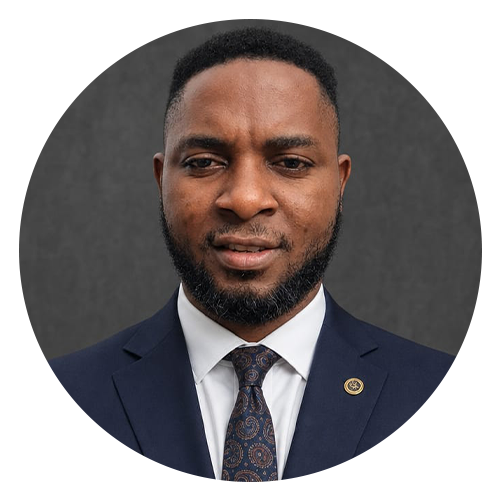

Femi Otedola’s latest purchase of First HoldCo shares was worth ₦12.58 billion. On its own, it is another transaction in Nigeria’s increasingly active capital market, but viewed alongside everything that has happened before it, the purchase becomes considerably more significant. On August 24, 2026, Otedola acquired another 95.7 million First HoldCo shares through Calvados Global Services Limited at ₦131.48 per share, taking his holding to approximately 27.70% of the company. The transaction came after a series of increasingly large purchases that have steadily moved the billionaire closer to a level of ownership where questions about control can no longer be treated as mere market speculation.
The latest acquisition followed several major purchases in quick succession. Earlier in August, Otedola acquired 138 million shares for about ₦18.1 billion, taking his holding to approximately 26.1%, and subsequently bought another 147.7 million shares worth about ₦20.68 billion, pushing the position to 27.49%. In July, he had already made his biggest disclosed purchase of the year, acquiring approximately 1.78 billion shares for about ₦222.2 billion. Taken together, the transactions show that Otedola’s accumulation is not a one-off investment decision but part of a sustained increase in his exposure to First HoldCo.
The progression becomes even more striking when viewed over several years. At the end of 2023, Otedola held approximately 2.03 billion First HoldCo shares, representing about 5.65% of the company. By the end of 2024, his holding had increased to around 11.8%, and by December 2025, his combined direct and indirect interest had reached approximately 18.12%, representing more than eight billion shares. His position then moved beyond 20% in 2026 before accelerating through 26%, 27.49% and ultimately 27.70%. In less than three years, the scale of his ownership has therefore changed dramatically, and the speed of the most recent accumulation is particularly difficult to ignore.
There is another fact that makes the progression important: Otedola is not simply an investor watching First HoldCo from outside. He joined the company’s board in 2023 and became Group Chairman in January 2024. At the time, his holding was around 5.6%, meaning that his financial interest and governance influence have expanded together. His position as chairman does not, by itself, establish that his share purchases are designed to achieve control, but it makes the accumulation materially different from a conventional portfolio investment in which an investor buys shares and remains a passive participant.
The more important question, therefore, is not whether Otedola believes in First HoldCo. His transactions have already answered that. The question is what he believes First HoldCo can become and whether the growing ownership position is part of a deliberate strategy to place himself at the centre of that transformation.
The story goes back to Geregu
To understand the possible logic behind Otedola’s current strategy, it is useful to look at the asset that occupied a significant part of his investment portfolio before First HoldCo: Geregu Power. Otedola built a controlling position in the power-generation company and helped transform it into one of Nigeria’s most prominent listed power businesses. Geregu’s listing in 2022 gave the company a market value of roughly ₦250 billion, while Otedola held approximately 95.5% through investment structures including Amperion Power Distribution Company and Calvados Global Services.
The value of the Geregu investment increased substantially over the following years. By September 2025, Otedola and affiliated entities held approximately 76.4% of Geregu’s issued shares, and in December 2025 he exited his controlling position through the sale of his interest in Amperion to MA’AM Energy in a transaction reported at approximately $750 million, or about ₦1.09 trillion at the time. The transaction represented a major realisation of value from an asset that had become one of the most prominent holdings in his portfolio.
There is no public evidence that allows us to conclude that the proceeds from the Geregu transaction were directly transferred into First HoldCo. It would therefore be too strong to describe the First HoldCo purchases as a direct recycling of Geregu proceeds. What can reasonably be examined, however, is the broader movement of Otedola’s capital from one strategic sector into another. The timing is notable because he exited a major controlling position in the power sector just as his accumulation of First HoldCo shares was becoming increasingly aggressive.
The connection between the two investments is not that electricity generation and banking are the same businesses. They clearly are not. The more interesting connection is that both occupy strategically important positions within the economy. Geregu is part of the physical infrastructure through which economic activity is powered, while First HoldCo sits within the financial infrastructure through which capital is mobilised, distributed and allocated.
That distinction provides a useful way of understanding Otedola’s investment history. He has repeatedly demonstrated an appetite for concentrated ownership in businesses with significant economic importance rather than simply spreading relatively small investments across unrelated companies. His earlier investment in Forte Oil followed a similar broad pattern: he acquired a controlling interest, participated in the company’s transformation and eventually exited the investment. The businesses are different, the circumstances are different and the regulatory environments are different, but the preference for substantial ownership and long-term value creation appears repeatedly in his career.
First HoldCo therefore represents a different kind of strategic asset from Geregu, but not necessarily a completely different investment philosophy. At Geregu, Otedola controlled an asset that generated electricity. At First HoldCo, he is accumulating an interest in an institution that provides access to deposits, lending, payments, corporate finance, investment services and other financial activities. One is physical economic infrastructure; the other is financial infrastructure.
That difference is important because the strategic value of a large financial institution extends beyond its reported annual profit. A major bank sits at the intersection of businesses, consumers, governments and investors. It participates in determining how capital moves through the economy, who receives financing, how businesses manage liquidity and how investment is channelled into different sectors. For an investor interested in strategic ownership, that makes a large financial-services group a fundamentally different proposition from an ordinary operating company.
What exactly is Otedola buying?
It is also important to be precise about what Otedola is accumulating. The popular description is that he is buying FirstBank, but the listed entity in which he is building his stake is First HoldCo Plc, formerly FBN Holdings. The holding-company structure was created when FirstBank was reorganised under a financial holding-company model, with FirstBank becoming a subsidiary of the holding company. First HoldCo now provides exposure to a wider financial-services group that includes commercial banking, asset management, capital markets, securities, trusteeship and insurance-related businesses.
That makes the proposition considerably larger than owning a traditional commercial bank. FirstBank is the flagship institution, but First HoldCo is the listed parent through which investors gain exposure to a broader financial ecosystem. Its scale is also significant. By the first half of 2026, the group’s total assets had risen to approximately ₦30.65 trillion, customer deposits had reached about ₦21.93 trillion and net customer loans stood at roughly ₦9.51 trillion.
Those figures help explain why the investment deserves to be considered beyond the question of share price. Otedola is accumulating exposure to an institution with a balance sheet measured in tens of trillions of naira and with relationships spanning millions of customers and businesses. If his ownership were eventually to become controlling, he would not simply have acquired another company in his portfolio; he would have gained control of one of the most important financial platforms in Nigeria.
The timing is equally significant because First HoldCo itself is undergoing a major transformation. The group entered 2026 after a difficult 2025 financial year in which it recognised approximately ₦826.3 billion in impairment charges. Those charges weighed heavily on reported profitability, with profit before tax falling to about ₦235 billion and profit after tax declining to approximately ₦147.3 billion.
The following year produced a very different picture. For the six months ended June 2026, First HoldCo reported gross earnings of approximately ₦1.93 trillion, profit before tax of about ₦653.5 billion and profit after tax of approximately ₦526.1 billion, representing an 81.6% increase compared with the corresponding period of 2025. Total assets rose above ₦30 trillion, while deposits and lending also continued to expand.
The composition of that improvement is important. The turnaround was not simply the result of a dramatic increase in traditional lending income. Interest income declined slightly year-on-year, while non-interest income increased substantially and impairment charges fell by roughly 37.4%. This suggests that the recovery reflected a combination of stronger non-interest revenue, lower credit losses and the effects of the balance-sheet clean-up.
That makes the timing of Otedola’s accumulation particularly interesting from an investment perspective. He is increasing his ownership while the institution is emerging from a difficult period of credit clean-up and reporting a significant recovery in earnings. It would be inappropriate to attribute that turnaround directly to Otedola simply because he is chairman; First HoldCo’s performance reflects the work of its management, employees, risk systems and broader operating structure. Nevertheless, an investor building a large position during such a transition could be positioning for the value of the institution after the transformation rather than simply betting on its current financial performance.
The capital strategy strengthens that argument. First HoldCo is pursuing a plan to build its paid-up capital to ₦1 trillion, and shareholders approved authority in May 2026 for the company to raise up to ₦253.1 billion through various equity instruments, subject to regulatory approvals. The target would put the group at twice the Central Bank of Nigeria’s ₦500 billion minimum capital requirement for banks with international authorisation.
The company has already completed a ₦45 billion private-placement tranche, with the proceeds intended to strengthen FirstBank’s capital position. The broader recapitalisation strategy is designed to improve financial resilience, expand balance-sheet capacity and enable the group to pursue larger opportunities. This matters because a stronger capital base can allow a major bank to take on larger transactions, expand lending and compete more aggressively across markets.
For Otedola, therefore, the investment may not simply be about owning a profitable bank. It may be about owning a significant portion of a bank that is attempting to become substantially larger and more financially powerful. If the recapitalisation and restructuring succeed, the value of his existing position could increase alongside the value of the institution itself.
The ownership map is changing
The evolution of the shareholder structure provides another important part of the story. In 2024, Otedola’s holding moved from around 11.67% to approximately 13.15% after he acquired more than 534 million additional shares. At the time, Barbican Capital was another significant shareholder, while other substantial positions were held by institutional investors.
The ownership landscape changed considerably in 2025 after a large block of First HoldCo shares associated with former major shareholders was transferred to RC Investment Management. Approximately 10.4 billion shares changed hands in the transactions, creating another major shareholder in the company. Otedola, however, continued to increase his own position.
By December 2025, his holding had reached approximately 18.12%. In May 2026, he bought another ₦43.4 billion worth of shares, followed by the much larger July purchase and the series of August acquisitions that moved his position to 27.70%. The important point is that his accumulation continued even as the shareholder structure around him changed.
Calvados Global Services is also significant in understanding the ownership structure. The investment vehicle has repeatedly appeared in disclosures relating to Otedola’s First HoldCo purchases and was also associated with his Geregu ownership structure. Its continued use suggests that the accumulation is being executed through an established investment structure rather than as a series of unrelated personal transactions.
The ownership story is therefore more complicated than simply stating that Otedola owns 27.70% of First HoldCo. The more important development is that he has steadily increased his position while also occupying the chairmanship, making him both the largest identifiable shareholder and the principal figure in the company’s governance structure. His influence today is consequently greater than the percentage alone suggests.
Then came the 51% comment
For much of the accumulation period, it would have been reasonable to describe the possibility of Otedola eventually seeking control as an interpretation rather than an established intention. That changed in August 2026 when Otedola publicly discussed his investment philosophy and connected it directly to majority ownership.
In an interview with Nairametrics, Otedola said he had invested more than ₦600 billion of his personal wealth in First HoldCo and described the investment as a long-term commitment. More significantly, he explained that his investment philosophy has historically been to seek more than 51% ownership, arguing that firm shareholder control, while respecting minority interests, provides the ability to implement reforms and restructuring.
That statement does not constitute a takeover announcement. Otedola has not announced a formal offer to acquire First HoldCo, nor has he disclosed a completed financing arrangement for the purchase of a majority stake. There is therefore a considerable difference between saying that majority ownership is consistent with his investment philosophy and saying that a takeover is already underway.
The distinction is important, but so is the context in which the comment was made. Otedola was already approaching 30% ownership when he made the statement, and his stake has continued to rise through additional purchases. His comments therefore give the market a clearer framework for interpreting the accumulation than existed previously.
The next major ownership threshold is 30%, but the more consequential number is 51%. Reaching 51% would require Otedola to invest substantially more capital, and the calculation would become more complicated if First HoldCo continues to issue new shares as part of its recapitalisation programme. New shares issued to other investors can dilute existing shareholders and increase the number of shares required to reach a majority position.
The route to control would therefore depend on several variables, including future capital raises, market prices, the willingness of other shareholders to sell, the availability of shares and the regulatory framework governing ownership of a major financial institution. Becoming the largest shareholder also does not necessarily require 51% to exercise substantial influence, particularly where the remaining shares are distributed among a large number of investors.
That is why the significance of 51% should not be overstated as an immediate target. Otedola already has considerable influence at 27.70% because he is chairman and the largest shareholder. Majority ownership would represent a fundamentally different level of control, but it is not the only point at which an investor can exercise meaningful strategic influence.
What could Otedola be building?
There are several possible interpretations of the strategy, and the evidence does not require us to choose only one. The simplest explanation is that Otedola considers First HoldCo an attractive long-term investment and wants to own a very large position in an institution whose earnings, balance sheet and strategic prospects he believes are improving.
Another possibility is that he wants to become the dominant shareholder without necessarily moving immediately to 51%. At 27.70%, with the chairmanship already secured, he has already established a level of influence that few other individual investors can match. A position around 30% could therefore be strategically valuable even if majority ownership never materialises.
The most ambitious interpretation is that the current accumulation represents the early stages of a longer-term attempt to establish majority control. The available evidence cannot establish that as a certainty, but it can no longer be dismissed as ordinary market speculation because Otedola himself has publicly discussed majority ownership as part of his investment philosophy.
The investment thesis becomes even more interesting when First HoldCo’s current condition is taken into account. The group has gone through a major balance-sheet clean-up, its profitability has rebounded sharply, its assets have crossed ₦30 trillion and management is pursuing a ₦1 trillion capital base. If the transformation continues successfully, the institution could be considerably stronger and more valuable several years from now than it was when Otedola first began building his position.
This creates the possibility that Otedola is not simply buying First HoldCo as it exists today. He may be positioning himself to own a substantial part of what First HoldCo could become after its capital restructuring and operational transformation are fully reflected in the business.
That would also help explain why the scale of his purchases has increased as the company’s strategic direction has become clearer. An investor who believes an institution is entering a new growth cycle has an incentive to build ownership before that future value is fully reflected in the market.
From Geregu to financial infrastructure
Seen from this perspective, Otedola’s movement from Geregu to First HoldCo becomes more than a simple change in investment preference. At Geregu, he built a substantial position in a strategic physical asset, participated in its transformation, took the company to the public market and eventually realised a significant return from his controlling interest. At First HoldCo, he is accumulating an interest in a much older and more complex financial institution at a time when the group is strengthening its balance sheet, rebuilding profitability and pursuing a substantially larger capital base.
The two investments should not be treated as identical, because banking is considerably more regulated and the ownership of a major financial institution carries implications that are different from ownership of a power company. Nevertheless, there is a consistent element in Otedola’s approach: identify a strategically important business, establish substantial ownership, participate in its long-term development and position the investment for significant value creation.
That is what makes the Geregu exit relevant to the First HoldCo story. It does not prove that Geregu financed the banking investment, and it does not mean that Otedola is simply replacing one company with another. It shows, however, that he has demonstrated a willingness to concentrate capital in strategic assets, hold them through periods of transformation and eventually redeploy capital when the opportunity changes.
The difference now is the nature of the asset at the centre of the strategy. Electricity generation gave Otedola exposure to the physical infrastructure of Nigeria’s economy. First HoldCo gives him exposure to the financial infrastructure that supports businesses, households and investment across that economy.
If he were eventually to obtain majority ownership, the significance would extend beyond the size of his personal investment. He would potentially control a financial-services group with a balance sheet measured in tens of trillions of naira, a large deposit base, a nationwide banking franchise and businesses extending beyond conventional commercial banking.
That would represent a major shift in the nature of Otedola’s economic influence. The story would no longer be primarily about an investor who made a successful transition from oil and power into banking. It would be about the emergence of a financial-services centre within an investment empire that has historically been built around concentrated ownership of strategically important businesses.
For now, however, the evidence should be interpreted carefully. Otedola’s transactions clearly establish an aggressive accumulation strategy, but they do not establish that a takeover is certain. His 27.70% holding, chairmanship and repeated purchases demonstrate significant influence, while his public comments about majority ownership provide a reason to monitor whether the accumulation continues.
The most important question is therefore not whether Otedola is interested in First HoldCo. That is already evident from the billions of naira he has committed to the company. The question is whether the 27.70% position represents the level of ownership at which he is comfortable, or whether it is another stage in a much longer strategy that could eventually take him beyond 30% and, potentially, toward majority control.
That question will be answered not by speculation but by the transactions that follow. Future purchases, the company’s recapitalisation, changes in the positions of other major shareholders and Otedola’s own statements will provide the clearest evidence of where the strategy is heading.
For now, the trajectory is difficult to ignore. Otedola has moved from approximately 5.65% at the end of 2023 to 11.8% in 2024, 18.12% in 2025 and 27.70% in August 2026, while simultaneously becoming chairman and increasing his influence over the institution. During the same period, First HoldCo has undergone a major financial clean-up, reported a sharp recovery in earnings and embarked on a plan to strengthen its capital base toward ₦1 trillion.
None of those developments individually proves that Otedola is preparing to take control of First HoldCo. Together, however, they create a strategic picture that deserves much closer attention. An investor with a history of concentrated ownership is committing hundreds of billions of naira to a major financial institution while that institution is being repositioned for a potentially larger phase of growth, and he has publicly acknowledged that majority ownership forms part of his broader investment philosophy.
Whether he ultimately stops at a large minority position, becomes the dominant shareholder below 51% or eventually pursues majority control remains uncertain. What is increasingly clear is that First HoldCo has become one of the most important assets in Otedola’s investment strategy, and the accumulation is now large enough that every additional purchase carries significance beyond its immediate naira value.
Otedola’s journey from Geregu to First HoldCo may therefore come to represent more than a movement from one industry to another. At Geregu, he built around the generation of electricity; at First HoldCo, he is building around the movement of capital. If the accumulation continues, the transactions taking place today may eventually be viewed as the early stages of Otedola’s attempt to establish his next major business platform around one of Nigeria’s most important financial institutions.