



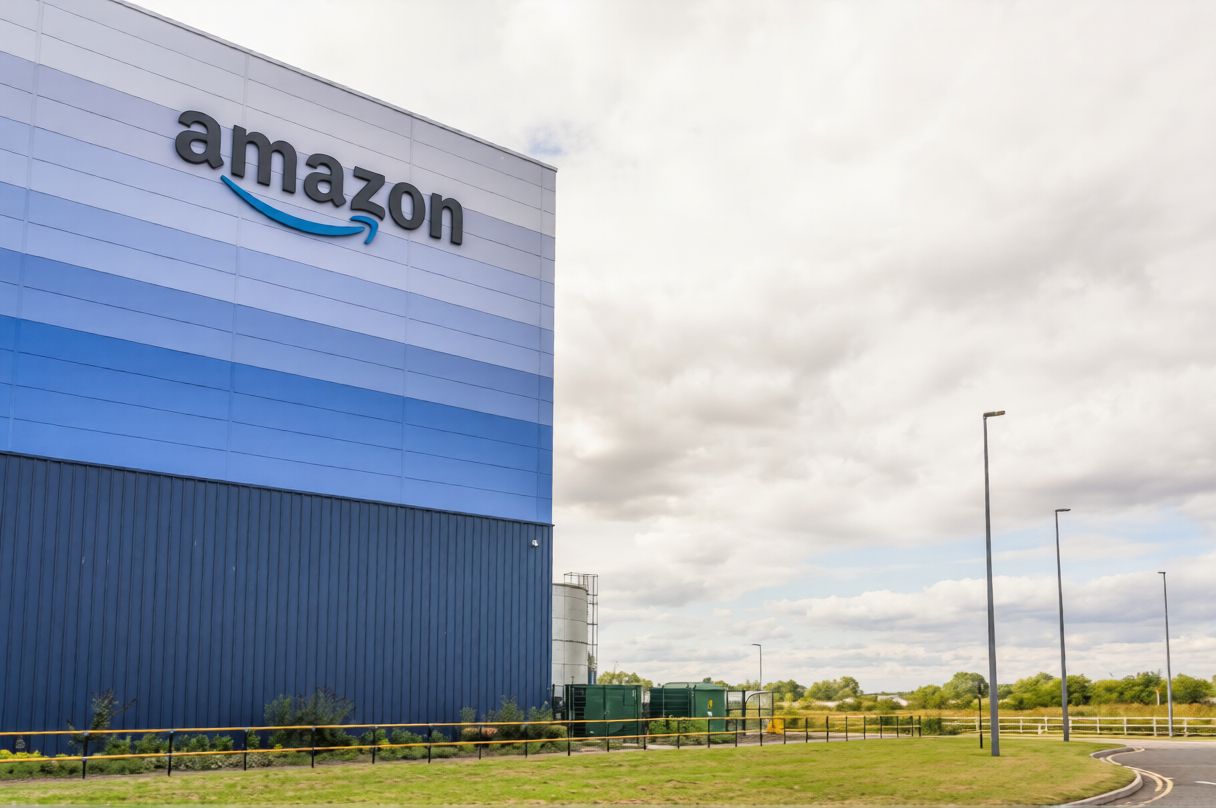

The market does not panic quietly. And right now, it is speaking loudly about Amazon. The gist is that Amazon $200B AI bet wiping out $450B in its market value.
In what is shaping up to be one of the most severe losing streaks in the company’s history, Amazon has shed roughly $450 billion in market value as investors recoil at its aggressive $200 billion artificial intelligence spending plan.
What looks like a routine post-earnings correction is becoming something else, a referendum on the economics of Big Tech’s AI arms race. Amazon shares are staring down a potential 10th consecutive day of losses, a streak that would tie the longest in the company’s modern trading history.
Since early February, the stock has fallen nearly 18%, erasing close to half a trillion dollars in valuation. The trigger wasn’t weak revenue. It wasn’t collapsing demand. It was spending. During its latest earnings call, Amazon revealed it expects to spend $200 billion in capital expenditures this year, nearly 60% higher than last year and over $50 billion above Wall Street expectations. Most of that will go toward artificial intelligence infrastructure – Data centers, AI chips, Networking systems and Cloud capacity. The scale stunned investors.
Amazon is not alone in that ship. Collectively, Alphabet, Microsoft, Meta, and Amazon could spend up to $700 billion this year expanding AI infrastructure. Certainly, it isn’t incremental innovation. It is industrial-scale capital deployment. But here’s the tension: AI infrastructure demands upfront cash and returns take time. Investors, in a higher-rate environment, are less patient with promises of distant payoff.
Read also: AWS Earnings Soar As Amazon Stakes $200B On AI Dominance
The core of Amazon’s bet sits inside Amazon Web Services (AWS). Cloud is Amazon’s profit engine and AI is quickly becoming the next competitive layer within cloud.
AWS CEO Matt Garman argues that expanding capacity now ensures Amazon captures long-term AI demand. CEO Andy Jassy has defended the strategy, insisting the spending will “yield strong returns on invested capital.”
The logic is straightforward:
- AI workloads require massive computing power
- Enterprises are migrating AI applications to cloud environments
- The provider with the most scalable infrastructure wins
But logic does not equal earnings. Analysts say Amazon has entered what one firm described as “prove it mode.”
The company must now demonstrate:
- Tangible AI-driven revenue growth
- Expanding cloud margins
- Sustainable free cash flow despite rising capex
Without that, the spending becomes an overhang and markets punish uncertainty.
This moment reflects something larger. For much of the past two years, AI announcements sent stocks soaring. Today, the narrative is shifting.
Investors are asking harder questions:
- How fast will AI monetize?
- Will returns exceed cost of capital?
- Can infrastructure spending avoid compressing margins?
Amazon’s $450 billion drawdown suggests the market is recalibrating expectations.
If Amazon’s AI buildout succeeds:
- AWS revenue could accelerate sharply
- Data center capacity could double by 2027
- Enterprise AI workloads could cement Amazon’s cloud dominance
If it misfires:
- Free cash flow compresses
- Margins tighten
- Investors rotate toward leaner balance sheets
The AI revolution may define the next decade of technology.
But it will also test which companies can fund that revolution without destabilizing their own foundations.
Amazon has built its legacy on long-term bets – logistics, cloud, Prime, marketplace infrastructure. Each looked expensive before it looked inevitable.
Now comes the biggest wager yet. The real question is whether Amazon can absorb a $200 billion bet and convince markets the payoff will be worth the price. Because for now, Wall Street is demanding proof.

 English
  简体中文
简体中文  Čeština
  Deutsch (Sie)
  Français


