

Uber built Nigeria’s ride-hailing market. But the more uncomfortable question is whether someone had already taken its crown before Uber finally left.
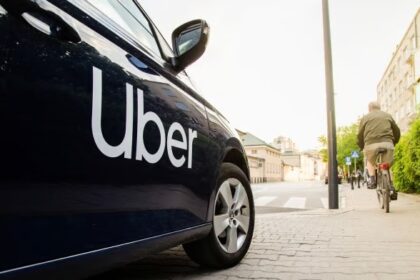
Uber’s exit from Nigeria on September 2, 2026, exactly 12 years after it arrived in Lagos, marks the end of an important chapter in the country’s transportation story. When Uber entered Lagos in 2014, it introduced something that was still unfamiliar to most Nigerians. A passenger could open an app, request a car, see the driver’s identity, track the trip and make a payment without standing by the roadside negotiating with a stranger.
Uber did not invent transportation in Nigeria. It introduced a new way of accessing it, and that distinction is important because twelve years later, the Uber app is gone, but the behaviour it created remains. Nigerians are still booking rides from their phones, comparing prices across platforms and expecting transportation to arrive at their location with the kind of visibility that was once unusual.
So the question is no longer whether Nigerians will continue using ride-hailing services. The more interesting question is who will control the market Uber helped create, and whether there is already a company that has quietly taken the position Uber once held.
How Uber built the market
When Uber launched in Lagos in 2014, Nigeria already had a complex transportation ecosystem made up of taxis, danfo buses, keke, okadas, car-hire services and private drivers. The problem was not that Nigerians had no transportation options. The problem was how those options were accessed, how reliable they were and how much information passengers had before entering a vehicle.
Uber turned the smartphone into a transportation marketplace. Instead of finding a vehicle on the street, negotiating a price and hoping the driver was trustworthy, passengers could request a ride digitally and receive information about the person picking them up. The company introduced a different level of convenience and transparency to urban transportation, while its rating and tracking systems created a layer of accountability that traditional transportation often lacked.
By July 2016, only two years after entering Lagos, Uber said it had facilitated more than one million trips in the city and had expanded into Abuja. Those early numbers were evidence that the company had moved beyond being a novelty. It was changing consumer behaviour and teaching Nigerians to think about transportation as something that could be ordered, tracked and managed through a phone.
Once drivers understood that an application could connect them with passengers, other companies could recruit those same drivers. Once passengers understood that they could request a car from their phones, another company could offer essentially the same experience. The technology could be replicated, the business model could be replicated, drivers could move between platforms and passengers could download another application.
The first-mover advantage is everyone’s advantage
Uber’s early strength came from several advantages arriving at the same time. It had a global brand, technology, capital, an established operating model and the ability to create trust around an unfamiliar form of transportation. It also arrived at a moment when smartphone adoption and digital payments were expanding and consumers were becoming increasingly comfortable using technology to solve everyday problems.
But the network effect Uber created was not exclusive to Uber. Once the category became established, competitors no longer needed to convince Nigerians that ride-hailing worked. They only needed to convince them that their platform offered a better experience.
That shifted the competitive advantage away from being first and towards supply, pricing, driver economics, availability, customer experience and local market understanding.
This is where the Nigerian market began to change.
Bolt learned how to compete inside the market Uber created
Bolt entered Nigeria in 2016 under the name Taxify, two years after Uber. By then, Uber had already done the difficult work of introducing Nigerians to app-based transportation, which meant Bolt did not have to explain what ride-hailing was. It needed to give Nigerians a reason to use Bolt instead of Uber.
Price became one of its important weapons, while driver economics became another. Historical reporting from Technext suggested that Bolt had captured more than 60 percent of Nigeria’s ride-hailing volume by 2020, based on driver numbers, interviews and industry data available at the time. The same report estimated that Bolt had about 20,000 drivers compared with approximately 10,000 for Uber.
Those figures are historical and should not be treated as current market share. They are nevertheless important because they demonstrate that Uber’s competitive displacement did not begin when the company announced its exit in 2026. The process had been developing for years.
The driver became the real battlefield
The most important person in the ride-hailing business may not actually be the passenger. It may be the driver, because ride-hailing is a two-sided marketplace in which passengers need drivers and drivers need passengers.
More drivers can mean shorter waiting times, which can attract more passengers. More passengers create more earning opportunities for drivers, which can attract more drivers. The company that builds the strongest supply network can therefore create a powerful competitive advantage.
This is one reason driver economics became so important in Nigeria. Historical reporting suggested that Bolt’s commission structure was more attractive to some drivers than Uber’s, while drivers who worked across multiple platforms could choose the platform that offered the better opportunity at any given time.
That dynamic has not disappeared. In March 2026, drivers operating across Uber, Bolt and other platforms staged a three-day strike in Lagos over low fares and rising operating costs, with fuel prices, vehicle maintenance and platform commissions among the major pressure points.
In May, the Amalgamated Union of App-Based Transporters of Nigeria petitioned the Lagos government over what it described as unsustainable commissions and driver earnings. In August, Lagos e-hailing drivers again raised complaints involving Uber, Bolt and inDrive over issues including fares, commissions, deactivation and welfare.
These developments reveal something important about Uber’s departure. It did not remove the fundamental problems facing Nigeria’s ride-hailing industry. It simply handed those problems to whoever remains.
Did Uber fail to build community?
One theory surrounding Uber’s decline is that the company may have underestimated the importance of community. The argument is that Uber built a powerful technology platform but did not build the same depth of relationship with drivers and local transportation stakeholders that some competitors developed.
There is not enough evidence to conclusively say that Uber failed because it did not build community, and reducing a complex market exit to one explanation would be misleading. There is, however, enough evidence to establish that relationships with drivers have become an increasingly important part of competition in Nigerian ride-hailing.
Drivers do not simply want access to passengers. They want sustainable earnings, predictable economics, flexibility, support and a platform that understands the realities of operating a vehicle in Nigeria. Passengers also want more than an application. They want availability, affordable fares, reliable drivers, safety and customer support.
This changes the definition of competition. The battle is no longer simply between applications. It is increasingly between ecosystems.
Bolt has the strongest immediate claim
If the question is who is most likely to inherit Uber’s immediate position in Nigeria, Bolt has the strongest claim. It already had a significant Nigerian operation before Uber left, an established driver network, a familiar brand and a presence across multiple Nigerian cities.
Most importantly, Bolt does not have to build the market from scratch. It is entering the next phase with a customer base that has already been educated by more than a decade of ride-hailing competition.
But Bolt should not confuse Uber’s departure with victory, because the same problems that affected Uber are still affecting Bolt. Drivers are demanding better economics, passengers are demanding affordability, vehicle owners are facing rising operating costs and regulators are becoming more involved in the industry.
Bolt now has to prove that it can absorb additional demand while maintaining a sustainable relationship with drivers and passengers.
The inDrive question
Unlike the traditional ride-hailing model in which the platform largely determines the fare, inDrive allows passengers and drivers to negotiate prices. That model has particular relevance in Nigeria, where affordability is one of the biggest factors influencing consumer behaviour.
If passengers become increasingly resistant to high fares and drivers become increasingly dissatisfied with platform-controlled pricing, the ability to negotiate could become a significant competitive advantage. Globally, inDrive is also growing, with Reuters reporting that the company’s net revenue increased 31 percent in 2025 to $601.6 million.
That gives inDrive a combination of a distinctive pricing model and significant international scale. Bolt may have the stronger starting position in Nigeria, but inDrive could become one of the most important challengers if the economics of the market continue to push both drivers and passengers towards greater price control.
The LagRide model
Then there is LagRide, which represents a different approach to mobility. Rather than simply connecting independent drivers and passengers, the platform has built around a fleet model involving vehicles and driver financing.
That distinction matters because one of the biggest problems in Nigerian transportation is not simply finding passengers. It is putting reliable vehicles on the road.
Fuel is expensive, vehicle maintenance is expensive and vehicle acquisition is expensive. For many drivers, the vehicle itself represents the biggest barrier to entering or remaining in the business.
A company that can solve vehicle ownership and financing could therefore have an advantage that a conventional ride-hailing application does not.
LagRide’s opportunity is deeper control of the physical supply of transportation, while its challenge is scale. Its strongest presence remains associated with Lagos, meaning that becoming a national successor to Uber would require significant expansion.
Moove may be playing a different game
Moove is perhaps the most interesting wildcard in the Nigerian mobility ecosystem because it does not fit neatly into the traditional definition of a ride-hailing company.
Its model has focused heavily on vehicle financing for mobility workers, which means it is addressing one of the industry’s most important structural problems: access to vehicles.
A ride-hailing platform can have millions of potential passengers, but those passengers cannot become rides without vehicles and drivers. This raises a different question about the future of mobility: what if the most powerful company in African mobility is not the company with the largest ride-hailing application, but the company that controls access to the vehicles behind those applications?
The driver may not belong to anyone
One of the biggest weaknesses in the traditional understanding of ride-hailing loyalty is that drivers do not necessarily have to choose one platform.
They can use multiple applications, moving between platforms based on demand, fares, incentives and personal preference. A 2023 Bolt driver survey cited by Oliver Wyman found that 32 percent of surveyed Nigerian Bolt drivers used multiple ride-hailing applications.
That changes the competitive equation because a platform can have thousands of drivers registered on its system without truly owning their loyalty.
The same thing happens on the passenger side. A Nigerian passenger can have Bolt, inDrive and other applications installed on the same phone, choosing whichever platform offers the best combination of price, availability and convenience at that moment.
There is no permanent relationship. There is simply the best option available.
This may be one of the most important lessons from Uber’s exit. The Nigerian consumer did not necessarily become loyal to ride-hailing companies. The consumer became loyal to the convenience of ride-hailing itself.
Uber’s greatest legacy may also be its biggest weakness
Uber taught Nigerians how to use ride-hailing, and that was its greatest contribution to the market. But it also meant that competitors did not have to educate consumers in the same way.
They only had to compete for the customer. The relationship gradually changed from “I use Uber” to “I use ride-hailing.” That is a major difference.
Once the category became stronger than the brand, Uber’s first-mover advantage became less powerful. The consumer no longer needed Uber. The consumer needed a reliable ride.
The economics finally caught up with the industry
There is another dimension to Uber’s exit that cannot be ignored. The Nigerian ride-hailing market has become increasingly difficult to operate as fuel costs, vehicle maintenance costs, inflation and currency volatility put pressure on drivers, passengers and platforms.
Consumers want cheaper rides, drivers want higher earnings, platforms need sustainable margins. So these interests are often in conflict, and someone has to absorb the difference.
That is the fundamental economic problem every platform operating in Nigeria must solve, and it may ultimately determine who becomes the next market leader.
Uber is also moving towards a different future
The timing of Uber’s Nigerian exit is particularly interesting because the company announced its withdrawal while also undergoing a major global restructuring.
Reuters reported that Uber planned approximately 3,300 job cuts as part of the restructuring and was preparing to invest heavily in autonomous vehicle technology. The company also launched autonomous rides in London through its partnership with Wayve shortly after announcing its Nigerian exit.
This does not prove that Uber left Nigeria because it wanted to focus on robotaxis. Uber has not made that claim but the sequence tells us something about where the company sees its future.
Uber is increasingly positioning itself around the next generation of transportation, while Nigeria’s immediate mobility challenges remain focused on fuel, fares, vehicles, drivers, maintenance, regulation and affordability.
So who takes Uber’s place?
Bolt has the strongest existing combination of brand recognition, driver supply, passenger awareness and market presence. It has already spent years competing in Nigeria and does not need to convince consumers that app-based transportation works.
inDrive has a strong argument because of its negotiated pricing model. LagRide has a different argument because of its fleet and local infrastructure strategy. Moove has another because of its vehicle financing and supply strategy.
Our verdict
Uber’s place may already have been taken, but only if we define that place as the company Nigerians open when they need an app-based ride. On that measure, Bolt has the strongest immediate claim because it already possesses the market presence, driver network, brand recognition and consumer familiarity required to absorb part of the demand created by Uber’s departure.
But if we define Uber’s place as the company that will control Nigerian mobility for the next decade, nobody has won that race yet. The market remains fragmented, and each major player has a different advantage. Bolt has scale and familiarity, inDrive has a distinctive pricing model, LagRide has a fleet and local infrastructure strategy, while Moove has a vehicle financing and supply strategy.
The drivers themselves are also becoming more sophisticated, with many able to operate across several platforms rather than committing themselves exclusively to one company. That means the next market leader cannot simply depend on having the largest registered driver base. It has to create an ecosystem that drivers actually want to remain inside.
The same is true for passengers. Nigerians have already demonstrated that they are willing to move between applications when price, availability or convenience changes. The loyalty may therefore belong less to a particular brand and more to the experience of getting a ride when and where it is needed.
Uber taught Nigeria that transportation could become a digital platform. Bolt demonstrated that the first mover could be challenged. inDrive is challenging the economics of the traditional model. LagRide is experimenting with deeper control of vehicles, while Moove is addressing the financing problem underneath the wider mobility ecosystem.
The next winner will therefore not simply be the company with the biggest app. It will be the company that can solve the industry’s three biggest problems at the same time: keeping the passenger’s ride affordable, keeping the driver’s earnings sustainable and keeping the platform profitable.