


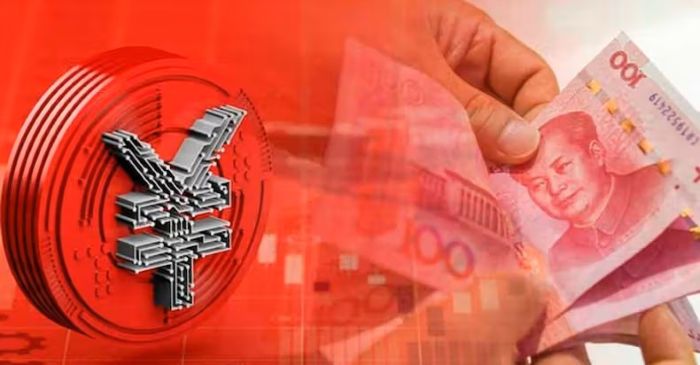

Zambia’s decision to accept the Chinese yuan for mining taxes and royalties is not a symbolic headline. It is a tightly scoped financial move that reveals how debt, commodities, and geopolitics are quietly rearranging Africa’s monetary habits.
This is not about replacing the dollar. It is about reducing friction in a very specific, very expensive part of the economy.
This didn’t start with currency, it started with copper
Zambia is Africa’s second-largest copper producer. Copper is not just an export; it is the backbone of government revenue, foreign exchange inflows, and debt repayment capacity. When copper prices move, Zambia feels it almost immediately, through the kwacha, through reserves, and through fiscal pressure.
Chinese companies sit at the center of this system. Over the past two decades, Chinese firms have become some of the largest operators and financiers in Zambia’s mining sector, backed by Chinese policy banks and long-term infrastructure-for-resources arrangements.
For years, this created a quiet inefficiency: Chinese mining firms earned revenue locally, converted into dollars, paid taxes in dollars, while Zambia simultaneously owed billions of dollars to Chinese creditors—often serviced indirectly through yuan-linked arrangements.
The system worked, but it leaked value at every conversion point.
What actually changed, and what didn’t
Starting in October 2025, Zambia will allow mining taxes and royalties to be paid in Chinese yuan. The Bank of Zambia confirmed the policy in December, making Zambia the first African country to formally adopt such a framework.
This policy is deliberately narrow:
- It applies only to mining taxes and royalties
- It applies primarily to Chinese mining companies
- It does not replace the dollar for general taxation or trade
That narrowness is the point. Zambia is not making a political statement. It is optimizing a financial loop.
Instead of:
Yuan → Dollar → Kwacha → Dollar → Debt service
Zambia is moving closer to:
Yuan → Yuan reserves → Yuan-denominated obligations
Fewer conversions. Lower transaction costs. Less exposure to dollar liquidity shocks.
The technology here isn’t blockchain, it’s plumbing
There is no flashy financial innovation in this move. The “technology” is old-school central banking infrastructure: reserve management, settlement systems, and bilateral clearing arrangements.
What had to be in place for this to work:
- Yuan-clearing capability within Zambia’s banking system
- Regulatory comfort with holding and managing yuan reserves
- Ongoing trade and debt flows large enough to justify non-dollar settlement
- Confidence that yuan balances can be redeployed meaningfully (debt service, imports, swaps)
Without these, accepting yuan would simply create trapped liquidity.
This is why most African countries talk about currency diversification but don’t operationalize it. Zambia did, because it already lives inside a yuan-heavy mining and debt ecosystem.
Where the money logic actually makes sense
For Chinese mining firms, the benefit is immediate and mechanical.
Paying taxes in yuan:
- Eliminates repeated FX conversion costs
- Reduces exposure to dollar volatility
- Aligns operating cash flows with home-currency financing
For Zambia, the benefit is more strategic:
- Yuan inflows can directly support servicing Chinese debt
- Reserve diversification reduces dependence on dollar availability
- FX pressure on the kwacha is marginally eased
This is not about getting “more money.” It is about losing less money to friction.
In capital-intensive sectors like mining, that difference compounds quickly.
Investors aren’t watching Zambia, they’re watching the pattern
On its own, Zambia accepting yuan for mining taxes is manageable and limited. What makes investors pay attention is the pattern it hints at.
Across Africa:
- China remains the largest bilateral creditor to many governments
- Chinese firms dominate infrastructure, mining, and energy projects
- Trade with China increasingly exceeds trade with traditional Western partners
Yet settlement remains overwhelmingly dollar-based.
Zambia is testing a different alignment: match currency inflows to currency obligations.
If this works smoothly, without liquidity traps or balance-of-payments complications, it becomes a replicable playbook for other resource-heavy, China-exposed economies.
The risk everyone glosses over
Holding yuan is not the same as holding dollars.
The yuan is:
- Not fully convertible
- Managed by capital controls
- Deeply tied to Chinese domestic policy decisions
This means Zambia is trading one form of dependency for another.
If Chinese demand slows, or if yuan liquidity tightens globally, Zambia could find itself holding reserves that are politically safe but operationally constrained.
There is also concentration risk. Zambia already owes China around $6 billion. Deepening yuan exposure without parallel diversification could narrow future negotiating leverage.
This strategy works best when it is one leg of a broader reserve mix, not the foundation.
Why this only works in mining, for now
Mining is uniquely suited to this experiment.
- Revenues are large, predictable, and concentrated
- Operators are mostly foreign and capitalized
- Taxes and royalties are centrally administered
- Commodity pricing is globally transparent
Trying this with SMEs, consumer taxes, or general trade would introduce chaos.
Zambia understood this. That’s why the policy stops at mining.
It’s a scalpel, not a hammer.
Here is the real strategy: currency alignment, not de-dollarization
This is not a rejection of the dollar. It is a strategy of currency alignment.
Zambia is aligning:
- Who earns in yuan
- Who pays in yuan
- Who it owes in yuan
That alignment reduces stress on reserves without triggering financial instability.
It’s a quiet strategy, one that doesn’t require speeches, alliances, or dramatic shifts. Just accounting logic applied at sovereign scale.
What this quietly says about African financial sovereignty
For years, African countries have talked about monetary independence in ideological terms. Zambia’s move is different. It is practical, narrow, and reversible.
It accepts a hard truth:
Sovereignty is not about which currency you prefer—it’s about which frictions you can afford.
As African economies deepen ties with non-Western partners, more of these micro-adjustments will appear. Not sweeping currency revolutions, but targeted financial re-engineering.
Zambia just showed what that looks like when it’s done without drama.
The real question is not whether others will follow, but whether they’ll do it with the same restraint.






 English
  简体中文
简体中文  Čeština
  Deutsch (Sie)
  Français


