





Meta has confirmed that WhatsApp will soon roll out third-party chat integration across Europe, marking one of the biggest changes in the platform’s history. The move is part of Meta’s compliance with the EU’s Digital Markets Act (DMA), which requires dominant messaging platforms to open their systems to competing apps.
The announcement was officially made on November 14, 2025, following months of small-scale testing.
Rollout: How and When the Feature Will Arrive
Meta says the integration will begin rolling out over the coming months, gradually reaching users across the European Region.
Key rollout details include:
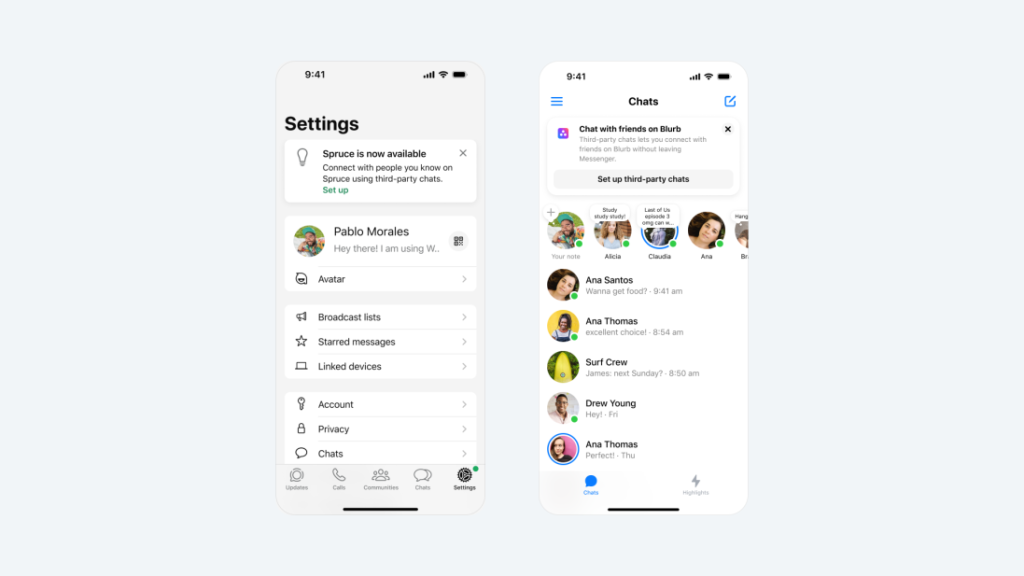
- Users will receive an in-app notice under Settings → Chats prompting them to opt in.
- The feature is optional, users can turn it on or off at any time.
- Available only on Android and iOS mobile apps at launch.
- Not yet supported on desktop, web, or tablet versions.
- Limited to users with phone numbers registered in DMA-covered regions (EU + associated areas).
This ensures that interoperability starts with a controlled, compliant environment before expanding more widely.
First Messaging Apps to Connect With WhatsApp
Two third-party messaging apps will be available at launch:
Meta says these partnerships are the result of over three years of collaboration with European developers and the European Commission to design a secure, privacy-preserving interoperability system.
More apps may join later once they meet the technical and end-to-end encryption requirements set by Meta.
What Users Can Do With Third-Party Chats
At launch, WhatsApp users who opt in will be able to exchange:
- Text messages
- Photos and images
- Voice notes
- Videos
- Files
- Message reactions
- Read receipts
- Typing indicators
- Direct replies
Group chats with third-party users will be added later, once partner apps implement support.
Voice and video calls will not be available at launch and are expected to arrive much later — industry timelines suggest 2027 for some calling interoperability features.
Privacy and Security: End-to-End Encryption Is Mandatory
Meta emphasizes that third-party chats must maintain the exact same level of end-to-end encryption (E2EE) as WhatsApp.
Security details:
- WhatsApp cannot access message content from interoperable chats.
- Third-party chats will appear in a separate folder at the top of the inbox by default.
- Users can choose to combine all chats into one unified inbox if they prefer.
- Visual indicators will distinguish WhatsApp-native chats from third-party messages.
- An onboarding flow explains differences in privacy handling across external apps.
- Blocked WhatsApp contacts may still message you via a third-party app, depending on its own policies.
This ensures users are aware of the potential privacy differences when communicating outside the WhatsApp ecosystem.
User Experience: Simple, Transparent, Fully Optional
During setup, users will learn how third-party interoperability works and what features may behave differently. WhatsApp will also notify users whenever a new third-party app becomes compatible.
The system is designed to make external chats easy to identify and manage while still keeping WhatsApp’s familiar interface intact.
A Major Shift in Europe’s Messaging Landscape
This rollout marks a historic change for WhatsApp, which has long operated as a closed messaging system. By opening its platform — starting with two small apps and expanding over time — Meta is taking a significant step toward regulatory compliance and a more open messaging ecosystem in Europe.
Larger platforms like Signal, Telegram, Threema, or Viber may join in the future, but only if they adapt to WhatsApp’s encryption and technical requirements.
The move confirms that the DMA is reshaping how big tech companies operate in Europe, with messaging interoperability being one of the most visible changes for everyday users.


 English
  简体中文
简体中文  Čeština
  Deutsch (Sie)
  Français


