



Seattle’s Sound Transit is channeling late-90s ambition with its sprawling light rail expansions, but skyrocketing costs, persistent delays, and a $30 billion shortfall are drawing fire from critics who say the tech-savvy city is stuck in a transit time warp amid modern urban challenges.
The Pacific Northwest hub, home to Amazon and Microsoft, kicked off its light rail era decades late after voters rejected federal-funded proposals in 1968 and 1970, missing out on the kind of subsidies that built systems like Atlanta’s MARTA. A rail-inclusive plan finally passed in 1996, leading to the Link system’s debut in 2009 with Tacoma Link opening in 2003 and Central Link following suit. Voter approvals in 2008 and 2016 poured billions into expansions via taxes like $1,000 per household annually and $100 per car.
Fast-forward to 2026, and Sound Transit is in the midst of a building boom. The north-south 1 Line now spans 41 miles after a $3 billion extension to Lynnwood opened in June 2025 and a $2.5 billion leg to Federal Way debuted in December 2025. Ridership has rebounded strongest among U.S. light rail systems, up 24% since 2019 with 3.4 million riders in October 2025 alone.
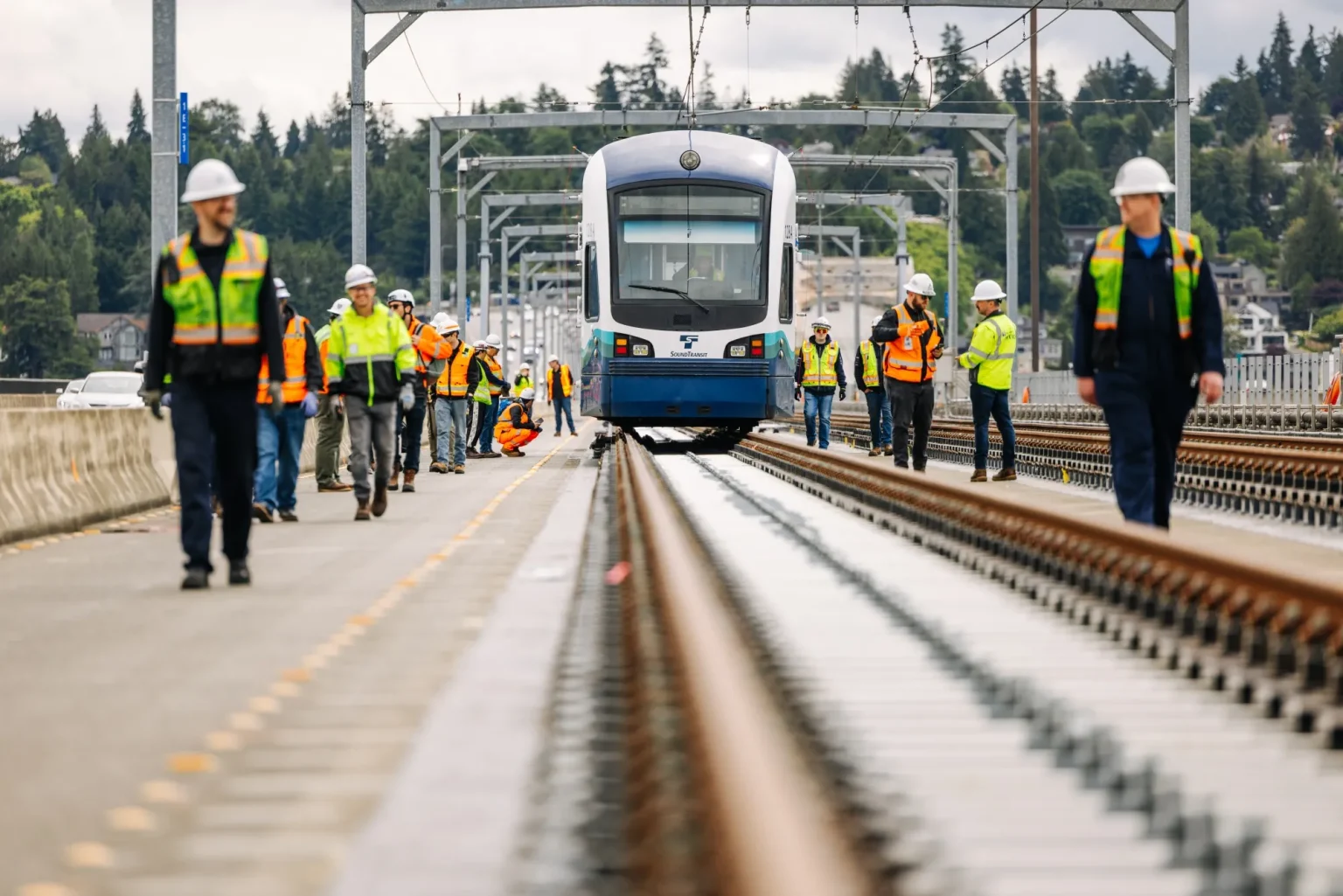
Engineering feats abound: Test trains have been zipping across the I-90 floating bridge since September 2025, marking the world’s first light rail on such a structure, as part of the $3.7 billion, 14-mile Crosslake Connection for the 2 Line, slated for full opening by May 31, 2026, after delays from an original 2020 target. Simulated service kicks off in February 2026, potentially accelerating the timeline, with passengers allowed to board during tests between Lynnwood and Chinatown-International District.
Looking ahead, the West Seattle Link Extension adds 4.1 miles and four stations from SODO to Alaska Junction, eyeing a 2032 debut after final route selection in October 2024 and a Federal Transit Administration Record of Decision in April 2025. Pinehurst Station at NE 130th Street in Seattle is on track for June 2026, while parking and access upgrades at Sumner, Kent, and Auburn Sounder stations roll out in 2026-2027. The 2016 ST3 package, voter-approved at $54 billion for 62 miles, now faces estimates ballooning to $180 billion, about $150,000 per household—fueling a $30 billion shortfall. The Ballard Link Extension alone has doubled to $22 billion.
Critics aren’t holding back. “Seattle is a leftist kook city. They spend money like its infinite,” one observer quipped online, warning of trains turning into “rolling homeless shelters” amid safety concerns over homelessness, drugs, and crime. Comparisons to California’s stalled High-Speed Rail abound, with calls for Japanese-style efficiency or autonomous alternatives like Waymo and Zoox. Historical echoes resonate: A monorail push in the early 2000s fizzled due to costs, mirroring current overruns. Sound Transit defends the investments, noting the Crosslake Connection as a “generational investment” per King County Executive Dow Constantine.
The “1999” nod harks back to planning roots, like the 1999 preferred route from Northgate to Sea-Tac, and a sense of revivalist optimism, but in a city pioneering AI and cloud tech, the analog pace feels antiquated. As 2026 service tweaks integrate new lines with ST Express buses, the agency eyes FIFA World Cup readiness with station upgrades.
Peers like Los Angeles and Denver have expanded faster with lower costs per mile, while international benchmarks like Vancouver’s SkyTrain highlight efficient automation. In Seattle, where tech drives the economy, the light rail saga tests whether old-school infrastructure can keep pace with innovation, or if alternatives like autonomous shuttles will disrupt the tracks. As expansions chug along, the real question is whether this 1999 vibe will evolve or leave riders waiting at the station.





 English
  简体中文
简体中文  Čeština
  Deutsch (Sie)
  Français


