


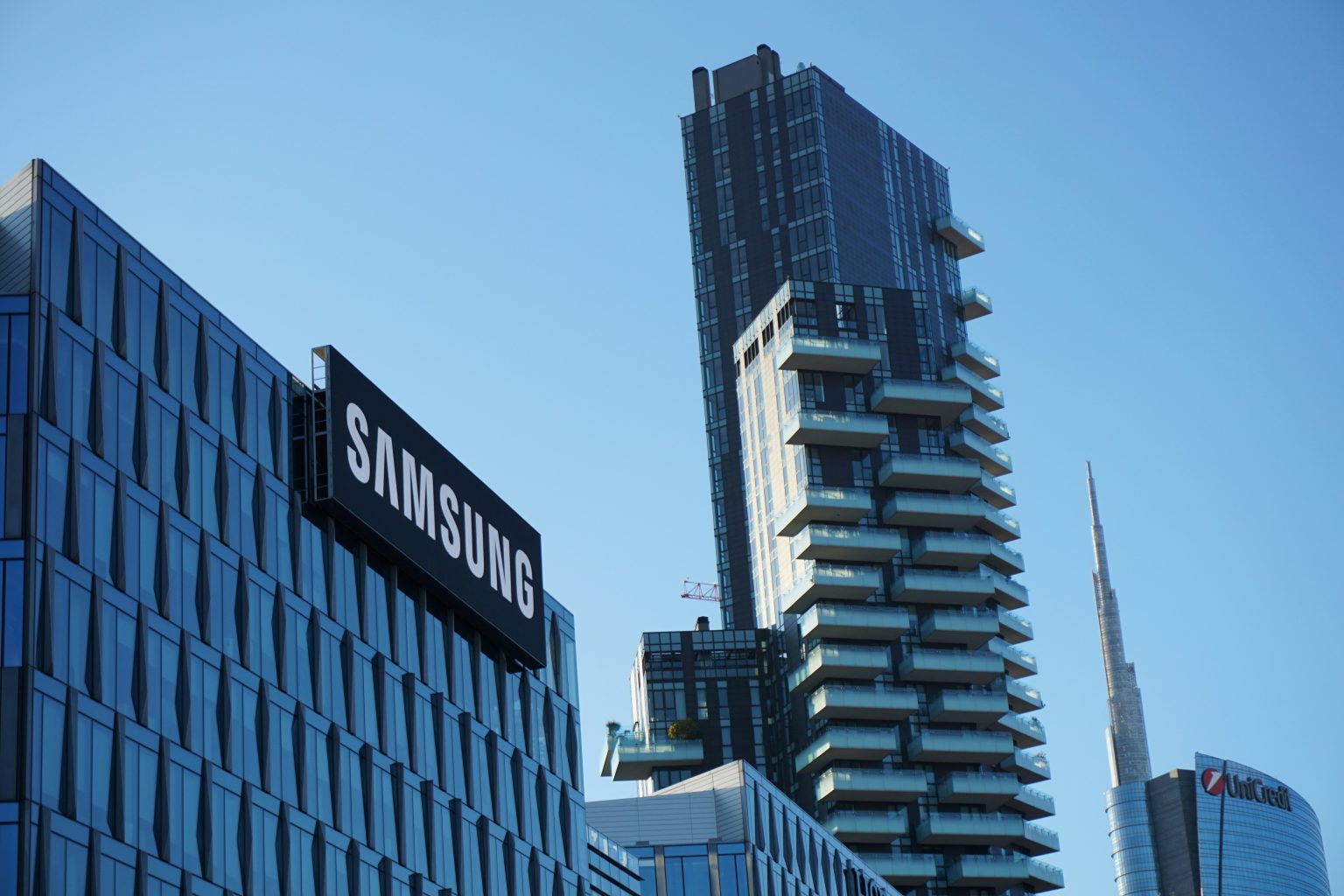

Samsung Electronics has announced plans to transition its global manufacturing network into fully “AI-Driven Factories” by 2030, outlining a strategy that will embed artificial intelligence across every stage of production, from raw material intake to final shipment.
The company said the shift will integrate AI throughout the entire manufacturing value chain, including inbound logistics, assembly lines, quality inspection and distribution. The goal is to create production environments capable of operating with higher levels of autonomy, guided by real-time data and intelligent systems rather than conventional automation alone.
Central to the strategy is the deployment of digital twin technology across manufacturing facilities. By building virtual replicas of factories and processes, Samsung plans to simulate operations, test scenarios and validate changes before applying them on-site. This approach is designed to reduce downtime, improve precision and strengthen decision-making across plants worldwide.
Alongside digital twins, Samsung will introduce specialized AI agents focused on distinct operational areas such as quality control, production management and logistics coordination. These agents will analyze large volumes of operational data, anticipate issues and recommend or execute adjustments aimed at improving consistency and output. The company expects that stronger pre-validation and predictive analysis will lift productivity and standardize performance across its global footprint.
Samsung also confirmed that artificial intelligence will expand into Environmental, Health and Safety operations. AI-powered systems will monitor facilities for potential hazards, detect anomalies and trigger preventive measures. The company said this proactive framework is intended to improve worker safety and reduce operational risk, particularly in complex or high-risk environments.
At the core of the initiative is what Samsung describes as “Agentic AI,” a system capable of planning, executing and optimizing decisions independently based on defined objectives. First introduced in its consumer mobile products, the technology is now being adapted for industrial use. By transferring advanced AI capabilities from its device ecosystem into factory environments, Samsung aims to establish a manufacturing model where on-site systems can assess conditions and act with limited human intervention.
The transformation extends beyond software. Samsung is progressively integrating robotics into its production lines, including humanoid and task-specific machines. Operating robots will support line management and facility operations, while logistics robots will handle material movement within plants. Assembly robots are being deployed for precision tasks requiring consistent accuracy. In areas where human access is limited or potentially unsafe, digital twin-linked environmental safety robots will monitor conditions, identify risks and respond accordingly.
Read also: Google Adds New Agentic Capabilities to AI Mode for Booking Tickets and Appointments
YoungSoo Lee, Executive Vice President and Head of Global Technology Research at Samsung Electronics, said the next stage of manufacturing innovation depends on systems that can interpret operational contexts in real time and make informed decisions without waiting for manual input. He added that the company intends to lead the transition toward AI-powered manufacturing on a global scale.
Samsung plans to present its industrial AI roadmap at the upcoming Mobile World Congress in Barcelona, where it will demonstrate how digital twin simulations and intelligent agents can operate within real production scenarios. The company will also outline its broader governance framework for AI expansion during the Samsung Mobile Business Summit, a private event for business customers and partners marking its tenth year.
According to Samsung, the governance strategy will embed safety and accountability mechanisms into AI systems from the design stage. The aim is to ensure that increasing levels of autonomy in industrial settings are supported by oversight structures that promote reliability and trust. The company said responsible deployment will remain a key component as AI becomes more embedded in critical operations.
The move reflects a broader shift within the manufacturing sector toward data-centric, autonomous systems capable of continuous optimization. By setting a 2030 target for full implementation, Samsung is placing artificial intelligence at the center of its long-term production strategy, positioning its factories to operate with greater flexibility, efficiency and resilience in an increasingly competitive global market.




 English
  简体中文
简体中文  Čeština
  Deutsch (Sie)
  Français


