


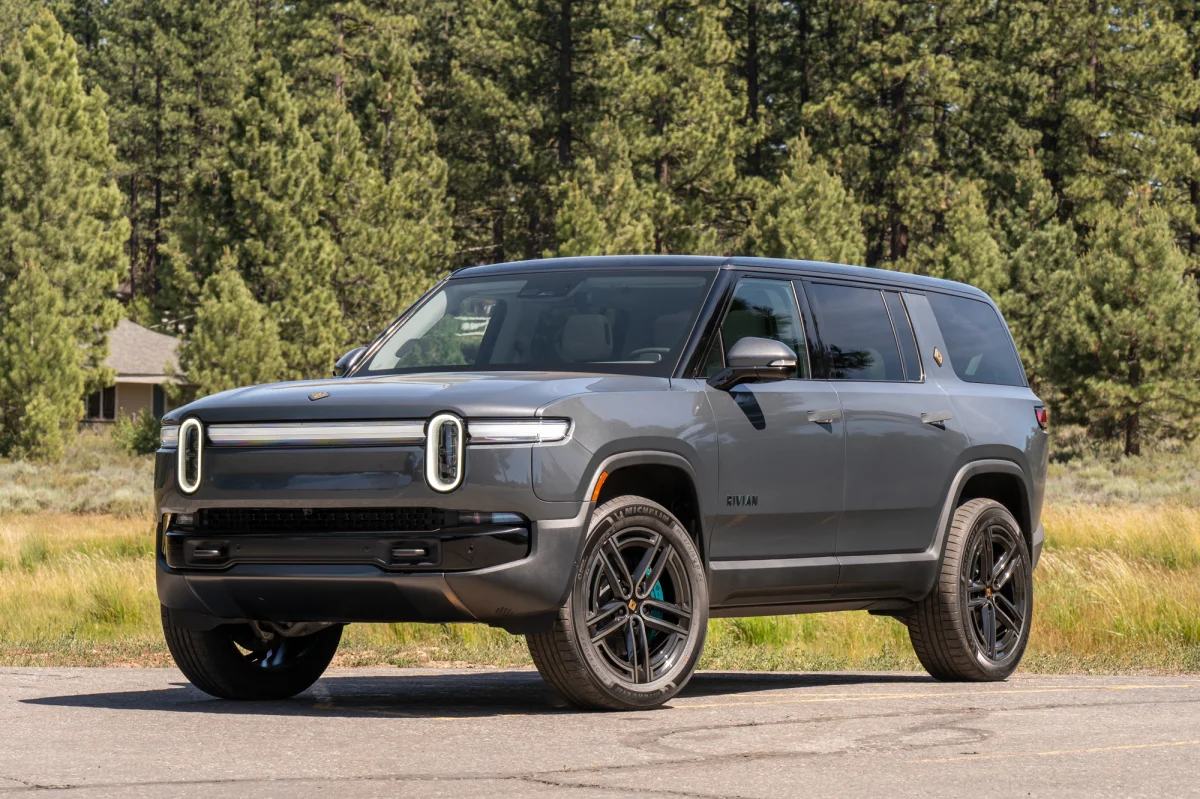

Electric vehicle maker Rivian Automotive shocked investors with its first-ever annual gross profit of $144 million for 2025, sparking a 27% spike in shares during after-hours trading as the company demonstrated progress toward profitability amid a challenging EV market.
The Irvine, California-based company reported full-year 2025 revenue of $5.387 billion, an 8% increase from $4.97 billion in 2024, driven by higher average selling prices, cost reductions per vehicle, and growth in software and services. This marked a dramatic turnaround from a $1.2 billion gross loss in 2024, with Q4 2025 alone contributing $120 million in gross profit. Rivian produced 42,284 vehicles and delivered 42,247 in 2025, reflecting steady output despite market headwinds.
Q4 revenue came in at $1.286 billion, down 26% year-over-year due to the loss of regulatory emissions credits, the end of federal EV tax credits, and lower average selling prices, but the gross profit swing provided a bright spot. The company still posted a $432 million net loss for automotive profits in 2025, an improvement from the prior year, and a full-year net loss of $3.63 billion.
For 2026, Rivian forecasts deliveries of up to 67,000 vehicles, signaling growth, with the R2 model launch on track for Q2. Analysts reacted positively, with some pointing to long-term upside despite mixed near-term signals, contributing to the stock’s surge to around $17.73.
“On Thursday, Rivian reported gross profits for 2025 of $144 million, compared with a net loss in 2024 of $1.2 billion,” noted the Los Angeles Times, crediting the turnaround to “strong software and services performance, higher average selling prices, and reductions in cost per vehicle.”
This earnings beat stands out in a sluggish EV sector, where rivals like Tesla and Ford have grappled with subsidy cuts and softening demand, but Rivian’s focus on cost efficiencies and software revenue offers a blueprint for survival.
As EV adoption accelerates globally, Rivian’s profitability milestone could bolster investor confidence, but scaling deliveries and navigating economic pressures will be key to sustaining the momentum.






 English
  简体中文
简体中文  Čeština
  Deutsch (Sie)
  Français


