


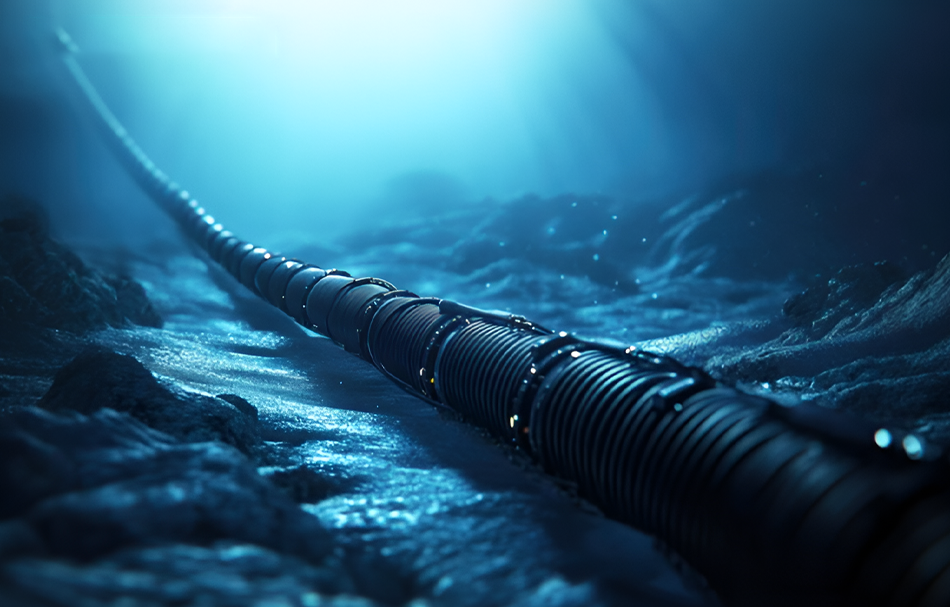

The Republic of Congo is preparing to connect to a new undersea internet cable as repeated faults on the West Africa Cable System (WACS) continue to disrupt connectivity across the country.
Authorities in the country say the move is aimed at stabilizing internet access for millions of users after weeks of outages, slow speeds, and service interruptions that have affected businesses, government services, and daily life.
According to Benjamin Mouandza, Director of Networks and Electronic Communications Services at the Regulatory Authority for Posts and Electronic Communications (ARPCE), technical studies for the new connection began late last week and are expected to be completed within two weeks.
If work stays on schedule, the new cable link could become operational within three weeks.
“This connection would help operators improve service quality and availability,” Mouandza said, adding that Congo urgently needs more resilient international internet routes as digital usage accelerates.
WACS Failures Expose Congo’s Connectivity Weakness
Congo has relied heavily on the WACS undersea fibre-optic cable for international internet access since 2012. In recent weeks, faults on the cable have caused repeated disruptions, according to a statement from the Ministry of Posts, Telecommunications and the Digital Economy published on January 16.
The ministry described WACS as one of Africa’s most important submarine cables, making the recent failures especially damaging.
More than 3.5 million people in Congo use the internet daily, out of a population of nearly 6 million. The outages have affected everything from mobile data and broadband services to digital payments and online public services.
Telecom users across the country have reported extremely slow speeds, unstable connections, and complete service blackouts lasting hours or even days.
Government Orders Emergency Measures
In response, Telecommunications Minister Léon Juste Ibombo has instructed telecom operators to activate emergency backup routes, even if doing so increases operating costs.
The minister also called for closer cooperation with neighbouring countries to diversify Congo’s international connectivity and reduce reliance on a single cable.
Operators have been asked to submit detailed technical plans outlining both short-term fixes and long-term solutions to prevent future disruptions linked to WACS.
“For several weeks, Congolese people have experienced repeated interruptions and exasperatingly slow internet connections,” Ibombo said. “These are direct consequences of failures on one of Africa’s vital digital arteries.”
Hope for Dow Africa and 2Africa Cables
Alongside the new connection, authorities are also looking ahead to the delayed Dow Africa undersea cable, which Mouandza said could further strengthen national connectivity once completed.
Congo also connected to Meta-backed 2Africa cable in August 2023, but the system does not yet appear to be fully operational in the country. In neighbouring Democratic Republic of Congo, which linked to 2Africa at the same time, the cable only became active in December 2025.
The slow rollout highlights the challenges African countries face in translating infrastructure connections into usable, reliable services.
Regional Impact and Broader Concerns
Congo’s push to secure alternative connectivity comes as the Democratic Republic of Congo is also experiencing internet disruptions linked to WACS failures.
Last week, the DRC’s Postal and Telecommunications Regulatory Authority (ARPTC) said maintenance operations were underway and that telecom operators were implementing support measures for affected subscribers.
Despite the scale of the outages across multiple countries, the WACS cable consortium has not issued a public statement on the recent failures.
Why This Matters
The situation underscores a growing reality across Africa: digital infrastructure resilience is no longer optional.
As governments push digitalisation, mobile payments, e-government services, and online commerce, reliance on a single undersea cable creates national-level risk.
For Congo, adding a new submarine cable could mark a turning point, reducing outages, improving service quality, and strengthening the foundation of its digital economy.
But until new links become operational, millions of users remain vulnerable to failures beyond their control.
For a country betting on digital growth, the clock is ticking.






 English
  简体中文
简体中文  Čeština
  Deutsch (Sie)
  Français


