




OpenAI is dipping its toes into the advertising waters, announcing plans to test sponsored content in ChatGPT starting in the coming weeks for U.S. users on its free and low-cost tiers, as the AI juggernaut seeks new revenue streams amid skyrocketing operational costs.
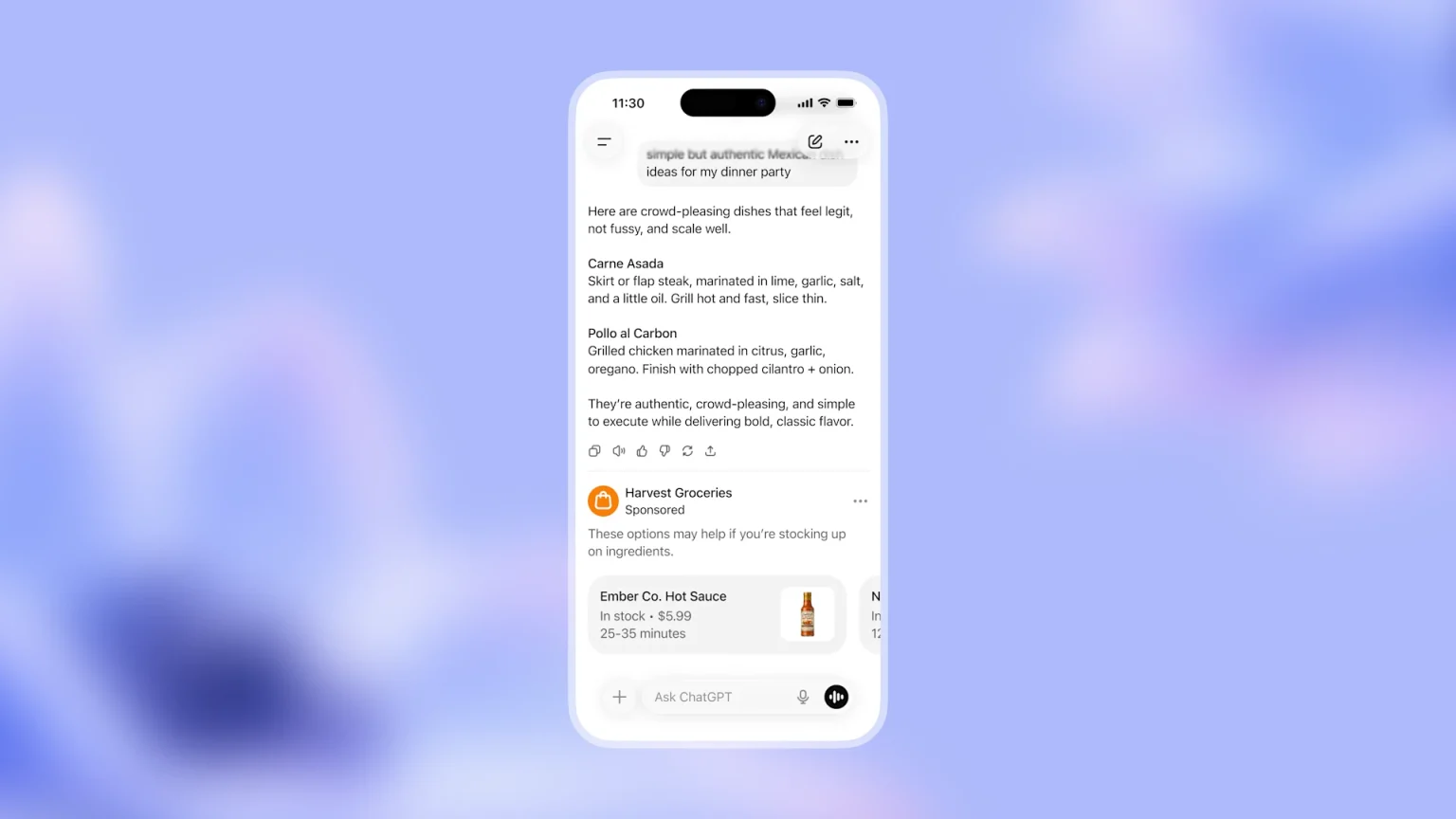
The move, revealed Friday alongside the global rollout of the $8-per-month ChatGPT Go subscription, will introduce clearly labeled ads at the bottom of responses when a relevant sponsored product or service aligns with the ongoing conversation, think hotel suggestions after querying New York travel plans. Ads won’t appear for Plus ($20/month), Pro ($200/month), Business, or Enterprise subscribers, and OpenAI stresses they won’t influence ChatGPT’s core answers or involve selling user data to marketers. Personalization is on by default but opt-outable, with no ads for users under 18 or near sensitive topics like health, mental health, or politics.
Initial tests target logged-in adults in the U.S. on the free and Go tiers, with potential for interactive ads where users can query sponsors directly for purchase decisions. The Go tier, expanding from its India debut in August 2025 to worldwide availability, offers enhanced features like longer memory, more image generations, file uploads, and messaging for a fraction of Plus’s price, OpenAI advertisingthough it too will include ads during the test.
“We prioritize user trust and user experience over revenue,” OpenAI wrote in its announcement. “Ads support our commitment to making AI accessible to everyone by helping us keep ChatGPT available at free and affordable price points.” The company, which has burned through billions in compute and talent costs, views ads as a way to sustain broad access without compromising core integrity. CEO Sam Altman once called ads a “last resort” in 2024, citing trust erosion risks, but didn’t rule them out entirely.
This pivot arrives as OpenAI faces intensifying competition and financial pressures, with the AI sector projected to hit $1.4 trillion in spending by 2030. Analysts warn ads could alienate users, potentially driving them to ad-free rivals, but OpenAI plans to gather feedback during the test to refine the approach.
Rivals aren’t shying away from monetization either: Meta has integrated ads into its AI chatbot conversations, using them to pitch products, while Google weaves sponsored results into Gemini responses. Anthropic and xAI, meanwhile, stick to subscription-heavy models without ads so far. As OpenAI’s user base swells beyond 200 million weekly actives, this ad experiment could redefine sustainable AI, balancing free access with profitability, but at the risk of eroding the seamless experience that fueled ChatGPT’s meteoric rise.


 English
  简体中文
简体中文  Čeština
  Deutsch (Sie)
  Français


