


On many South African news sites, display banners load before the story does. They flash, animate, and disappear into the margins of attention. For publishers, they remain a core revenue line. For brands, they are a necessary spend. For users, they are often ignored.
This quiet stalemate between visibility and indifference has defined much of digital advertising over the past decade. Marketers call it “banner blindness.” It is the slow erosion of attention in an economy built on impressions.
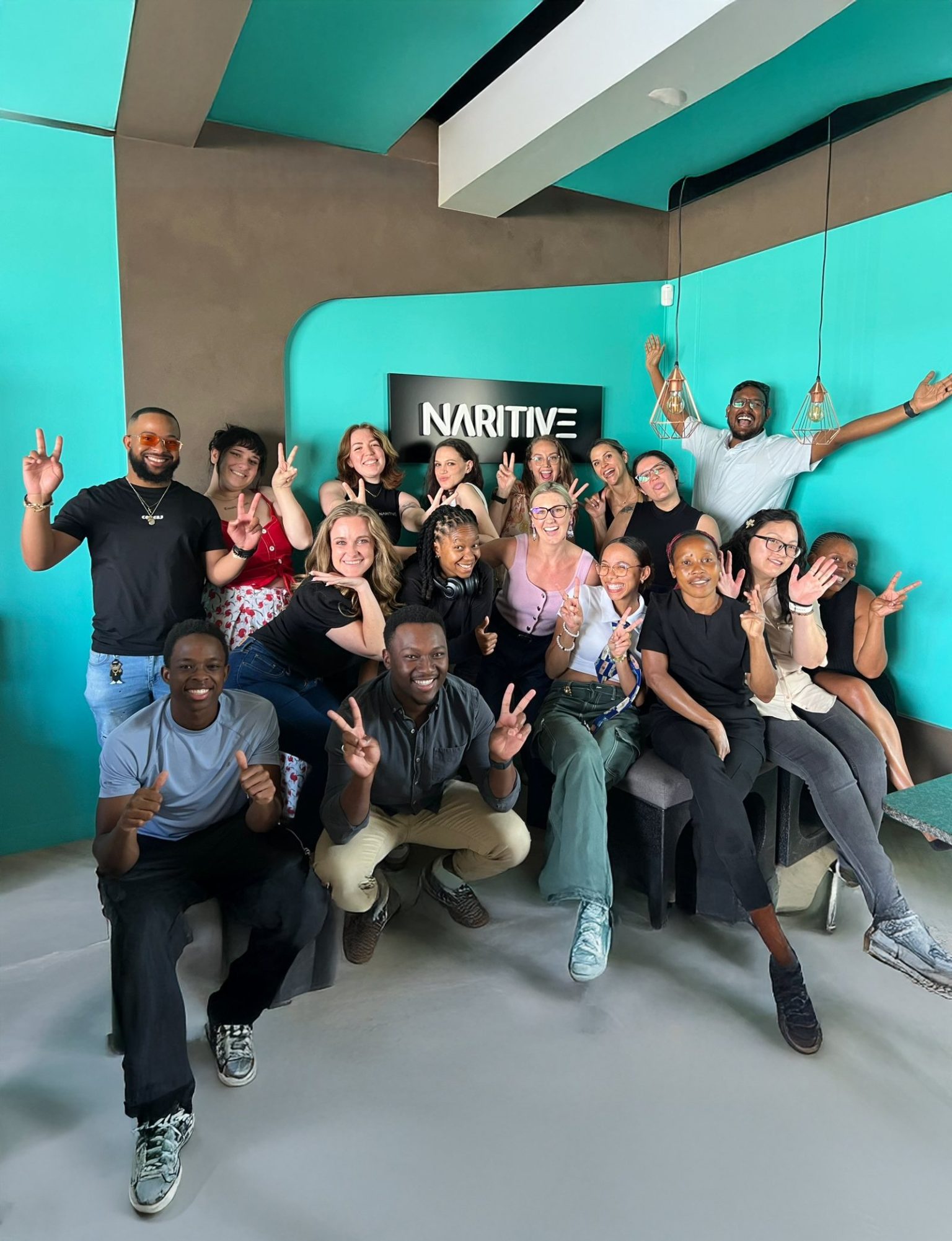
In Johannesburg, a startup called Naritive is attempting to rework that equation.
Founded in early 2024, Naritive positions itself as an interactive advertising infrastructure company rather than a traditional creative agency. Its core thesis is simple: passive ad units no longer command meaningful attention across the open web. To remain relevant, ads must behave more like the formats users already engage with on social platforms.
The company’s origins are rooted in operational frustration. Co-founders Rafiq Phillips and Nicolas Van Zyl previously worked within digital marketing environments where large brand campaigns consistently underperformed on standard display formats. While managing campaigns for major advertisers such as MTN South Africa, Phillips observed a pattern: high impression counts did not translate into engagement or recall.
With a background in software development, he built an internal prototype designed to transform static banners into interactive story-driven formats. Within three months, that prototype evolved into a production-ready platform. Early private funding followed, giving the company both validation and runway. Naritive later secured entry into the Google Startups programme, providing additional ecosystem credibility at a formative stage.
At the product level, Naritive enables brands to deploy interactive ad formats across the open web. Its flagship offerings, Ad Stories and Ad Social, borrow structural cues from social media swipeable cards, embedded polls, quizzes, product feeds but operate within publisher environments outside closed platforms. The result is an ad unit that invites participation rather than interruption.
This is not a minor design tweak. It represents a shift in how digital advertising inventory is conceptualised. Traditional display prioritises reach and frequency. Naritive’s model prioritises dwell time and interaction depth.
The business model reflects that positioning. The company operates on a CPM-based technology fee, offering both fully managed campaign services and a self-serve SaaS platform for agencies. This dual structure allows Naritive to capture enterprise brands seeking turnkey execution while also serving performance-focused agencies that want direct control over deployment.
Since launch, the company reports generating approximately $2.5 million in revenue, with more than 100 brands and agencies adopting the platform across Africa, Europe, the Middle East, and the United States. Repeat usage has become a meaningful signal; interactive formats tend to be integrated into broader campaign strategies once initial performance benchmarks are met.
Independent verification has played a role in Naritive’s market narrative. Attention analytics firm Lumen has assessed the company’s formats, reporting higher brand recall and engagement rates compared to standard display units. In a sector where performance claims are often difficult to validate, third-party measurement provides structural legitimacy.
Yet scaling an ad-tech platform carries execution risk. Integration with publisher inventory requires technical compatibility and commercial alignment. Brands demand measurable ROI. Agencies require speed and reliability. The open web, unlike closed ecosystems, is fragmented and infrastructure-heavy.
Read more: Cheap Solar Is Changing Lives and Economies in Africa
Naritive’s ability to operate across that fragmentation is part of its differentiator. Its platform is built to integrate programmatically, allowing interactive units to be distributed without bespoke development for each publisher. That reduces friction but increases operational complexity behind the scenes.
There is also the broader market context to consider. Global digital advertising remains dominated by large platform players. Competing for attention within that ecosystem requires both technical sophistication and capital discipline. Naritive’s expansion into connected TV and AI-powered creative tools suggests an ambition to diversify beyond web-based formats and into higher-margin channels.
Importantly, the company’s engineering base remains in Johannesburg. An all-South African development team maintains the core product infrastructure. Sales operations, however, have expanded internationally. This split model reflects a growing pattern among African technology firms: local technical execution paired with global commercial outreach.
The structural question is whether interactive advertising becomes a niche enhancement or a mainstream requirement. If attention metrics continue to decline across static formats, brands may have limited choice but to adopt more immersive units. If, however, engagement gains plateau, cost sensitivity could reassert itself.
Naritive sits at that intersection. It is not attempting to replace digital advertising infrastructure. It is attempting to reconfigure a component of it – the unit itself.
In a market defined by oversupply of impressions and scarcity of attention, that adjustment may prove economically durable. Or it may become another layer in an increasingly complex ad stack.
For now, the Johannesburg startup represents a measured but deliberate effort to shift digital advertising from exposure to interaction and to do so from within Africa’s growing technology ecosystem rather than outside it.






 English
  简体中文
简体中文  Čeština
  Deutsch (Sie)
  Français


