


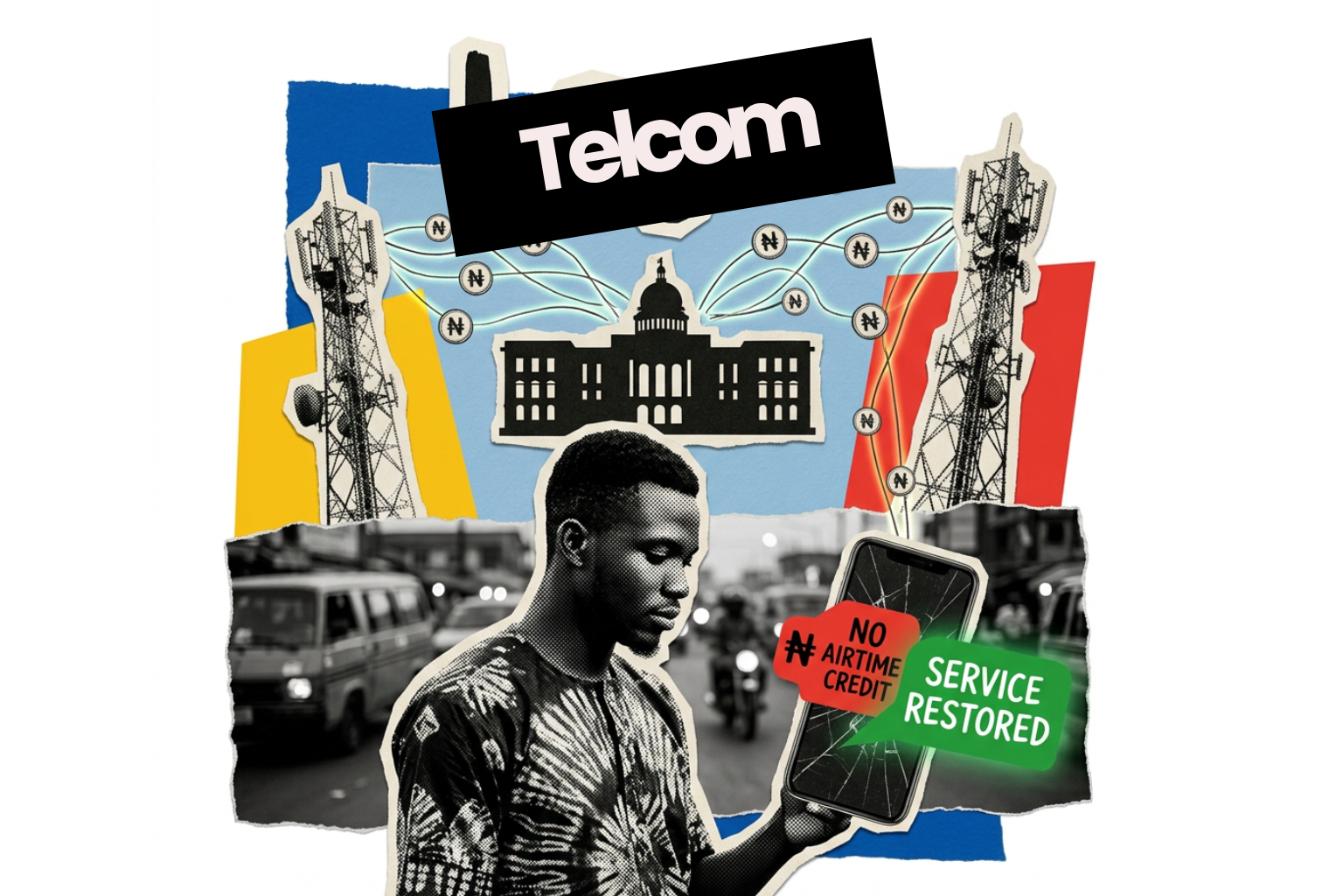
A Federal High Court order forcing MTN Nigeria and Airtel Nigeria to restore airtime credit services exposes a deeper regulatory clash shaping Nigeria’s digital lending space.
The Moment Something Broke
When a court ordered MTN Nigeria and Airtel Nigeria to restore airtime credit services, it looked like a quick correction, fix the disruption and move on. But the shutdown itself, and the urgency to reverse it, points to something much bigger than airtime.
What Actually Happened
Two separate rulings from Nigeria’s Federal High Court sitting in Abuja and Lagos, directed telecom operators to restore airtime and data credit services that had been suspended earlier in April. The suspension was tied to new digital lending regulations introduced by the Federal Competition and Consumer Protection Commission (FCCPC), which extended oversight to cover services like airtime borrowing.
In response, telecom operators halted offerings such as MTN’s XtraTime and Airtel’s credit services, citing compliance concerns. The court intervened, restraining enforcement of those regulations and ordering the restoration of services used by millions of Nigerians.
Where the Story Gets Interesting
On the surface, this looks like a regulatory misunderstanding. But that explanation doesn’t fully hold. Because for something used at this scale to be switched off, and then forced back on by court order, there has to be a deeper conflict about who controls it.
The Real Drivers
1. A Regulatory Tug-of-War
At the center of this issue is a jurisdictional clash.
The FCCPC is attempting to regulate digital lending, bringing airtime credit under its framework. But industry players argue these services fall under telecom regulation, traditionally overseen by the Nigerian Communications Commission (NCC).
That overlap is not just technical, it determines who sets the rules.
2. Airtime Credit Is No Longer “Just Airtime”
What used to be a convenience feature has evolved into a large-scale micro-credit system.
Millions rely on it daily, for calls, data, and small financial gaps. Its sudden suspension disrupted not just communication, but liquidity for everyday users.
That makes it too important to sit in a regulatory gray zone.
3. Legal Pressure Replaced Regulatory Clarity
Instead of a clear policy resolution, the issue escalated into court action.
The rulings didn’t just restore services, they also blocked enforcement actions tied to the new regulations, effectively pausing the regulator’s push.
That tells you alignment broke down before enforcement.
4. Infrastructure Control Became the Battleground
Part of the dispute involved access to telecom infrastructure, USSD channels, billing systems, and SMS platforms used by service providers.
Once that access is threatened, the entire credit ecosystem stalls.
Follow the Incentives
For consumers, this is immediate relief.
Access to emergency airtime credit, widely used by low-income earners and small businesses—returns.
For telecom operators, the outcome is more complex.
They regain operational continuity but lose some control over how and when services can be adjusted.
For regulators, the situation is more delicate.
The FCCPC’s attempt to expand oversight has been slowed, but not settled.
For service providers (like value-added platforms), this is a critical win.
Court protection ensures their access to telecom infrastructure, at least for now.
The Hidden System
This story sits at the intersection of two systems:
- Telecom infrastructure
- Digital lending
And the line between them is fading.
Airtime credit runs on telecom rails, but behaves like a financial product. That hybrid nature is exactly why multiple regulators are now trying to define it.
Power Shift
What looks like a service restoration is actually a pause in a larger power struggle.
- Regulators are testing how far their authority extends
- Telecom operators are defending operational control
- Courts are stepping in as the balancing force
The system is moving, from ambiguity to definition.
Second-Order Effects
Even though services are returning, the structure underneath is likely to change:
- Stronger compliance requirements for airtime lending
- Revised agreements between telecoms and service providers
- More cautious rollout of similar financial products
- Increased scrutiny on other embedded credit systems
The visible fix doesn’t mean the underlying tension is resolved.
What Happens Next
In the short term, services resume and users reconnect.
But the bigger questions remain unresolved:
- Who regulates telecom-based credit?
- Is airtime borrowing a telecom feature or a financial service?
- What framework governs future digital lending products?
These are no longer theoretical, they now require clear answers.
Because in the end, this wasn’t just about restoring airtime credit. It was about deciding who gets to control it.