


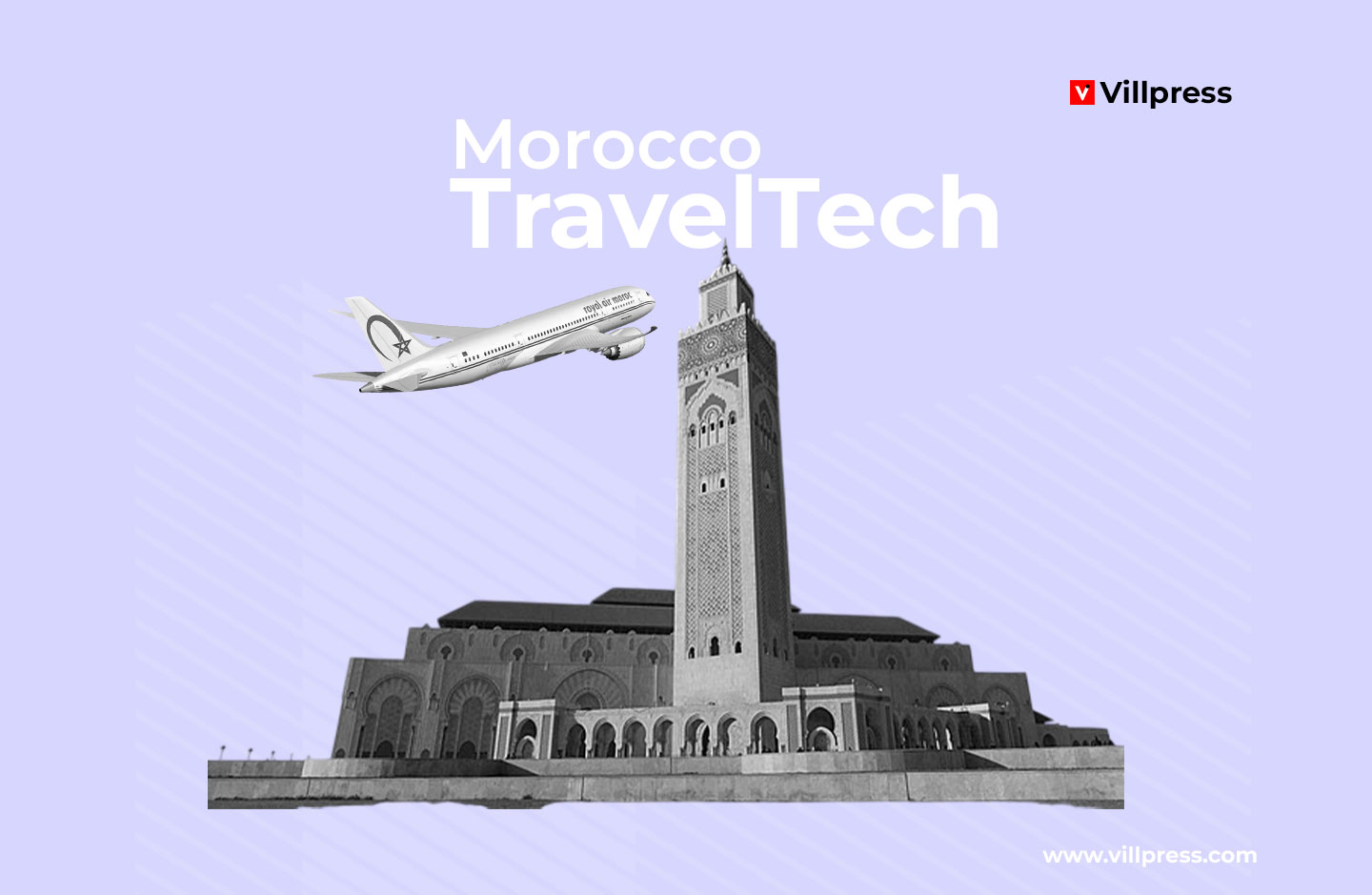

Morocco isn’t just a postcard-perfect vacation spot anymore—it’s morphing into a full-blown TravelTech powerhouse. Forget the camel rides and tagine feasts; we’re talking APIs, booking engines, and AI nudges that are quietly reshaping how the world travels. In 2024, the country clocked 17.4 million international arrivals, up nearly 20% from the year before, with tourism pumping about 7% into the national GDP. But the real story? A cadre of savvy Moroccan founders is cranking out the software and platforms that make all this tick, from discovery to dollars.
With mega-events like AFCON 2025 and the 2030 FIFA World Cup on the horizon, the government is pouring cash into airports, hotels, and venues. Yet, it’s the startups solving the gritty problems, fragmented bookings, inconsistent experiences, and leaky revenue, that are turning Morocco into Africa’s TravelTech lab. We dove into the ecosystem to spotlight the players building this stack, and why it could ripple far beyond the Sahara.
Why Morocco’s Timing Couldn’t Be Better
Three big tailwinds are fueling this surge:
- Policy-Driven Demand Explosion: Tourism isn’t a whim here; it’s a national strategy. Tied to global spectacles, it’s creating steady, predictable needs for tech infrastructure, not just flashy ads.
- Chaotic Supply Chain Ripe for Disruption: Think riads, surf spots, and local guides scattered like dunes. This mess screams for platforms that aggregate, standardize, and streamline operations.
- Prime Geopolitical Sweet Spot: Straddling Africa, Europe, and the Middle East, Morocco’s a natural launchpad for tech that starts local but scales global.
Founders aren’t just chasing tourist bucks; they’re engineering systems that could export to the world.
The Key Players in Morocco’s TravelTech Stack
1. Mouja: Surfing the Wave of Experience Discovery
Mouja is turning Morocco’s killer Atlantic coastline into a clickable adventure. This startup packages surf lessons, coastal trips, and blue tourism vibes into a seamless discovery and booking platform, formalizing what used to be word-of-mouth gigs.
Snagging fourth place in UN Tourism’s National Startup Competition in January 2025? That’s no small feat in a trust-heavy space. Mouja’s laser-focused on niche depth, partnering with local operators for authentic experiences—rather than spraying listings everywhere. In an era where travelers crave “do stuff” over “see stuff,” this could birth a defensible brand.
2. Nuitée: The API Empire Aiming for ‘Stripe of Travel.’
If anyone’s poised to break out globally, it’s Nuitée. Founded by Mohamed Benmansour, this one’s building the plumbing for embedded bookings. Banks, super-apps, OTAs—you name it—can plug in Nuitée’s APIs to let users book hotels without leaving their ecosystem.
The proof’s in the pudding: A whopping $48M Series A in December 2024, led by Accel. Integrations with Revolut Stays (unlocking 1.5M+ properties), plus heavyweights like Expedia and Google. With over 2 million properties aggregated and modular tools for branding and pricing, Nuitée’s not playing in the travel app sandbox; it’s infrastructure pure and simple. Moroccan DNA, worldwide ambition.
3. StayHere: Standardizing the Chaos of Urban Stays
StayHere flips the script to operated hospitality. Co-founders Mohamed Benzakour and Mohammed Lachgar are curating serviced apartments in hotspots like Casablanca’s Palmier and Rabat’s Agdal, emphasizing consistency in a market full of wildcards.
Smart move: They’re leaning on partners like Booking, Expedia, and Airbnb for distribution instead of going direct too soon. The focus? Nailing operations, racking up reviews, and courting corporate repeaters. It’s asset-light but ops-heavy, proving TravelTech isn’t all code, it’s about reliability in a fragmented world.
4. Userguest: AI That Turns Browsers into Bookers
Hospitality’s dirty secret? Most website visitors bounce without booking. Enter Userguest, founded by Ahmed Chami, Assil Bernossi, and Hicham Benyebdri, which uses AI to deploy personalized nudges, incentives, and social proof right on-site.
Backed by a $2.4M seed from Al Mada Ventures in September 2024, it’s already in 30+ countries and claims $100M+ in direct revenue for hotels since 2019. Seamless plugs into PMS and CRMs make it a no-brainer. In tight-margin biz like hotels, tools that deliver measurable ROI spread like wildfire.
5. Wanaut: Powering the Experience Economy’s Back End
Wanaut is the all-in-one toolkit for Morocco’s creators and organizers. Ayoub Koutar, Simo Tber, and Florent Heitzmann’s platform handles discovery, bookings, payments, analytics, even check-ins and ticket scanning for guides, events, and cultural pros.
Fresh off seed funding from Augustulus Ventures and a third-place nod in that UN Tourism comp, Wanaut’s branching into content too, like producing the Everest doc “De l’Atlas au sommet du monde.” It’s enabling the long tail of experiences, aligning with travelers ditching hotels for adventures. As “do” spend eclipses “stay” spend, this becomes table stakes.
What It Means for VCs, Founders, and the Big Picture
This isn’t a scattershot of apps, it’s a full-stack ecosystem: discovery to ops, software to marketplaces, local grit with global reach. Credit goes to government pushes, battle-tested founders, institutional money, and killer partnerships.
Morocco’s flipping from tourist magnet to tech exporter. These aren’t cycle-dependent plays; they’re evergreen infrastructure. In a decade, the real travel unicorns might not hawk destinations; they’ll power the pipes.
We’ll be watching (and maybe booking a surf lesson). This is part of our Building in Africa series, spotlighting the innovators rewriting the continent’s economic playbook.






 English
  简体中文
简体中文  Čeština
  Deutsch (Sie)
  Français


