



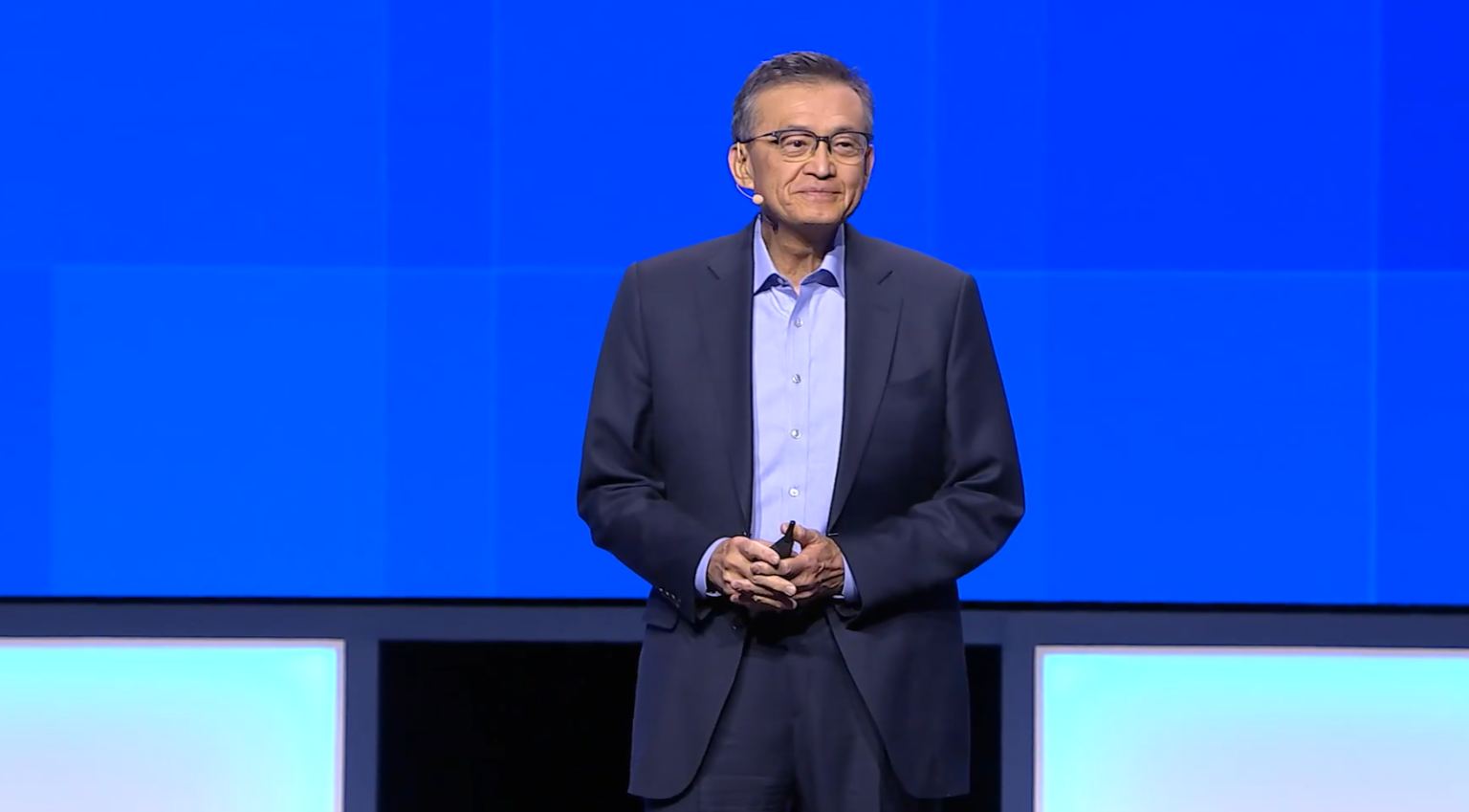

Intel CEO Lip-Bu Tan announced at CES 2026 that the company is “going big time into 14A,” signaling confidence in the chipmaker’s next manufacturing process and hinting that external customers have signed on. The statement marks a critical moment for Intel’s foundry business, which needs outside clients to justify the massive costs of developing cutting-edge chip technology.
14A is expected to be production-ready in 2027, with early versions of the process design kit coming to external customers this year. Tan’s phrasing—”serve the customer well”—suggests Intel has landed at least one major external client beyond its own products division.
The 14A node will introduce Intel’s 2nd Generation RibbonFET gate-all-around transistors and 2nd Gen PowerDirect, which connects power directly to source and drain of transistors. This improves power delivery and reduces issues like voltage droop and clock stretching. The process also includes Turbo Cells that boost speed without major area or power trade-offs.
But the technology details matter less than the business reality: With 18A, Intel failed to land a single major external client demanding decent volumes. While Microsoft and the U.S. Department of Defense will use 18A, only Intel will consume significant volumes.
For 14A to succeed financially, Intel needs external customers with substantial volume requirements. Otherwise, the company won’t recover its development investments.
Intel faces a unique challenge. The company’s current capital expenditure plan doesn’t include investments in 14A capacity for third-party clients. Even if Intel wins a major customer like Apple, AMD, Nvidia, or Qualcomm, it will need to invest in additional manufacturing capacity first.
“When we win a customer for Intel 14A, we will have to layer on expenses well ahead of getting revenue,” said John Pitzer, corporate vice president of corporate planning and investor relations, in November.
Traditional contract chipmakers discuss upcoming processes with customers before capacity exists and add manufacturing capability only after commitments are secured. Intel operates differently because its own Products Group is the main customer, so capacity gets built for internal demand first.
This creates a catch-22. Offering a process without available capacity risks undermining Intel’s foundry ambitions. But building expensive fabs that sit idle waiting for customers isn’t financially viable either. Competitors like TSMC and Samsung typically expand with multiple anchor customers already committed.
Lip-Bu Tan became Intel CEO in March 2025 after the surprise ouster of former CEO Pat Gelsinger in late 2024. Tan immediately slashed costs, laid off employees, and scrutinized entire business lines with a “no more blank checks” approach.
Intel’s foundry strategy became more disciplined under Tan, with investments in upcoming processes tied to confirmed customer commitments. The escalating costs of developing leading-edge manufacturing nodes means Intel needs considerable external volume to justify fully developing advanced processes.
The company showed some momentum in 2025. Apple is reportedly considering using a version of Intel’s 18A process for some M-series processors in 2027. Nvidia made a $5 billion investment, with plans to develop data center and PC CPUs incorporating technologies from both companies.
Intel stock soared 84% in 2025, though it still sits well below its all-time high.
At CES 2026, Tan declared Intel “over-delivered” on its 18A platform, meeting its commitment to ship first 18A products by end of 2025. The company launched Panther Lake processors on 18A and is ramping production across all three Core Ultra Series 3 chip packages.
The Department of Defense approved Intel Foundry’s 18A process for manufacturing defense system prototypes in April 2024. In January 2025, Intel Foundry added Trusted Semiconductor Solutions and Reliable MicroSystems as defense clients for the RAMP-C project.
Microsoft chose Intel’s 18A process for custom processors, providing crucial validation. But these wins haven’t yet translated into the high-volume external business Intel needs to make its foundry profitable.
For 14A to succeed where 18A struggled, Intel must secure volume commitments before production ramps. The company needs customers willing to bet on Intel’s manufacturing at a time when TSMC dominates the foundry market with 64% market share.
Tan’s comments at CES suggest this might be happening. His specific mention of serving “the customer” rather than “customers” could indicate at least one major client has signed on for 14A. But Intel hasn’t confirmed any external orders.
The technical capabilities are there. Intel 18A yields are progressing predictably, and Fab 52 in Arizona is fully operational. The company has shown it can execute on process technology after years of delays.
The question is whether Intel can translate technical execution into business wins. Tan secured an $8.9 billion equity investment from the U.S. government and a $2 billion investment from SoftBank in 2025. These deals provide financial stability while Intel proves its foundry model.
Intel is positioning itself as a critical part of U.S. semiconductor independence. The U.S. Department of Commerce awarded Intel $7.86 billion under the CHIPS Act, the largest award under the legislation.
In January 2026, President Trump met with CEO Tan at the White House, confirming Intel as primary recipient of an expanded Advanced Manufacturing Investment Credit expected to rise from 25% to 35%. The administration is positioning Intel as the cornerstone of domestic semiconductor strategy.
This government support creates a floor for Intel but doesn’t guarantee commercial success. The company still needs to win customers based on technology, manufacturing capability, cost, and reliability.
At CES 2026, Intel announced development of a dedicated gaming processor alongside a broader gaming platform, showing efforts to diversify beyond traditional markets. The company is fighting on multiple fronts, competing for foundry customers while also developing competitive products across PC, server, and gaming segments.
14A won’t reach production until 2027, giving Intel time to secure customers but also creating a window where competitors can advance. TSMC is targeting 2nm production in the same timeframe. Samsung is also developing comparable processes.
Intel needs to convince chip designers that its foundry services match or exceed what they can get from established Asian manufacturers. That’s a tough sell when Intel’s own history includes years of manufacturing delays that allowed competitors to pull ahead.
Intel doesn’t plan significant 18A capacity increases in 2026, with CFO David Zinsner saying the company will add capacity only with commitments from internal or external customers. Intel expects 18A supply to peak by end of the decade.
This disciplined approach reflects Tan’s “no blank checks” philosophy but also means Intel can’t afford to build 14A capacity speculatively. Customer commitments must come first.
If Intel’s confidence in 14A proves justified and the company has indeed secured external customers with volume commitments, it would mark a turning point for Intel Foundry. One major win could attract others as chip designers gain confidence in Intel’s ability to manufacture leading-edge chips reliably.
Failure would raise serious questions about Intel’s foundry strategy. The company previously stated that going forward, investment in 14A would be based on confirmed customer commitments. If those commitments don’t materialize at sufficient scale, Intel might need to reconsider how much to invest in future process nodes.
The stakes extend beyond Intel. U.S. semiconductor independence depends partly on having a domestic foundry capable of manufacturing advanced chips. Intel is the only American company attempting to compete at the leading edge of chip manufacturing.
The U.S. share of global semiconductor manufacturing fell from 37% in 1990 to 12% in 2020. Intel’s foundry success or failure will significantly impact whether that trend reverses.
Tan’s “going big time into 14A” statement is either a sign of secured commitments or optimistic positioning. Given the disciplined approach he’s brought to Intel, the former seems more likely. But until Intel announces specific customer wins with volume details, the foundry business remains more promise than proof.
2026 is critical for Intel. Panther Lake chips began appearing in laptops in January, with new server CPUs on 18A expected later this year. These products will demonstrate whether Intel’s manufacturing matches its claims. External customers will watch closely before committing their own chips to Intel’s fabs.
For now, Intel is betting that 14A will succeed where 18A struggled, by securing the external volume needed to make advanced chip manufacturing profitable. The company has the technology, government support, and manufacturing capability. What it still needs is customers willing to trust Intel with their most important chips.

 English
  简体中文
简体中文  Čeština
  Deutsch (Sie)
  Français


