

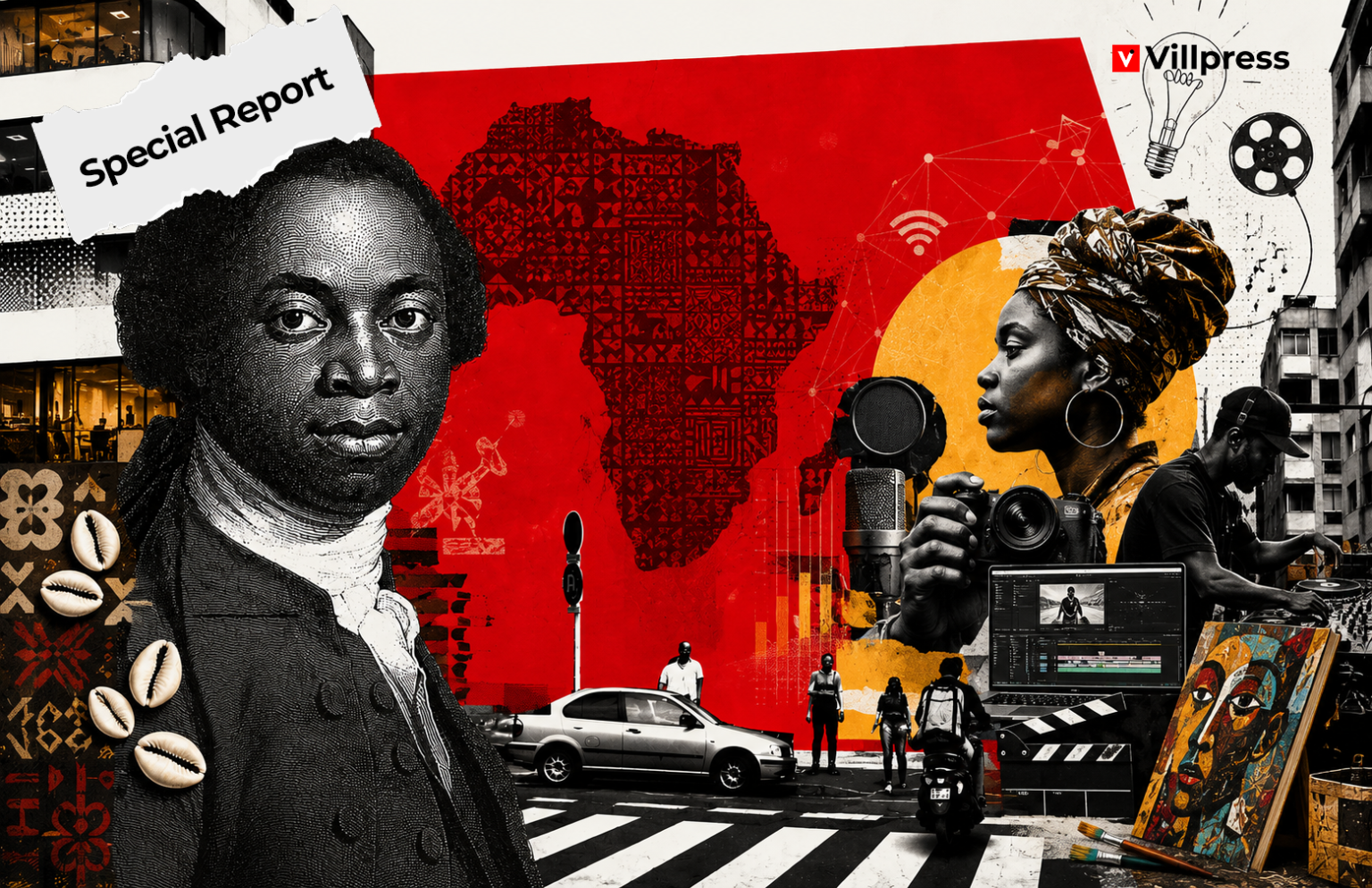

Africa has achieved unprecedented global visibility of its creative output. Afrobeats dominates streaming platforms. Nollywood reaches international audiences. African fashion patterns infiltrate global luxury markets.
Yet this visibility masks a structural economic reality: African creators capture a fraction of the value their work generates globally.
The core problem is not access to distribution. It is the absence of:
- Economic protection mechanisms that ensure fair revenue distribution from global platforms
- Legal infrastructure designed for modern creative assets (patterns, digital aesthetics, cultural expressions)
- Institutional power to negotiate with multinational platforms on equal terms
- Cultural sovereignty frameworks that prevent uncompensated appropriation
This analysis examines the systems of value extraction currently in place and proposes a strategic framework for African creative protection anchored in legal reform, platform accountability, technological infrastructure, and continental coordination.
1. Global Distribution Without Economic Parity
Music: Billions of Streams, Minimal Returns
The numbers appear impressive: Afrobeats generated an estimated $87 million in global streaming revenue in 2022, with Spotify reporting over 120 billion streams of African music annually (as of 2023).¹
Major artists, Wizkid, Burna Boy, Rema, achieve chart placement across North America and Europe. Yet they receive streaming royalties that average $0.003-0.004 per stream, identical to Western artists despite lower revenue capture for platforms in African markets.
Global reach, local-market compensation.
The Math: A song with 100 million streams generates approximately $300,000-400,000 in total platform payout. But that money is divided among: the record label (typically 60-70%), distributors (10-15%), and the artist directly (15-30% if signed to major label; 50-70% if independent). An independent African artist with 100 million streams might see $15,000-$28,000 in direct income, less than a mid-level US corporate employee’s annual salary.
Film: Nollywood Produces, Hollywood Distributes
Nollywood produces approximately 2,500 films annually, making it the second-largest film industry by volume globally.³
Netflix’s partnership with African production companies has increased accessibility. Yet revenue-sharing agreements are not publicly standardized, and production budgets for African content remain dramatically lower than equivalent productions. A Netflix Nollywood original might have a $1-5M budget; an American series receives $10-50M for equivalent audience reach.
Fashion: Patterns Appropriate, Designers Disappear
African textile patterns and aesthetic systems (Aso-oke, Ankara, Adire, Kente, Bogolan) have achieved global luxury brand integration.
But documentation of pattern appropriation without attribution or compensation is common across European and North American fashion houses.
For example, A European textile manufacturer can legally produce Ankara-style fabrics without:
- Registering them as designs
- Attributing them to West African textile traditions
- Compensating any creator
The manufacturer’s “original” design is protected. The African pattern tradition is not.
Views in Billions, Earnings in Thousands
YouTube creators from Nigeria, Kenya, Ghana, and South Africa have attracted billions of views. YouTube’s monetization thresholds ($100 minimum earnings before payout) and payment delays create cash-flow barriers for creators in markets with limited financial infrastructure.
A creator with 50 million views might earn $5,000-15,000 after platform cuts, a fraction of what US creators with equivalent engagement earn.
2. Visibility ≠ Economic Value
The Visibility-to-Value Gap
| Metric | Reality |
|---|---|
| Global streaming plays | Billions annually |
| Artist revenue per stream | $0.003-0.004 |
| Platform revenue capture | 65-70% of total transactions |
| Creator equity in platforms | <1% |
| Transparent payment models | Limited to major Western artists |
Three Mechanisms
1. Geographic Revenue Arbitrage
Platforms pay based on viewer/listener geography, not creator geography. A Nigerian creator with 80% Nigerian audience receives lower total payout than a US creator with equivalent engagement, because the Nigerian market CPM (cost per thousand views) is lower.
This directly punishes creators serving their home markets.
2. Distributor Intermediation
Most African independent artists access platforms through third-party distributors (DistroKid, CD Baby, TuneCore). These distributors take 15-30% cut for “handling” uploads and payments—creating a value leak:
Artist → Distributor (15-30%) → Platform → Artist
3. Lack of Collective Bargaining Power
Western music industries have strong publishing organizations (ASCAP, BMI, SACEM in France) that negotiate collectively with platforms. African countries lack equivalent structures. Individual creators have no leverage to negotiate payment terms.
Compare:
- ASCAP (US): 2.8 million members, negotiates payment rates with Spotify
- African Collective Organizations: Underfunded, minimal negotiating power, limited reach
3. The Value Chain: Where Money Goes
Spotify’s Payment Model
Spotify collects subscription fees and advertising revenue. Here’s where it flows:
- Spotify keeps 30-35% as platform fee
- Rights holders receive 65-70%, distributed as:
- Record labels: 60-70%
- Music publishers: 15-20%
- Distributors: 5-10%
- Artists directly: 5-15% (if independent; 0-5% if label-signed)
African music streams represent 6-8% of global streams but do not receive proportional revenue due to payment concentration in high-income markets. A stream from Nigeria is worth less than a stream from Norway to the platform, because the underlying subscription/ad revenue is lower.
YouTube’s Revenue Split
- YouTube keeps: 45% of revenue
- Creator receives: 55% of advertising revenue
- Catch: Requires 1,000 subscribers + 4,000 watch hours to monetize
- Additional penalties: Content demonetized without transparent criteria (African creators report asymmetric demonetization)
TikTok Creator Fund
- Creator earns: $0.02-0.04 per 1,000 views
- Comparison: YouTube averages $2-5 per 1,000 views
- Concentration: Highly concentrated in English-language, high-income-market content
- Result: African creators avoid TikTok as primary income source
4. Intellectual Property and Legal Gaps
What Current Law Does NOT Protect
Fashion Patterns and Textiles
Aso-oke, Ankara, Adire, Kente, and Bogolan are culturally and economically significant. Current IP law protects specific registered designs but does not protect:
- General pattern types (e.g., “traditional indigo resist-dye”)
- Cultural origin attribution
- Collective rights of pattern originators
Indigenous Cultural Expressions
Oral traditions, folklore, and cultural knowledge exist outside copyright frameworks. No global legal mechanism protects collective cultural ownership.
Digital Aesthetics and “Style”
The Afrobeats sound, the Nollywood editing style, the aesthetic of African digital content creation—these are too general to constitute protectable “works” under current law. They can be freely imitated without legal consequence.
5. Colonial-Era Extraction
Context: African creative exploitation is not new.
During colonial expansion, African cultural assets, textiles, patterns, aesthetics, and symbolic systems—were frequently extracted, copied, or reinterpreted in Europe without equitable ownership or compensation.
Documented examples:
- British textile manufacturers (19th-20th centuries) produced “African-inspired” fabrics marketed as European innovations
- French colonial industries commercialized West African indigo dye techniques under French branding
- Pattern motifs, color systems, and weaving techniques were copied without acknowledging African origins
This established a precedent: African creativity is globally valuable, but African creators are not required to capture that value.
6. Case Studies
Case Study 1: High Fashion and African Textiles
European and American luxury brands have incorporated Ankara-style prints into collections without crediting or compensating African textile traditions or contemporary designers.
The Economics:
- Wholesale Ankara fabric: $5/meter
- Luxury brand markup: Garment sold for $300+
- Portion returning to pattern originators: $0
The Marketing: “Inspired by African aesthetics” (vague), without crediting or compensating specific designers or traditions.
Case Study 2: Afrobeats Production Techniques
Afrobeats samples and production techniques are globally imitated by non-African producers. No licensing mechanism exists for the “Afrobeats sound.”
Western producers and DJs create music in Afrobeats style, achieving chart success, without acknowledging or compensating genre originators.
Case Study 3: Dance and Digital Trends
TikTok trends originating in African creator communities are often popularized by non-African influencers with larger followings.
The Reality:
- Original creator receives stream revenue (if the music is theirs)
- Non-African influencer receives brand deals and sponsorships for popularizing the trend
- The trend becomes “global” without cultural origin attribution
7. What “Protection” Should Actually Mean
Protection is not limited to copyright law. It encompasses multiple interlocking systems:
Economic Protection
Fair Revenue Distribution Models
- Platforms should pay on transactional basis (not pool-share) for creators from lower-income markets
- Creator payouts should reflect value generated, not geographic arbitrage
- Transparent payment models: creators can audit and verify payouts
Collective Bargaining
- African music organizations, film guilds, and design collectives negotiate collectively with platforms
- Similar to ASCAP/BMI model in US: creators join collective, which negotiates rates on their behalf
- Creates negotiation power that individual creators lack
Legal Protection
Stronger IP Enforcement
- African copyright offices funded adequately to handle digital infringement
- Criminal penalties for commercial-scale IP violation
- Training for judiciary on IP law and digital piracy
Cross-Border Cooperation
- Regional IP courts or dispute resolution mechanisms (African Union level)
- Mutual recognition of copyright across African countries
- Shared enforcement infrastructure
Design and Pattern Protection
- Legal frameworks protecting textile patterns, color systems, and aesthetic design elements
- Recognition of collective pattern ownership (communities, not just individual designers)
- Attribution requirements (if design draws from cultural tradition, origin must be credited)
Cultural Protection
Attribution Systems
- Requirement: when cultural expressions are used globally, origin is credited
- Registry of African cultural patterns, styles, and knowledge (with creator/community attribution)
- Metadata standards embedding cultural origin information in digital works
“African” Designation Standards
- Similar to “Champagne” (can only be labeled as such if from Champagne region)
- Products using African cultural forms must acknowledge and credit origin
- Creates legal distinction between cultural exchange and cultural appropriation
Technological Protection
Blockchain-Based Ownership Tracking
- Immutable record of creative work ownership and rights history
- Smart contracts automatically distributing royalties when work is used
- Transparent ledger showing who benefits and in what proportion
Smart Contracts for Royalties
- Automated payment distribution when creative work is licensed or used
- Eliminates intermediary delays
- Creator retains direct relationship with revenue stream
8. What Works Elsewhere
South Korea: Industrial Policy + Distribution Control
What they did:
- Government designated cultural exports as strategic industry (1990s)
- Invested in infrastructure: training, studios, distribution networks
- Companies (SM Entertainment, YG Entertainment, JYP) developed vertical integration: artist development → production → global distribution
- Negotiated with global platforms from position of power
Result: K-pop artists and companies retain 30-50% of global value (vs. 10-20% for African creators)
What Africa can adapt: Industrial policy coordination at continental level; investment in creator training and vertically integrated distribution
United States: Strong Enforcement + Collective Negotiation
What they do:
- Aggressive copyright enforcement (criminal penalties, statutory damages up to $150,000 per infringement)
- Powerful music publishing organizations (ASCAP, BMI, SESAC) negotiate with platforms
- Market dominance ensures high payouts (US represents 35-40% of global music revenue)
What Africa can adapt: Stronger enforcement mechanisms; collective negotiation structures
Europe: Regulatory Oversight + Creator Support
What they do:
- Digital Services Tax levies 3% on large platform revenue
- Directive on Copyright mandates link tax (platforms must pay for news snippets)
- Tax revenue redirected to creator support
- Negotiation from regulatory power position (large market + regulatory authority)
What Africa can adapt: Regulatory oversight of platform payment practices; taxation of platform revenue to fund creator infrastructure
9. Strategic Framework: What Needs to Happen
Tier 1: Legal and Policy Harmonization (1-3 Years)
African Union Continental IP Framework
- Harmonized copyright and design protection standards
- Mutual recognition of copyright registration across Africa
- Regional dispute resolution mechanism for IP disputes
Creator Protection Legislation
- Minimum standards for platform transparency (all African governments require payment disclosure)
- Design protection for textile patterns and cultural aesthetics
- Criminal penalties for commercial-scale infringement
Tier 2: Institutional Infrastructure (2-5 Years)
African Creative Rights Organization (Continental Level)
- Modeled on ASCAP/BMI: collective licensing organization for music, expandable to digital content
- Negotiates payment rates with platforms on behalf of African creators
- Collects royalties and distributes to creators
African Creator Fund
- Capitalized by: platform tax (small % of revenue in Africa) + government funding + philanthropic investment
- Funds: training programs, infrastructure development, creator grants
- Estimated annual budget: $100-300M
African-Owned Distribution Platforms
- Cooperative platform or consortium aggregating African content
- Negotiates with global platforms from position of coordinated power
- Potentially offers African-first distribution options
Tier 3: Technology (3-7 Years)
African Creator Registry (blockchain or centralized database)
- Creator identity and ownership claims
- Cultural origin and tradition attribution
- Rights metadata and payment splits
- Accessible to platforms and used to verify payments
Smart Contract Royalty Distribution
- Platform integrations that automatically distribute royalties to creators
- Eliminates intermediary delays
- Real-time earnings visibility
Tier 4: Sectoral Deep Protections (5-10 Years)
Music: Collective licensing, micro-royalty systems, real-time earnings dashboards
Film: Co-production equity stakes, distribution guarantees, revenue transparency
Fashion: Pattern registration system, design royalty collection, cultural attribution enforcement
Digital Content: Creator unions with negotiation power, algorithmic transparency, demonetization appeals
10. Leverage Points for Platform Negotiation
Tax and Regulatory Access
African governments collectively require payment transparency as condition of market access. Digital Services Tax applied to platform revenues in Africa, with revenue used to fund creator infrastructure.
Creator Union Cooperation
African creators coordinate around non-payment or unfair terms. Collective action to lower engagement on underperforming platforms. Public campaigns highlighting payment inequities.
Legislation and Enforcement
Copyright office enforcement actions against infringement. Mandatory licensing requirements. Criminal prosecution for commercial infringement.
11. Olaudah Equiano and Creative Ownership
Olaudah Equiano’s 1789 Interesting Narrative of the Life of Olaudah Equiano established principles that remain central to creative protection today.
Equiano was an 18th-century African author who:
- Controlled his own narrative (wrote and published his autobiography in his own voice)
- Asserted identity and agency (work was act of self-definition against systems denying African personhood)
- Created economic value (autobiography was commercially successful; Equiano benefited from sales)
- Established precedent (demonstrated African authors could reach European audiences and retain authority)
What makes it more relevant now: Modern creative protection extends Equiano’s achievement from the 18th-century written word to 21st-century music, film, design, and digital content.
Equiano established three principles:
- Identity ownership: The right to define oneself rather than be defined by others
- Narrative authority: The right to tell one’s own story in one’s own way
- Economic benefit: Direct link between creative work and income for the creator
These are precisely what is missing in contemporary African creative economy. Protection means extending them to all creators, not just exceptional individuals.
12. What Is The Bigger Risks If Nothing Changes
Continued Economic Marginalization
African creative workers remain in lower-income brackets despite global reach. Brain drain accelerates (talented creators relocate to Western markets where compensation is higher).
Cultural Commodification Without Ownership
African cultural forms become global consumer goods available without payment or attribution. Knowledge of cultural origins erases from younger generations’ understanding.
Platform Dependence
African creators remain dependent on Western-controlled algorithms for visibility. Platforms can unilaterally change payment models or policies without recourse.
Infrastructure Collapse
Without coordinated investment, African creative infrastructure remains underdeveloped. Training, equipment, distribution facilities lag behind Western and Asian counterparts.
13. The Mindset Shifts Required
1: Ownership Culture Over Consumer Culture
Current reality: African creators often view their work as “made for global consumption” (built for Western audiences)
Required shift: Creators should view work as African-origin intellectual property that is globally distributed
Implies: Creators retain decision-making authority; local markets are primary, global secondary; cultural authenticity is economic asset
2: Institutional Power Over Individual Heroics
Current reality: Success is narrated as individual creator achievement (“artist makes it globally”)
Required shift: Success depends on institutional infrastructure that enables negotiation, protection, and value capture
Implies: Creator unions and collectives are necessary; negotiation happens at institutional level; solidarity becomes economic strategy
3: Long-Term Value Over Immediate Visibility
Current reality: Creators optimize for “going viral” and immediate streaming income
Required shift: Creators optimize for long-term ownership, rights retention, and equity
Implies: Creators retain publishing rights; licensing revenue prioritized over streaming payouts; collectives build wealth
4: Continental Coordination Over Country Fragmentation
Current reality: Each African country pursues independent policy; no coordination
Required shift: Creative economy is continental asset; protection is collective responsibility
Implies: AU coordinates standards; platforms cannot play countries against each other; benefits flow across borders
5: Structural Power Over Ethical Appeals
Current reality: Activism relies on moral arguments (“platforms should be fair”)
Required shift: Protection built through institutional power, not appeals to fairness
Implies: African countries legislate transparency; creator collectives have leverage; economic incentives are restructured
14. What Success Looks Like: Vision for 2045
Economic Indicators
- African creators capture 25-35% of revenue from globally distributed works (vs. current 10-15%)
- Per-creator income gap with Western creators: within 20% (vs. current 40-60% gap)
- Creator earnings from African markets: majority of income (not Western-market dependent)
Institutional Indicators
- Continental African Creative Rights Organization operates across all major sectors
- Smart contract infrastructure routes royalties to creators within days (not months)
- Creator registries and origin attribution are industry standard
Legal Indicators
- Copyright enforcement proceedings: <6 months to resolution
- Design and pattern protection standardized across Africa
- Criminal penalties for commercial IP theft actively prosecuted
Cultural Indicators
- Attribution of African cultural origins: standard practice in global media and commerce
- Creators control narrative around their work (not platforms, labels, or Western media)
- Knowledge of African creative traditions transmitted to next generation
Technological Indicators
- African creative infrastructure (training, production, distribution) rivals Western counterparts
- Blockchain and smart contracts enable transparent creator-controlled revenue distribution
- African-owned platforms compete with Western platforms in creator experience
15. Remaining Challenges
What Won’t Be Solved by Protection Alone
Market Size Limitations: African markets are smaller than Western markets. Protection can equalize share of revenue but cannot expand overall market size.
Technological Dependency: Africa depends on Western technology infrastructure (cloud, payments, devices). This creates ongoing vulnerability to policy changes.
Capital Constraints: Competitive creative infrastructure requires sustained capital investment. Dependency on external funding remains.
Global Enforcement Limits: African protection is effective in Africa. Enforcement in Europe, North America, and Asia requires cooperation from those jurisdictions.
The Work Ahead
Africa has achieved unprecedented global visibility for its creators. Visibility without power is exploitation with an audience.
The task is to transform:
- Visibility into ownership
- Access into control
- Influence into wealth
This requires four parallel movements:
- Legal: Strengthen IP protection; enable enforcement; protect forms of creativity that current law ignores
- Institutional: Build African-led organizations that negotiate on creators’ behalf; establish collective power
- Technological: Deploy systems that make transparent value distribution the default
- Cultural: Shift from celebrating individual creator success to building institutional infrastructure
None of these is novel. South Korea implemented industrial policy for creative exports. The US built copyright law with enforcement. Europe developed regulatory oversight. Africa must adapt these models.
What is required is sustained commitment, continental coordination, and political will to prioritize creative sector economics.
The alternative is clear: African creativity will remain globally distributed, perpetually undercompensated, and controlled by external institutions. The pattern established in the colonial era, the extraction of African creativity without compensation for African creators, will persist, merely modernized through digital platforms.
Protecting the African creative economy is not charity. It is realigning economic incentives so that global consumption of African creativity generates wealth in Africa, controlled by Africans, for benefit of African creators and communities.
That is the work that must begin now.
Sources & References
¹ Spotify Global: Streaming platform data reports, 2023. Spotify reports 120+ billion streams of African music annually.
² Streaming Payment Analysis: Music industry reports compiled by MIDiA Research and similar bodies document per-stream rates of $0.003-0.004 across platforms. See: Spotify Transparency Report (2023), Apple Music Creator Guidelines.
³ Nollywood Production Volume: UNESCO and African Film Industry reports document Nigeria as second-largest film industry by volume (approximately 2,500 productions annually).
⁴ Platform Revenue Distribution: Analysis based on publicly disclosed platform payout percentages from Spotify, YouTube Creator Program, and TikTok Creator Fund documentation.
⁵ K-pop Economic Model: South Korean government cultural exports data; McKinsey reports on Korean creative industries (2021-2023); industry analysis by Korean Film Council.
⁶ Copyright Enforcement Data: Comparative analysis of enforcement capacity across African countries documented by World Intellectual Property Organization (WIPO) and African Regional Intellectual Property Organization (ARIPO).
⁷ Colonial-Era Pattern Extraction: Documented in postcolonial textile studies. See: academic work on European textile industries and their relationship to African pattern appropriation (19th-20th centuries).
⁸ Olaudah Equiano Reference: The Interesting Narrative of the Life of Olaudah Equiano (1789). Established in postcolonial scholarship as foundational African autobiographical narrative and assertion of creative and narrative authority.
Further Reading & Research Recommendations
- WIPO Studies on IP in Africa: www.wipo.int (creative economy and developing countries)
- African Regional Intellectual Property Organization (ARIPO): www.aripo.org
- African Union Agenda 2063 Cultural Economy: www.au.int
- Music Industry Economics: MIDiA Research reports on streaming economics
- Platform Economics: Academic studies on digital platform labor and value extraction
Click To ReadAbout This Analysis
Date: May 2026
Methodology: Evidence-based analysis using publicly available platform data, industry reports, academic research, and comparative policy frameworks from South Korea, United States, and European Union creative economy protections.
Scope: Focuses on commercial music, film, fashion, and digital content sectors with global platform distribution.
Not included: Detailed country-by-country IP law comparison (varies significantly); blockchain technology detailed specifications; specific implementation budgets (require detailed fiscal analysis).
Recommended next steps: Commission country-specific IP law audits; conduct platform negotiation simulation workshops; establish working groups on each Tier of the strategic framework.
For professional inquiries, implementation support, or research collaboration, contact us at our editorial office


 English
  简体中文
简体中文  Čeština
  Deutsch (Sie)
  Français


