


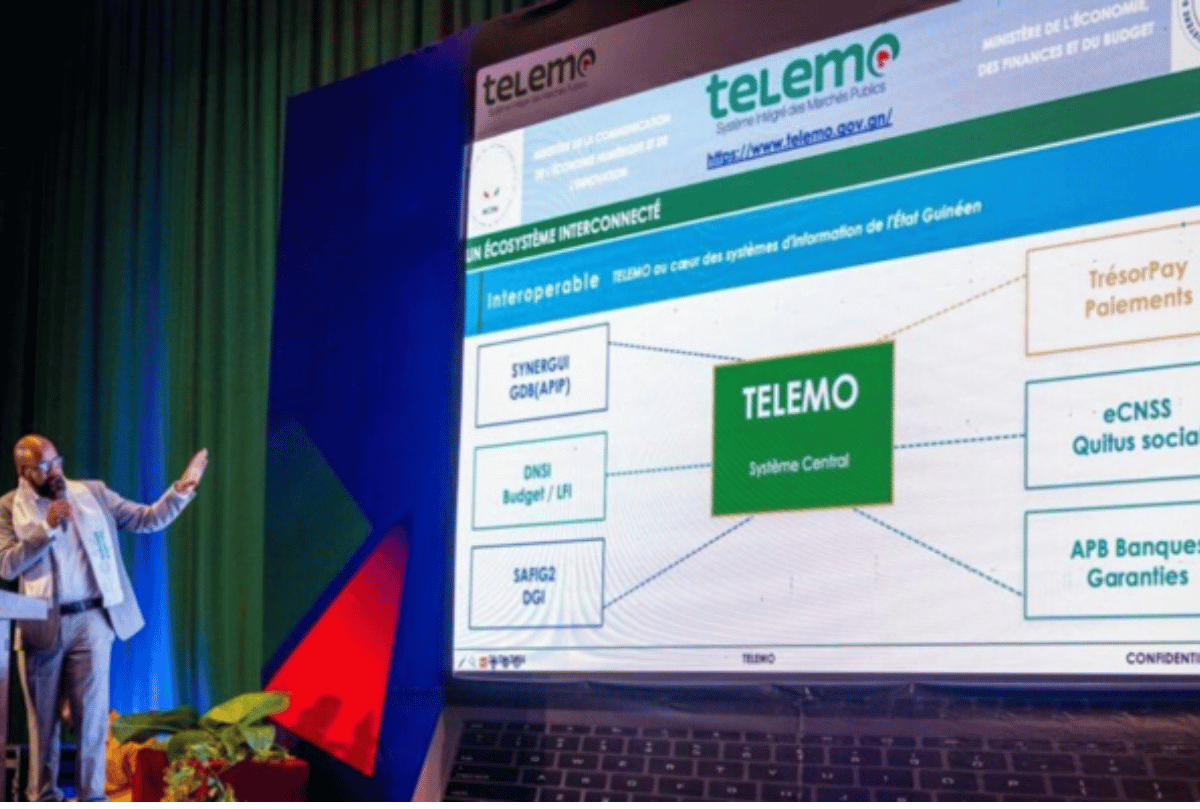

Guinea has officially launched TELEMO, its national e-procurement platform, marking a significant step in modernising public sector purchasing and improving governance through digitalisation.
The platform was unveiled in Conakry on May 22, 2026, by senior government officials, including Djiba Diakité, Minister and Chief of Staff to the Presidency, who represented the Head of State. TELEMO aims to fully automate and digitise the entire public procurement cycle from planning and tender publication to bid submission, evaluation, contract management, and payment.
Developed through a South-South partnership with Rwanda, TELEMO was designed “by Africans, for Africans.” Work on the platform began in September 2023 as part of efforts to move away from inefficient paper-based systems that were prone to delays, opacity, and corruption risks.
TELEMO centralises all procurement activities in one secure online system. Public institutions can now handle procurement planning, publish calls for tenders, receive and evaluate bids electronically, manage contracts, and generate real-time reports. Suppliers and businesses can register, access tender opportunities, and submit proposals digitally from anywhere in the country.
The government expects the platform to deliver greater transparency, reduce corruption risks, speed up procurement processes, and improve value for money in public spending. It also aims to make it easier for local businesses, particularly SMEs, to participate in government contracts.
This initiative forms part of Guinea’s broader digital transformation agenda, aligned with the Simandou 2040 vision, which emphasises technology as a driver of economic diversification, efficiency, and accountability.
The Rwanda-engineered solution highlights growing intra-African technical cooperation in digital governance. Several African countries are now adopting or developing similar e-procurement systems to strengthen public financial management and attract investment.
For Guinea, TELEMO addresses long-standing challenges in public procurement, including lengthy approval processes and limited access for private sector participants. Successful implementation could improve the business environment, support local entrepreneurship, and enhance public trust in government spending.
As the platform rolls out nationwide, authorities are conducting training sessions for procurement officials and suppliers to ensure smooth adoption. The coming months will be critical in measuring its impact on efficiency, cost savings, and transparency in Guinea’s public sector operations.


 English
  简体中文
简体中文  Čeština
  Deutsch (Sie)
  Français


