




The Global Africa Business Initiative (GABI) is intensifying efforts on its newly launched Digital Transformation and Healthcare Action Pathways, aiming to convert high-level commitments into scalable, financed projects that address longstanding bottlenecks in Africa’s growth agenda.
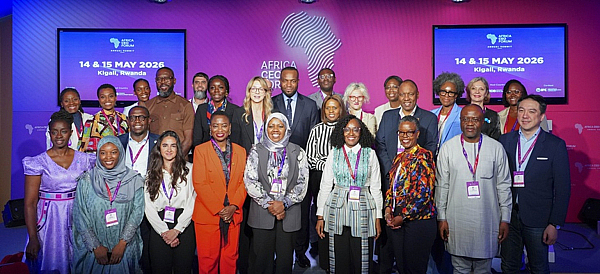
The push gained concrete momentum during a GABI Solutions Lab held on the sidelines of the Africa CEO Forum in Kigali on May 15. Senior executives from across public and private sectors gathered to tackle execution gaps particularly around financing, scaling proven technologies, and building the absorptive capacity needed for digital tools to deliver broad economic impact.
“Africa does not face a shortage of ideas, but a significant gap in execution and the financing required to scale solutions,” said Sanda Ojiambo, Assistant Secretary-General and CEO of the United Nations Global Compact. The session focused on developing actionable work plans, structuring bankable partnerships, and identifying viable financing pathways for immediate advancement.
The two Action Pathways were formally introduced at GABI’s Unstoppable Africa forum in New York last September. The Digital Transformation Pathway targets expanded internet access, modernization of government services, support for small businesses through technology and finance, and responsible deployment of AI and data systems. The Healthcare Pathway focuses on leveraging digital tools to broaden medical access, fortify regional supply chains, attract investment into health systems, and expand workforce capabilities.
In Kigali, participants treated digital health as a practical test case for the larger challenge of channeling private capital into public-interest infrastructure. Discussions centered on accelerating investment in digital public infrastructure (DPI) including connectivity, interoperable systems, skills development, and governance frameworks to position AI as a genuine multiplier for development rather than another source of divergence.
Caitlin Burton, CEO of Rwanda-headquartered Zipline Africa, stressed the need to break out of pilot-project cycles. “Across much of Africa, adoption is still moving at the pace of traditional aid cycles… We need financing models, incentives, accountability mechanisms, and partnerships that can collapse the adoption timeline for proven infrastructure from decades to years,” she said.
Kate Kallot, founder and CEO of Kenyan data infrastructure firm Amini, highlighted persistent data and capability gaps. “The lack of data is a symptom of a much larger digital divide… The challenge now is how to deploy financing models for sovereign digital infrastructure at scale, across multiple markets,” Kallot noted.
Nigeria’s Minister of Communications and Digital Economy, Bosun Tijani, framed the stakes clearly: success hinges not on willingness to adopt AI, but on building the underlying connectivity, skills, and governance to absorb and apply it effectively.
GABI, hosted by the UN Global Compact, positions itself as a platform that places the private sector at the center of Africa’s economic narrative shifting the conversation from “doing business in Africa” to “doing business with Africa.” Launched in 2022, it has grown into a convening force that draws heads of state, ministers, corporate leaders, and investors.
The timing of this acceleration is significant. Africa’s digital economy holds substantial promise, yet infrastructure deficits and financing hurdles remain acute. Initiatives such as the World Bank’s Digital Economy for Africa (DE4A) aim for universal digital enablement by 2030, aligning with the African Union’s Digital Transformation Strategy. However, translating policy ambition into widespread impact requires precisely the kind of cross-sector coordination GABI is attempting to foster.
The focus on digital public infrastructure reflects a maturing understanding: foundational elements like digital identity, payments, and data systems are prerequisites for broader economic formalization, service delivery, and private sector innovation. In health, where digital tools can dramatically improve supply chains and access in underserved areas, the interplay between technology and delivery systems is especially pronounced.
GABI’s next major milestone is Unstoppable Africa 2026, scheduled for September in New York. Organizers intend to build on the Kigali outcomes, showcasing progress on the Action Pathways and attracting additional commitments from investors and governments.
For a continent whose working-age population is expanding rapidly, the success of these pathways could influence everything from job creation and service delivery to competitiveness in global value chains. The real test, as participants in Kigali repeatedly emphasized, will be execution at speed and at scale.
Observers will watch closely whether the Solutions Lab model intensive, closed-door collaboration among decision-makers can produce the tangible pipelines of investable projects that Africa’s development ambitions require. In an era of constrained global aid and heightened scrutiny on returns, bridging the gap between potential and delivery has never been more critical.


 English
  简体中文
简体中文  Čeština
  Deutsch (Sie)
  Français


