

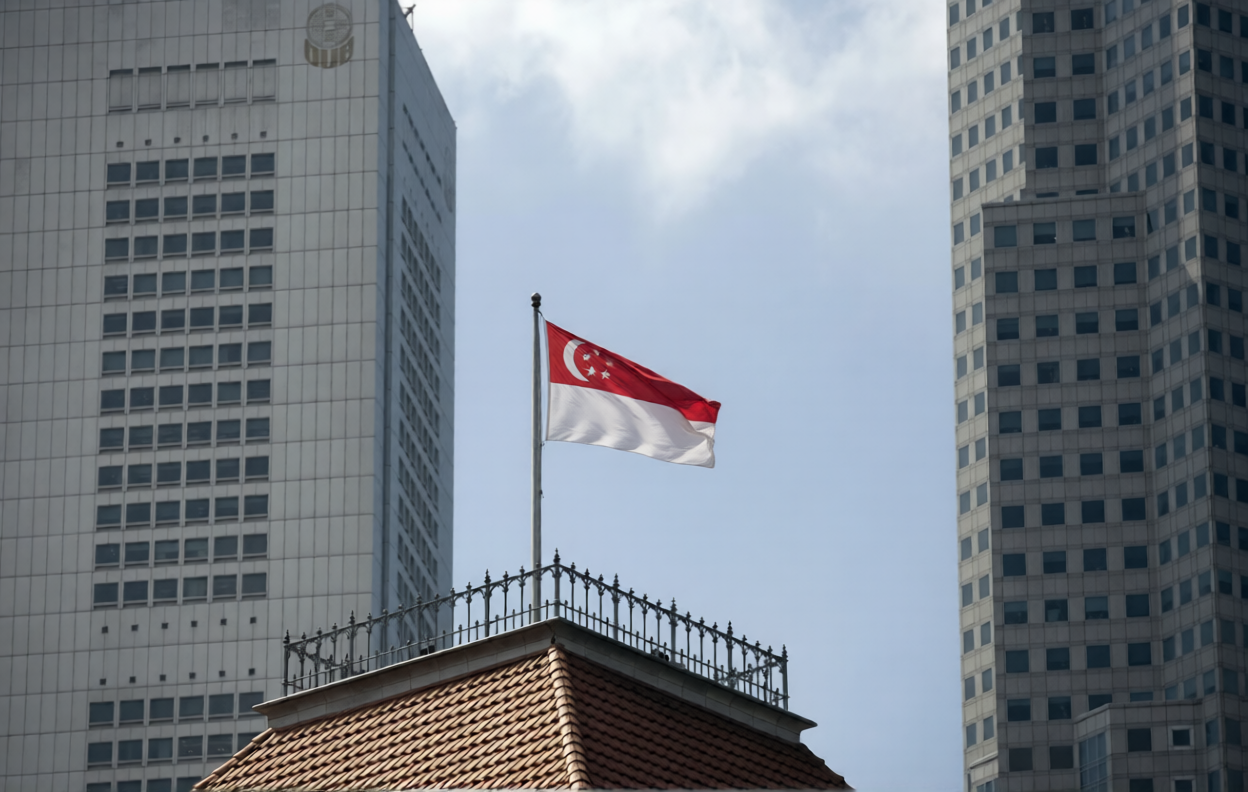
Singapore has confirmed that hackers linked to China-backed cyber group Salt Typhoon gained access to critical systems across all four of the country’s major telecommunications operators, marking a serious escalation in state-sponsored cyber activity targeting national infrastructure. While officials insist the breach was limited and did not disrupt services or expose customer data, the disclosure highlights growing vulnerabilities in global telecom networks as geopolitical tensions increasingly spill into cyberspace.
According to the Singapore government, the attackers managed to gain what it described as “limited access” to key systems operated by Singtel, StarHub, M1, and TPG Telecom. Together, these companies provide mobile and internet services to nearly the entire population of the city-state. Authorities said there was no evidence that customer information was stolen or that communications services were interrupted, but acknowledged that the intrusion itself was real and coordinated.
The admission places Singapore alongside a growing list of countries affected by Salt Typhoon, a hacking group that cybersecurity researchers have linked to China’s state-backed cyber operations. In recent months, the group has been associated with breaches of telecommunications infrastructure in the United States and parts of Europe, often targeting systems that sit deep within national communications networks.
Read also: Singapore Study Ties High Infant Screen Time to Teen Anxiety and Brain Changes
Telecom infrastructure is considered critical national infrastructure because it supports everything from emergency services and government communications to banking systems and digital commerce. Even limited access to these networks can be significant. Cybersecurity experts warn that such access can allow attackers to quietly study network layouts, identify sensitive systems, and establish footholds that could be used for intelligence gathering or future attacks.
Singapore’s Cyber Security Agency worked with the affected telecom operators to detect and respond to the intrusion. However, the government has not disclosed key details, including when the breach first occurred or how long the attackers may have had access before being detected. That lack of clarity leaves open questions about the scope of the exposure and what information may have been observed, even if nothing was formally stolen.
The fact that all four major telecom providers were affected has raised concern among security analysts. Breaching multiple operators suggests a highly resourced and coordinated effort rather than an isolated incident. It also raises the possibility that the attackers exploited shared vulnerabilities, whether in commonly used network equipment, software, or operational practices.
Salt Typhoon is believed to specialize in long-term access rather than quick, destructive attacks. Its operations are often focused on espionage rather than disruption, making them harder to detect and assess. In many cases, the goal is not to cause immediate damage but to quietly collect intelligence or prepare the ground for future operations if tensions escalate.
For Singapore, the disclosure carries diplomatic and strategic weight. The country has long positioned itself as a neutral, highly secure global hub, balancing strong economic ties with China alongside close security cooperation with Western nations. Publicly acknowledging a China-linked cyber intrusion into critical infrastructure is a sensitive step, but one that reflects the increasing difficulty of keeping such incidents quiet in an era of heightened cyber awareness.
The government’s careful messaging reflects that balance. By confirming the breach while emphasizing that services were not disrupted and customer data was not compromised, officials sought to reassure the public without downplaying the seriousness of the incident. Still, the acknowledgment alone underscores that even advanced, well-resourced countries are not immune to sophisticated cyber operations.
Read more: New York Lawmakers Float Three-Year Moratorium on New Data Centers Amid Energy and Climate
The incident also highlights broader challenges facing the global telecom industry. Modern networks are complex systems built over decades, combining legacy infrastructure with newer technologies such as 5G and cloud-based systems. That complexity creates potential entry points for attackers, particularly those with the time, funding, and expertise of nation-state actors.
As countries race to digitize their economies, telecom networks have become increasingly valuable targets. Beyond phone calls and internet access, they now support mobile payments, smart city systems, connected devices, and critical government functions. A breach of this infrastructure, even one described as limited, can have far-reaching implications.
For Singapore’s telecom operators, the breach is likely to trigger deeper security audits and possible upgrades to systems and monitoring tools. While authorities have not announced new regulatory requirements, the public disclosure places pressure on both companies and regulators to demonstrate that lessons have been learned and defenses strengthened.
More broadly, the incident adds to mounting evidence that cyberspace has become a central arena for geopolitical competition. As attribution becomes more public and attacks more frequent, governments are being forced to confront uncomfortable realities about digital security and national resilience.
Singapore’s confirmation that Salt Typhoon hackers accessed its telecom systems serves as a reminder that cyber threats are no longer hypothetical or distant. Even when damage appears limited, the strategic implications are significant. As state-sponsored cyber operations grow more common and more sophisticated, the question is no longer whether critical infrastructure will be targeted, but how prepared countries are to detect, contain, and respond when it happens.