


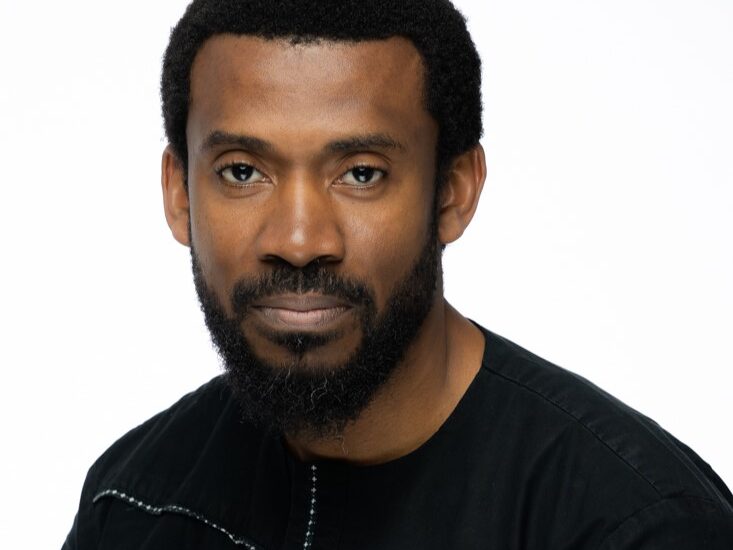

Chukwuemeka Afigbo has spent years observing Africa’s tech ecosystem from the inside, first at global giants like Google, Meta, and Okta, then as a convener and builder in the continent’s emerging deep tech scene. His diagnosis is blunt: the biggest barriers to Africa leading in frontier technologies, AI, advanced computing, robotics, XR, and more,are structural, not just a lack of funding or ideas. Education systems produce graduates who often lack practical skills for modern tech careers; compute infrastructure is scarce and expensive; energy constraints threaten to sideline the continent in the AI race; and capital for high-risk, long-horizon deep tech remains elusive.
Afigbo’s response is the Africa Deep Tech Foundation (ADTF), a community-driven initiative he convenes to tackle these root causes head-on. Launched to bridge Africa’s tech potential, ADTF connects operators, researchers, policymakers, and entrepreneurs across the continent and diaspora. It focuses on building three interlocking stacks: infrastructure (compute, connectivity, energy-aware solutions), talent (upskilling, education reform advocacy), and catalytic capital (de-risking bold ideas through grants, challenges, and networks).
The foundation’s work is already visible. The Africa Deep Tech Challenge (2025 edition) identified and supported breakthrough innovators with equity-free grants, mentorship, and investor access, targeting solutions that thrive despite Africa’s unique constraints like unreliable power and connectivity. Winners and participants are pushing boundaries in areas from localized AI models to offline-capable systems and XR for education. The Africa Deep Tech Conference (2026 edition in Lagos) drew builders to discuss real constraints and lessons, from energy-efficient AI to robotics for local industries.
Afigbo’s writings and talks amplify the structural critique. In pieces on Sub-Saharan Africa’s talent shortage, he argues university curricula often leave graduates unequipped for industry demands, calling for systemic reform. On AI’s energy problem, he warns that Africa’s limited electricity capacity could exclude it from training large models, pushing for edge computing, smaller localized models, and NPUs over power-hungry GPUs. His contributions to ADTF’s directory highlight priorities: Alexa-like models for African languages, offline compute solutions, XR education tools, and more.
This isn’t abstract advocacy. ADTF blends research, community events (salons, podcasts), and practical support to make deep tech viable here. By de-risking experiments and connecting diaspora talent, it aims to shift Africa from consumer of global tech to creator of resilient, context-aware breakthroughs.
In Lagos, where infrastructure failures are daily realities, Afigbo’s approach resonates. Startups must build for offline sync, lightweight APIs, and local compute, principles ADTF promotes. The foundation’s growth, board members like Judith Okonkwo, events drawing continental participation, shows momentum.
Africa’s deep tech future depends on addressing structural gaps: education mismatches, energy deficits, compute scarcity. Afigbo isn’t waiting for external fixes. Through ADTF, he’s architecting the infrastructure, talent, and capital needed to unlock the continent’s next decade of innovation—one challenge, conference, and bold idea at a time.






 English
  简体中文
简体中文  Čeština
  Deutsch (Sie)
  Français


