


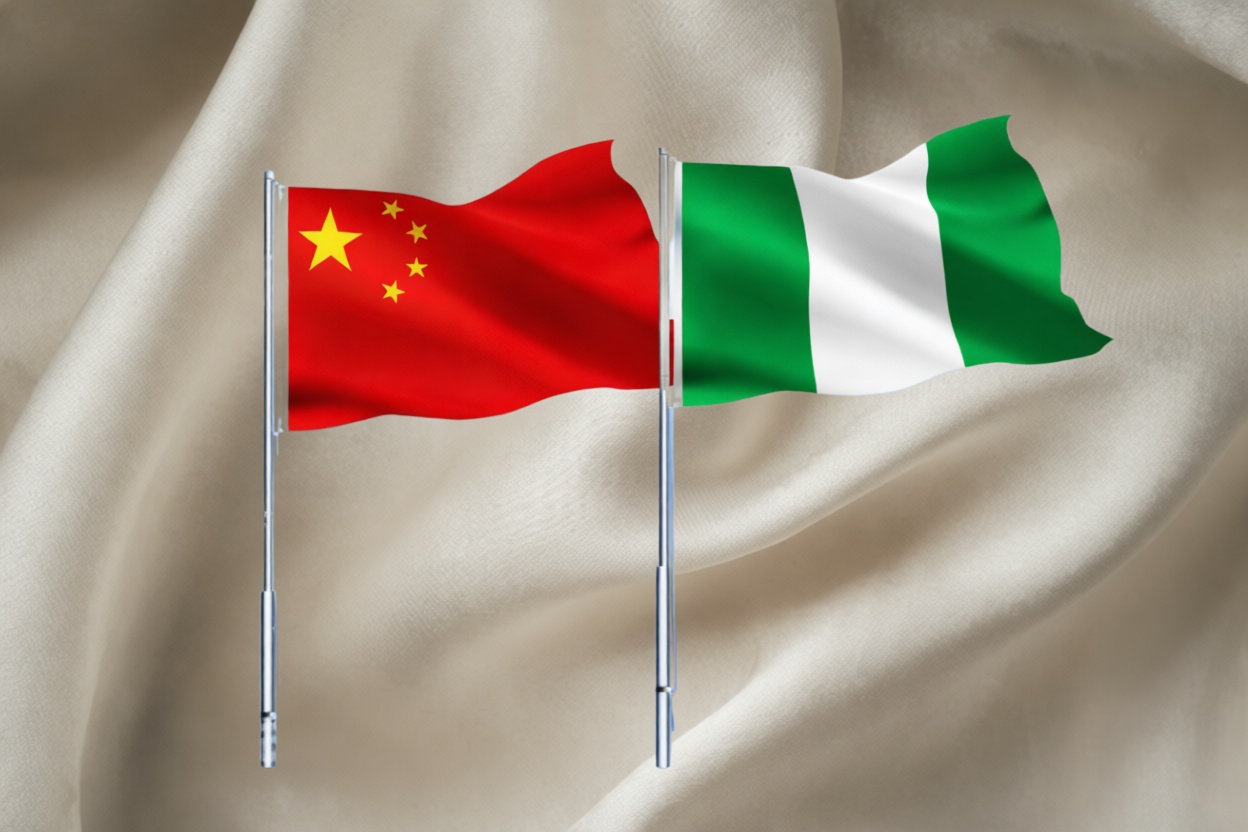

Nigeria has quietly secured one of the most consequential infrastructure wins of the decade.
The Ogidigben Gas Revolution Industrial Park (GRIP) in Delta State has emerged as the single largest recipient of construction contracts under China’s Belt and Road Initiative (BRI) in 2025, with deal values estimated at $24.6 billion. No other project globally matched its scale this year.
The designation comes from a new report by Christoph Nedopil, a leading China energy and infrastructure researcher at Griffith University, and it places Nigeria at the very center of China’s current global construction push. For a project once written off as stalled, risky, and politically fragile, the reversal is striking.
A Defining Shift in Nigeria – China Infrastructure Ties
According to the report, Nigeria’s total BRI construction inflows jumped from $1.8 billion in 2024 to $24.6 billion in 2025, a 13-fold increase in just one year.
Nearly $20 billion of that surge is directly tied to the Ogidigben project, following the award of a major engineering and construction contract to China National Chemical Engineering Corporation (CNCEC).
As a result, Nigeria now ranks first globally in total BRI construction value for 2025, ahead of traditional heavyweights in Asia and the Middle East.
Globally, BRI construction contracts reached $128.4 billion in 2025 an 81% year-on-year increase while total BRI engagement (construction and investment combined) climbed to $213.5 billion across roughly 350 deals.
Energy projects were the backbone of this expansion.
Why China Is Doubling Down on Nigeria’s Gas Strategy
Energy-related BRI engagement alone hit $93.9 billion globally in 2025, with fossil fuel projects still dominating though green energy initiatives also reached record levels.
Nigeria’s cumulative energy engagement with China since 2013 now stands at approximately $28 billion, making it China’s third-largest energy partner globally, behind only Pakistan and Saudi Arabia.
This is intentional. Analysts increasingly see Nigeria as a strategic anchor in China’s long-term energy and industrial strategy across Africa and the Global South, particularly as trade tensions, tariffs, and supply-chain realignments reshape global manufacturing.
Africa as a whole recorded a dramatic surge in BRI construction activity, with engagement jumping to $61.2 billion, a 283% year-on-year increase.
Researchers link this shift to new trade incentives and tariff dynamics, which now make African locations more attractive for export-oriented Chinese industrial investments than some Asian markets.
Standing Out in a Weak Global Investment Climate
The scale of Nigeria’s BRI inflow is even more notable given the broader global context.
In 2025:
- Global foreign direct investment fell by 3% in the first half of the year.
- Greenfield renewable energy investment collapsed, dropping from $147 billion in H1 2024 to $83 billion in H1 2025.
- Africa’s non-BRI FDI declined by 42%, according to independent data cited in the report.
Against this backdrop, Nigeria’s Ogidigben breakthrough represents a rare counter-trend, positioning the country at the forefront of what analysts describe as one of the last waves of mega-scale, China-driven infrastructure expansion.
CNCEC’s Renewed Commitment
Momentum around the project was reinforced in January 2025, when a delegation from China National Chemical Engineering International Corporation Ltd (CNCEC) formally announced its readiness to support the Ogidigben project through restructured funding and strategic partnerships with Nigerian stakeholders.
CNCEC President Li Zhenyi described the project as aligned with China’s broader commitment to Nigeria’s industrial transformation.
“Our company is devoted to contributing to Nigeria’s industrialisation and economic growth,” Zhenyi said, referencing support for President Bola Tinubu’s national development agenda.
A Project With a Complicated Past
The scale of today’s commitments contrasts sharply with Ogidigben’s troubled history.
For years, the project was stalled by:
- Ethnic tensions between Ijaw and Itsekiri communities, which disrupted site access and undermined investor confidence.
- Security challenges, including reports during the Goodluck Jonathan administration that militant groups demanded up to $30 million to allow initial groundwork.
- The withdrawal of early Saudi investors, who cited instability, the influence of local warlords, and governance concerns.
- Public skepticism, with some stakeholders openly labelling the project a “fraud.”
A turning point came in October 2022, when the Federal Government reconstituted the project’s Steering Committee and Technical Working Group. Co-chaired by the Minister of State for Petroleum Resources and the Governor of Delta State, the new leadership focused on resolving structural bottlenecks and restoring credibility.
That intervention appears to have laid the foundation for the scale of Chinese involvement now recorded in the BRI data.
What the Ogidigben Gas Park Is Designed to Become
At full scale, the Ogidigben Gas Revolution Industrial Park is one of the most ambitious industrialisation efforts ever conceived in Nigeria’s energy sector.
Key features include:
- 2,700 hectares designated for gas-based industries
- Planned facilities for fertilizer, methanol, petrochemicals, and aluminium production
- A tax-free zone structure under a Public-Private Partnership model
- An estimated 250,000 direct and indirect jobs
- Proximity to over 18 trillion cubic feet of gas reserves, including Odidi, Okan, and Forcados fields
- Direct linkage to the Escravos–Lagos Pipeline System (ELPS), Nigeria’s dominant gas transport network
- Location just 1km from Chevron Nigeria’s operational base, and about 60km from Warri
If fully executed, Ogidigben could become a cornerstone of Nigeria’s gas monetisation strategy, shifting the country from raw resource exports toward industrial processing, manufacturing, and value capture in the Niger Delta.
The Bigger Picture
China’s decision to make Ogidigben its largest BRI construction bet in 2025 is not just a vote of confidence in a single project.
It signals:
- Nigeria’s re-emergence as a serious industrial destination
- China’s recalibrated Africa strategy toward energy-anchored industrial hubs
- A rare opportunity for Nigeria to anchor long-term growth in infrastructure, jobs, and domestic value creation
For a country long defined by unrealised potential, Ogidigben may yet become a test case for whether mega-projects can finally translate ambition into execution.




 English
  简体中文
简体中文  Čeština
  Deutsch (Sie)
  Français


