



AI is stealing the show at CES 2026, with automakers and tech giants unveiling breakthroughs in autonomous driving, advanced safety systems, and AI integrations that promise to redefine the road ahead.
From robotaxis to AI-powered cockpits, the Las Vegas convention floor buzzed with innovations aimed at making vehicles smarter, safer, and more autonomous, as traditional carmakers ceded the spotlight to AI-driven startups and silicon heavyweights.
Nvidia kicked things off with a splash, announcing its Alpamayo portfolio of open AI models, simulation tools, and datasets tailored for level-4 autonomy, including the Alpamayo R1 reasoning vision language action model that enables vehicles to navigate complex urban scenarios like busy San Francisco streets. The first passenger car to feature this tech is the Mercedes-Benz CLA, which recently earned a five-star EuroNCAP safety rating and will hit U.S. roads with AI-defined driving capabilities this year. Nvidia also unveiled the Rubin platform, a six-chip AI powerhouse delivering massive efficiency gains for inference, with CEO Jensen Huang declaring, “With Rubin, NVIDIA aims to ‘push AI to the next frontier’ while slashing the cost of generating tokens to roughly one-tenth that of the previous platform.”
Bosch wasn’t far behind, debuting an AI-based cockpit system that uses large language models for personalized interactions and visual language models to interpret cabin and road events, such as automatically scouting parking spots. The company also highlighted its Vehicle Motion Management software, which centrally controls braking, steering, and powertrain to minimize motion sickness and bolster autonomous features, alongside the Radar Gen 7 Premium sensor for detecting small objects over 200 meters with AI-enhanced precision. In a nod to safety beyond cars, Bosch extended anti-theft tech to eBikes via its app. Tanja Rückert, Bosch board member, said, “Our many years of expertise in hardware and software enable us to bridge the gap between the physical and the digital. By integrating hardware and software, we can create intelligent products and solutions that are people centric – in other words, ‘invented for life’.”
Autonomy took center stage with robotaxi advancements. Waymo showcased its sixth-generation Driver system, featuring 13 cameras, four lidars, six radars, and audio receivers for 360-degree coverage up to 500 meters, halving costs and deployment times while upholding safety standards. The company, eyeing a $15 billion funding round, plans expansions to over a dozen markets and international cities like Tokyo and London, with fleet upgrades including Zeekr RT and Hyundai Ioniq 5 platforms. Meanwhile, Uber, Lucid, and Nuro unveiled a level-4 robotaxi based on the Lucid Gravity SUV, seating up to six with a 450-mile range, set for San Francisco rollout later this year.
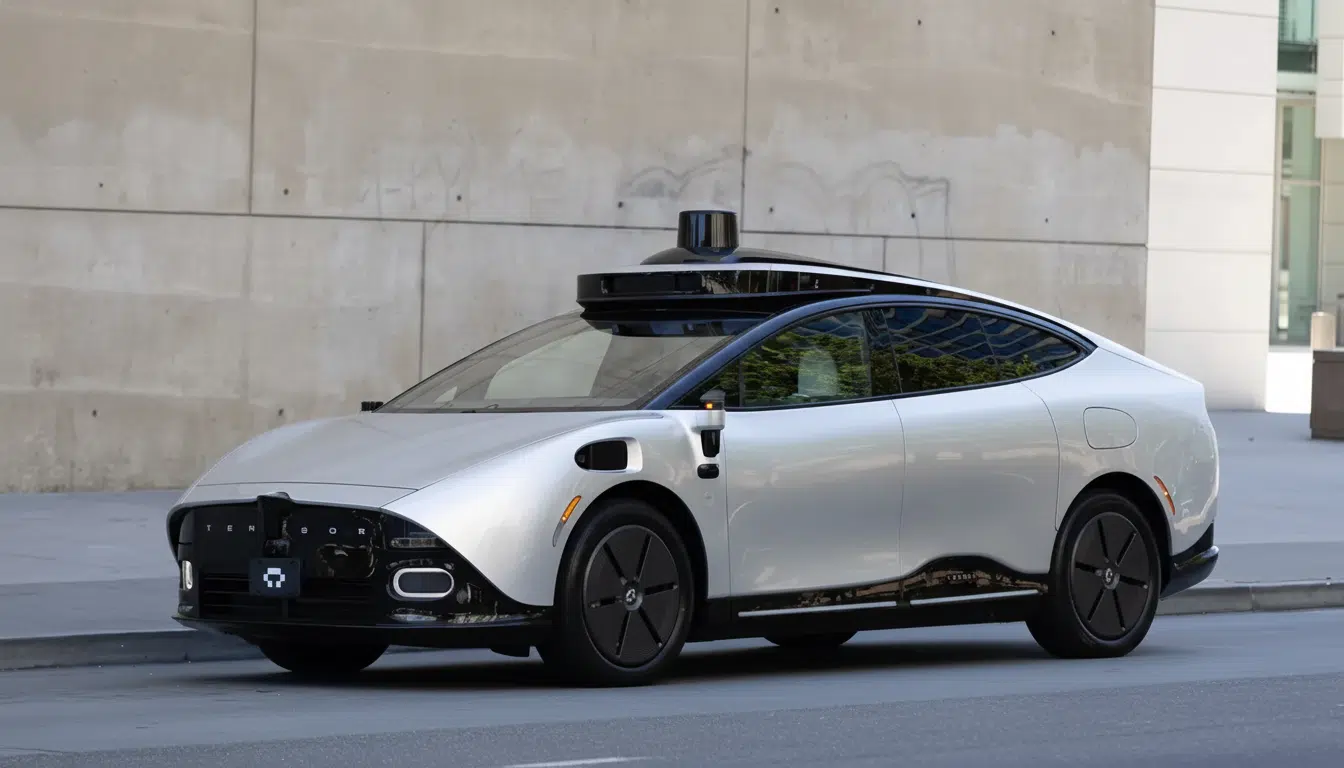
Startups like Tensor Auto (formerly AutoX) introduced the Tensor Robocar, a personal autonomous vehicle packed with over 100 sensors—including 37 cameras and five lidars, for redundant safety in fog or rain, contrasting vision-only approaches. Aptiv rolled out an end-to-end AI-powered ADAS platform with Gen 8 radars for L2++ autonomy, enhancing urban and highway safety. BMW and Ford amped up AI assistants: BMW’s integrates Amazon Alexa for natural queries, while Ford’s uses vehicle data for maintenance and personalization.
Safety innovations extended to predictive cybersecurity, like SYSGO’s AI-driven intrusion detection, and hyperconnectivity via 5G/6G for real-time hazard sharing, as seen in Aptiv’s C-V2X tech. AUMOVIO’s AI night vision uses existing cameras to boost visibility and comfort.
This CES marks a pivot, with automakers like Sony Honda Mobility treating vehicles as software platforms, debuting the Afeela EV lineup with advanced ADAS—while traditional players focus on by-wire systems and SDVs for over-the-air updates.
Join the Disrupt 2026 Waitlist Add yourself to the Disrupt 2026 waitlist to be first in line when Early Bird tickets drop. Past Disrupts have brought Google Cloud, Netflix, Microsoft, Box, Phia, a16z, ElevenLabs, Wayve, Hugging Face, Elad Gil, and Vinod Khosla to the stages, part of 250+ industry leaders driving 200+ sessions built to fuel your growth and sharpen your edge. Plus, meet the hundreds of startups innovating across every sector. San Francisco | October 13-15, 2026 WAITLIST NOW
Competitors aren’t idle: Tesla’s Full Self-Driving faces rivals like Nvidia’s Drive Assist Pro, while Bosch partners with Kodiak on driverless trucks. Physical AI for edge cases and integrated robotics signal a convergence of EVs, autonomy, and shared mobility.
As CES 2026 wraps, the auto industry’s AI obsession hints at a future where cars think, adapt, and protect like never before—but regulatory hurdles and safety validations will determine who leads the pack.




 English
  简体中文
简体中文  Čeština
  Deutsch (Sie)
  Français


