


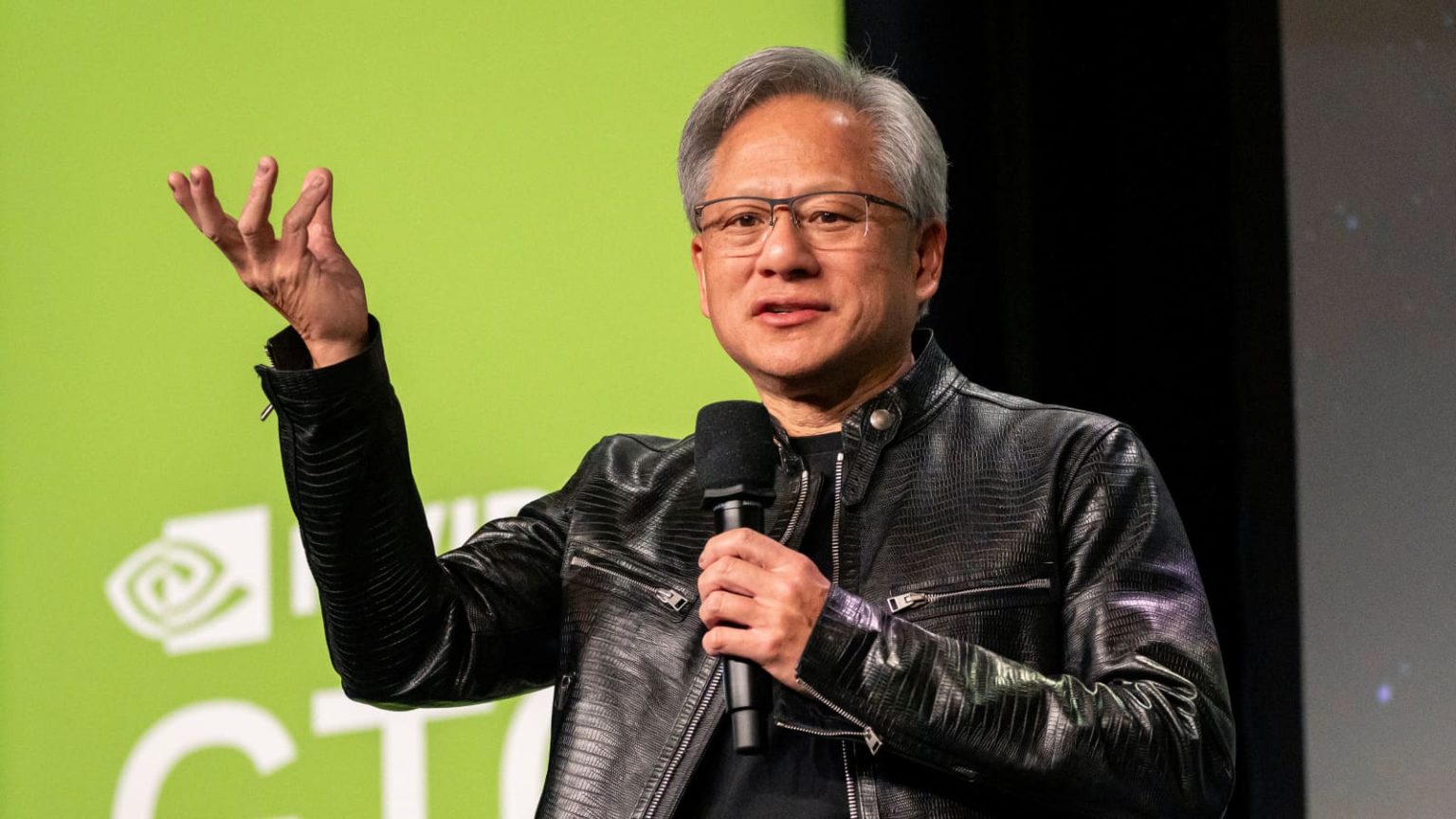
Jensen Huang took the stage at the SAP Center in San Jose on March 16, 2026, for his signature two-hour-plus keynote at NVIDIA GTC 2026. In front of thousands of attendees and a global livestream audience, the NVIDIA CEO laid out an ambitious vision for the next phase of AI, from next-generation hardware and massive revenue projections to breakthroughs in gaming, robotics, and agentic systems.
The address positioned NVIDIA not just as a chipmaker, but as the full-stack infrastructure provider powering the “age of AI.” Huang repeatedly emphasized that the industry is moving beyond training large models toward inference at scale, physical AI, and intelligent agents.
Major Hardware Announcements
Vera Rubin Platform
Huang unveiled the Vera Rubin architecture, NVIDIA’s next-generation AI accelerator family after Blackwell. Rubin promises up to 5x inference performance improvement over Blackwell Ultra in FP4 precision. The platform includes both GPUs and a new Vera CPU designed for disaggregated deployments, blending training and inference more efficiently. Huang highlighted strong demand, noting massive purchase orders already secured through 2026 and projecting at least $1 trillion in revenue from hardware through 2027.
Blackwell and Rubin Momentum
He reaffirmed that Blackwell remains sold out well into 2026, with Rubin ramping quickly behind it. Huang stressed architectural compatibility across NVIDIA’s entire GPU lineup, enabling customers to scale without forklift upgrades while driving down computing costs.
Gaming and Graphics Breakthrough: DLSS 5
One of the most visually striking moments came when Huang introduced DLSS 5, describing it as “the GPT moment for graphics.” Building on DLSS 4.5 (released earlier in 2026), DLSS 5 adds a real-time neural rendering layer that enhances lighting, materials, reflections, and global illumination using AI.
- It delivers photorealistic 4K performance with ray tracing on RTX 50-series GPUs.
- Early demos showed dramatically more lifelike scenes in complex environments.
- First supported titles include major games launching in fall 2026, with at least 16 titles in development.
Huang tied the announcement back to NVIDIA’s long gaming heritage, arguing that AI is now fundamentally redefining real-time rendering.
Also read: NVIDIA DLSS 5: Release Date, Features, Supported Games and RTX 50-Series Details.
Physical AI and Robotics
Huang devoted significant time to physical AI, showing how NVIDIA technology is powering humanoid robots and autonomous systems:
- Disney Imagineering partnership — A lifelike Olaf robot from Frozen was demonstrated on stage, highlighting advances in expressive, interactive robotics.
- Uber Autonomous Cars — New collaboration to accelerate self-driving vehicle development using NVIDIA’s DRIVE platform.
- Emphasis on agentic AI systems that can perceive, reason, and act in the physical world.
Software and Ecosystem Moves
- NemoClaw — An open-source enterprise AI agent platform focused on privacy and security for business deployments.
- OpenClaw partnership — Broader collaboration to advance open models and agentic systems.
- Strong push into AI factories, accelerated computing infrastructure, and tools for developers building agentic AI.
Huang also spotlighted partnerships across industries, from automotive to entertainment, underscoring NVIDIA’s expanding role beyond data centers.
The Big Picture: $1 Trillion Vision
A recurring theme was scale. Huang projected that NVIDIA’s hardware revenue could reach $1 trillion cumulatively through 2027, driven by insatiable demand for AI infrastructure. He framed 2025 as “the year of inference” and positioned 2026–2027 as the period when AI moves from labs and data centers into factories, vehicles, robots, and everyday applications.
The keynote closed on an optimistic note: AI is no longer just software, it is becoming the foundation of a new computing era, with NVIDIA providing the engines, the software stack, and the ecosystem to make it real.
What It Means
For developers and enterprises, the announcements signal faster inference, more capable agents, and easier deployment of AI at scale. Gamers can look forward to a major visual leap with DLSS 5 later this year. Investors walked away with reinforced confidence in NVIDIA’s growth trajectory, even as competition in AI chips intensifies.
GTC 2026 runs through March 19 in San Jose, with hundreds of sessions, hands-on labs, and partner announcements still to come. Huang’s keynote set a clear tone: the AI boom is accelerating, and NVIDIA intends to power every layer of it.
Watch the full keynote replay on NVIDIA’s site or YouTube for the complete experience, complete with Huang’s signature leather jacket and energetic delivery. The next 12–18 months look set to be defined by the technologies unveiled in San Jose this week.