
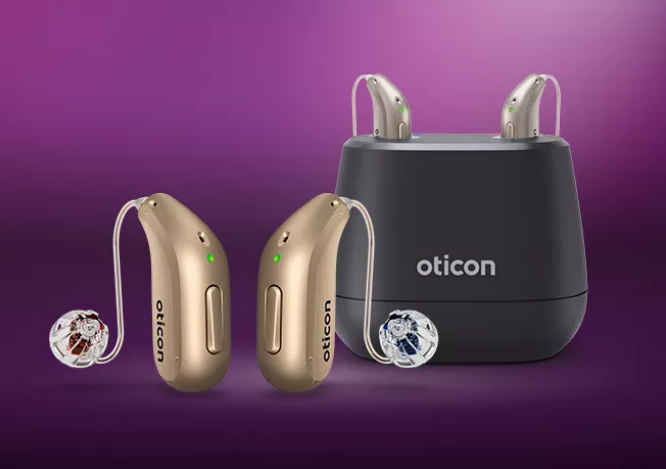
Oticon’s new Zeal hearing aids arrive at a moment when the line between medical device and consumer technology is finally starting to blur. For decades, hearing aids have been judged almost entirely on how well they amplify sound. Comfort, design, and everyday usability often came second. Zeal flips that hierarchy. It is designed to disappear in the ear while behaving more like a modern piece of personal tech, and in doing so, it quietly raises expectations for what premium prescription hearing aids should feel like.
At first glance, the defining feature of Zeal is size. These are ultra-compact, in-the-ear prescription devices built for users who want discretion above all else. They are small enough that, once fitted correctly, they are nearly invisible. That matters more than manufacturers often admit. Many people delay getting hearing aids not because they doubt the benefits, but because they do not want something visibly announcing a medical condition. Zeal speaks directly to that hesitation.
But shrinking hardware usually comes with compromises, especially when it comes to sound and connectivity. That is where Oticon’s approach becomes more interesting. According to hands-on testing, Zeal delivers audio quality that feels out of proportion to its tiny footprint. Streaming music, podcasts, and calls sounds fuller and more controlled than expected, avoiding the thin, compressed feel that smaller hearing aids often suffer from.
A standout detail is how Oticon treats streaming audio as its own experience rather than an afterthought. Zeal includes a separate three-band equalizer specifically for streamed sound, independent of the hearing aid’s main amplification settings. That may sound minor, but it gives users far more control than is typical in this category. You can tune music without affecting how voices sound in daily conversations, a level of separation more common in consumer headphones than medical devices.
Connectivity is another area where Zeal quietly breaks new ground. Oticon says these are the world’s first hearing aids to support Google Fast Pair, allowing near-instant connection with Android and ChromeOS devices. For iPhone users, pairing is similarly fast and reliable. The inclusion of Auracast support also signals future readiness. As Bluetooth LE Audio rolls out in public spaces like airports and theaters, Zeal users will be positioned to tap directly into shared audio streams.
The companion app reinforces the sense that Oticon understands modern user expectations. Controls are simple, clear, and responsive. Adjusting volume or switching environments does not feel buried in medical jargon. A built-in “find my hearing aids” feature addresses a very real fear for anyone wearing something this small. When devices are easy to lose, reassurance becomes a core feature, not a luxury.
Read also: Apple Poised to Integrate ChatGPT and Gemini into CarPlay for Hands-Free AI Assistance
Comfort is where the small form factor delivers its biggest win. Once in place, Zeal sits lightly in the ear, avoiding the pressure and fatigue that larger behind-the-ear models can cause over long days. Testers reported minimal occlusion, even with closed ear tips, meaning users are less likely to experience the echoing, blocked sensation that turns many people off in-ear devices. Proper fitting matters here, and Oticon clearly relies on audiologists to fine-tune that experience.
Still, small size comes with tradeoffs, and Zeal does not hide them. Inserting the hearing aids correctly takes practice. The design relies on a spiral motion that locks the device into place, and doing this without clear visual feedback can be frustrating at first. For users with limited dexterity, arthritis, or reduced hand control, this could be a serious barrier. The very feature that makes Zeal appealing to some may make it impractical for others.
There are also no physical buttons on the devices themselves. Space simply does not allow it. Tap controls can be enabled to handle volume changes, call management, or environment switching, but these are easy to trigger accidentally. Many users reportedly turn them off entirely, preferring to rely on the app instead. It is a reminder that minimalism, while elegant, can sometimes work against usability.
Zeal also draws a clear line between hearing aid and consumer earbud. There is no meaningful active noise cancellation. Even with closed tips, these are not designed to replace noise-canceling headphones on flights or in the gym. Oticon does not pretend otherwise. Zeal is built to improve hearing and deliver solid streaming, not to compete with lifestyle audio products.
Pricing remains the unspoken reality. Oticon has not publicly detailed costs, but prescription hearing aids at this level typically sit firmly in the premium bracket. Between advanced miniaturization, cutting-edge connectivity, and audiologist support, Zeal is unlikely to be accessible to budget-conscious buyers. That matters in a market facing growing pressure from over-the-counter hearing aids and tech companies offering hearing features in consumer devices like wireless earbuds.
Read more: NextSense Showcases EEG-Enabled Smartbuds at CES 2026
Oticon’s strategy is clear. Rather than racing to the bottom on price, it is doubling down on users who want invisible design, professional customization, and seamless integration with their digital lives. Google Fast Pair and Auracast are not just features; they are signals of where hearing aids are heading. These devices are no longer meant to exist in isolation. They are becoming part of a broader connected ecosystem.
Zeal does not pretend to be for everyone, and that honesty works in its favor. For users who value discretion, comfort, and high-quality streaming in a prescription device, it offers a compelling glimpse of the future. The compromises are real, especially around handling and price, but they feel like conscious design choices rather than oversights.
In many ways, Zeal represents a quiet shift. It treats hearing aids less like clinical tools and more like personal technology that happens to be medically necessary. That shift may not grab headlines, but for users who have long accepted bulky designs as the cost of better hearing, it changes the conversation entirely.