

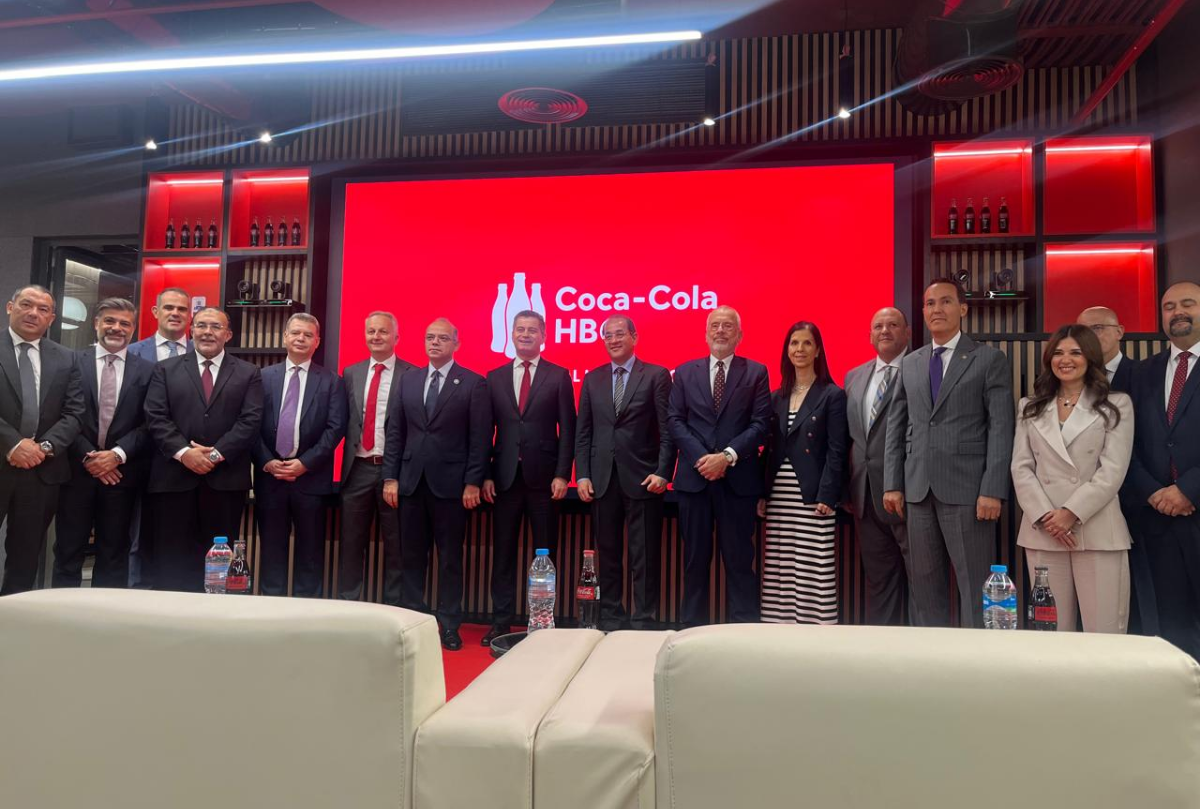
Coca-Cola HBC has officially opened its Digital Hub in Cairo, a significant step in the company’s technology strategy that will support operations across its 27 markets in Europe and Africa. The hub joins existing centres in Athens and Sofia, creating a networked capability for software engineering, AI, data science, and digital product development.
The Cairo facility, located in New Cairo, currently employs more than 150 IT professionals and is expected to grow to around 450 by 2027. It focuses on building and maintaining advanced digital tools, including AI-powered applications, IoT solutions such as digital twins for manufacturing optimisation, and customer-facing platforms.
Zoran Bogdanovic, CEO of Coca-Cola HBC, highlighted the strategic importance of the investment during related events, noting Egypt’s growing role as a regional technology and industrial centre. The hub reflects the company’s confidence in local talent and its commitment to long-term development in the Egyptian market, where it has expanded production capacity in recent years.
The Digital Hub is designed to accelerate Coca-Cola HBC’s digital transformation by centralising expertise in areas such as:
- Software engineering and custom development
- AI and machine learning applications
- Data visualisation and analytics
- IoT and digital twin technologies for sustainable manufacturing
- Enhanced customer portals and sales tools
Early projects include AI-driven sales applications for real-time promotion optimisation and upgraded customer platforms with significantly improved performance. These tools are already supporting operations across the group’s extensive footprint.
The hub’s sustainable design has earned gold environmental accreditation, aligning with Coca-Cola HBC’s broader ESG goals.
The choice of Cairo underscores Egypt’s emergence as a digital and talent hub in the region. Government officials have welcomed the investment, which contributes to job creation in high-skilled sectors and boosts digital service exports. The company has signalled further commitments, including substantial capital expenditure in Egypt through 2030.
For Coca-Cola HBC, which serves around 750 million consumers across 29 markets, the networked Digital Hubs model enables faster innovation, greater efficiency, and scalability. It also strengthens the company’s ability to respond to evolving consumer preferences and operational challenges in diverse markets.
The launch reflects a wider trend among multinational corporations to establish technology delivery centres in emerging markets with strong talent pools. Egypt’s young, tech-savvy population, improving digital infrastructure, and strategic location make it attractive for such investments.
As consumer goods companies face pressure to modernise supply chains, enhance customer experiences, and leverage data for decision-making, dedicated digital hubs are becoming critical infrastructure rather than support functions.
Coca-Cola HBC’s expansion in Egypt combining manufacturing growth with digital capability positions the country as an increasingly important node in its African and European operations. The Cairo hub is expected to deliver both internal efficiencies and broader economic contributions through talent development and export-oriented digital services.