


Chapter 1
Every Great Search Must Come to an End
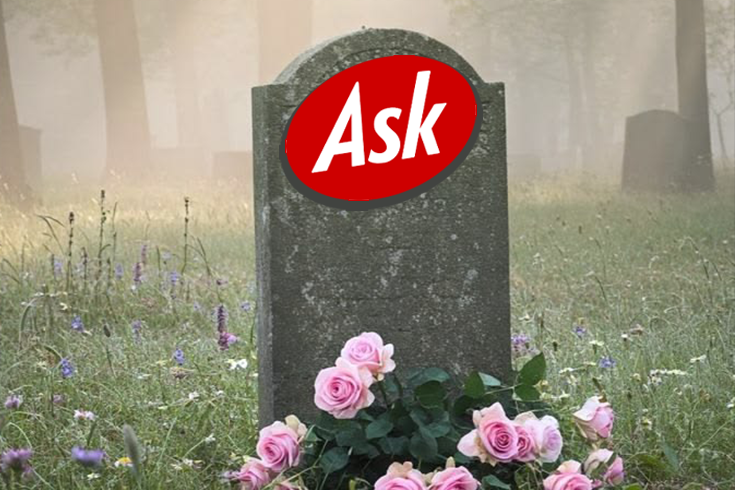
There is a particular kind of grief that belongs only to the internet, a digital nostalgia that arrives not with the smell of old books or the crackle of vinyl, but with the sudden realization that a website you once visited as a child no longer exists. On May 1, 2026, millions of people around the world experienced that grief all at once. Ask.com, the search engine that began its life as the charming, bow-tied Ask Jeeves, quietly closed its doors after thirty years of operation. In its place, a spare farewell message appeared on the homepage: “Every great search must come to an end.” It was understated, dignified, and heartbreaking in equal measure, a fitting epitaph for a platform that had, in its heyday, helped define what it meant to look for something on the World Wide Web.
The shutdown was confirmed by IAC, the media and internet holding company that has owned Ask.com since 2005. In a brief corporate statement, IAC said it had made the decision “to discontinue our search business, which includes Ask.com,” as part of a broader effort to sharpen its strategic focus. The language was corporate, clinical, and deliberately stripped of sentiment. But behind those measured words lies one of the most compelling, most instructive, and ultimately most tragic stories in the history of technology, a story about vision ahead of its time, about the merciless arithmetic of market competition, and about what happens when a good idea meets a better-funded rival on an uneven playing field.
To fully understand why Ask.com shut down, one must resist the temptation to reduce its story to a simple tale of failure. Ask Jeeves was not a bad product. It was, in many respects, a brilliant one. It was a pioneer, a prototype, and, in the cruelest irony of the digital age, a prophet. The very concept that made it radical in 1997 is the concept that now powers the most exciting technology of our era. The difference is that Ask Jeeves was running those ideas on dial-up internet infrastructure with 1990s machine learning, while the world was not ready to receive it. By the time the technology caught up, Ask.com had already been left behind.
“In 1997, asking a question in plain English on a computer was revolutionary. The idea that a machine could understand human intent, not just match keywords, was the stuff of science fiction. Ask Jeeves made that science fiction feel real.”
| 30 YEARS IN OPERATION | $1.85B IAC ACQUISITION (2005) | 100M+ GLOBAL USERS AT PEAK | 1996 YEAR FOUNDED |
Chapter 2
The Birth of the Butler: Berkeley, 1996
The story begins not in a Silicon Valley garage or a Harvard dorm room, but in Berkeley, California, where two entrepreneurs named Garrett Gruener and David Warthen sat down in 1996 to solve a problem that had begun to gnaw at everyone who used the early internet: searching for things online was a deeply unsatisfying experience. The web was young and sprawling and magnificent, but navigating it required users to think like machines, to strip their questions down to rigid keywords, to abandon the natural rhythm of human speech, and to sift through results that often had little to do with what they were actually looking for.
Gruener and Warthen proposed a radical alternative. What if, instead of forcing users to speak the language of computers, you built a search engine that could understand the language of people? What if you could simply type a question, a full, conversational, grammatically complete question, and receive an actual answer? The concept seems almost embarrassingly obvious in retrospect, but in 1996, it was genuinely revolutionary. Most search engines of the era were little more than keyword-matching directories. The idea that a machine could parse the intent behind a sentence, rather than just the words it contained, was the stuff of science fiction.
The company launched publicly in 1997 under the name Ask Jeeves, borrowing its identity from P.G. Wodehouse’s iconic fictional butler, the unflappable, impeccably informed manservant who always had an answer to every question his employer might dream up. The choice of mascot was inspired. It communicated, in a single image, everything the company wanted users to feel: that asking questions was natural, that knowledge was attainable, and that the internet could be a place of warmth and wit rather than cold technological bewilderment. For millions of early internet users, Ask Jeeves was not just a search engine. It was a personality. It was a presence. It was, for a brief and glittering moment, a genuine competitor to the biggest names on the web.
Chapter 3
The Golden Years: When Jeeves Stood Tall
Through the late 1990s and into the early 2000s, Ask Jeeves rode the wave of the dot-com boom with genuine momentum. The platform attracted devoted users who appreciated its friendlier, more conversational interface at a time when Yahoo was a sprawling directory and AltaVista felt like navigating a bureaucratic maze. Ask Jeeves was accessible in school computer labs around the world, became a household name in households that were just beginning to discover the internet, and earned a reputation as the search engine for people who didn’t know how to use search engines, a demographic that, at the dawn of the consumer web, represented the overwhelming majority of internet users on the planet.
The company also made strategically sound moves during this period. In 2001, recognizing that the quality of its search results needed to improve if it was to remain competitive, Ask Jeeves acquired Teoma, a search technology firm whose algorithms offered a more sophisticated approach to ranking web pages. The acquisition was a sign that Ask Jeeves understood its limitations and was willing to invest in overcoming them. For a brief period, the improvements it delivered gave the company genuine hope that it could close the gap between itself and its rivals. The hope did not last, but it was real while it existed, and it speaks to a management team that was, at least in those years, thinking seriously about the future.
By the mid-2000s, however, a shadow had begun to fall over Ask Jeeves and over every other search engine on the planet. That shadow had a name, and the name was Google. What Google had achieved, and what no other company had yet managed to replicate at scale, was a combination of algorithmic sophistication, speed, and simplicity that made every other search product feel clunky by comparison. Google’s PageRank system, which ranked websites based on the quality and quantity of other sites linking to them, produced results that were genuinely, consistently better than those of its competitors. And it did so with an interface of almost aggressive minimalism: a white page, a text box, and a button. In a world of increasingly cluttered web portals, Google’s clean design felt like a breath of fresh air. Against this competitor, Ask Jeeves, with its aging infrastructure and its charming but limited natural language capabilities, was overmatched.
Chapter 4
The IAC Era: Money, Rebranding, and the Long Slide
In 2005, IAC, the media and internet conglomerate led by the formidable Barry Diller, acquired Ask Jeeves in a deal valued at approximately $1.85 billion. At the time, the acquisition was seen as a bold strategic move. IAC was building a portfolio of consumer internet brands, and Ask Jeeves, despite its struggles against Google, still had a large and loyal user base, significant brand recognition, and a core concept that felt worth investing in. The price tag was steep, but the reasoning was sound: if anyone could take a flailing search engine and turn it around, it was a well-capitalized media company with the resources and the connections to make things happen.
The rebrand came quickly. By 2006, the Jeeves name was officially retired and the butler mascot, that charming, anachronistic symbol of a friendlier internet, was quietly shown the door. The company became Ask.com, a name that was cleaner, more modern, and entirely devoid of personality. The decision was understandable from a branding strategy perspective: the Jeeves image had begun to feel dated, and the company wanted to signal that it was a serious, broad-based search engine rather than a novelty tied to a single character. But in stripping away the thing that made it distinctive, Ask.com also stripped away the thing that made it memorable. Without Jeeves, Ask.com was just another search engine, and in a world where Google existed, being just another search engine was a very difficult position from which to build.
Barry Diller himself acknowledged the reality of the situation with characteristic bluntness. At TechCrunch Disrupt in 2010, he stated publicly that Ask.com was not competitive with Google and was not valued in IAC’s stock. It was a remarkable admission, the chairman of the company that owned Ask.com, standing at a major technology conference, essentially conceding that the product he had paid nearly two billion dollars for five years earlier was no longer a meaningful player in the search market. For those inside Ask.com, it must have been a difficult moment. For outside observers, it was simply honest. Google had won. The question was no longer whether Ask.com could compete, but how long it could survive.
Chapter 5
Key Milestones in Ask.com’s history
| YEAR | KEY EVENT |
|---|---|
| 1996 | Founded by Garrett Gruener and David Warthen in Berkeley, California, with the concept of natural language search. |
| 1997 | Launches publicly as AskJeeves.com, just one year before Google, featuring the iconic bow-tied butler mascot. |
| 2001 | Acquires Teoma search technology to improve result quality and compete more effectively with rapidly advancing rivals. |
| 2005 | IAC acquires Ask Jeeves in a deal valued at approximately $1.85 billion, a high-water mark for the brand’s perceived value. |
| 2006 | Drops the ‘Jeeves’ name and butler logo, rebranding as the more generic Ask.com in a bid for a modern identity. |
| 2009 | A brief revival of the Jeeves mascot is attempted in the UK and international markets. It does not last. |
| 2010 | Ask.com shuts down its independent web crawling infrastructure, lays off much of its engineering staff, pivots to Q&A. |
| 2012 | IAC reports that Ask.com still serves over 100 million users globally, a reminder the platform had not fully collapsed. |
| 2023 | IAC appoints Brad Wilson as CEO of Ask Media Group, the unit remains nominally active but without meaningful innovation. |
| 2026 | Ask.com officially ceases all operations on May 1, 2026. Farewell message: ‘Every great search must come to an end.’ |
Chapter 6
The Pivot That Couldn’t Save It: 2010 and the Q&A Gamble
The year 2010 was a turning point, and not an optimistic one. Facing the impossible reality of competing with Google’s search dominance on Google’s terms, IAC made the decision to change Ask.com’s terms entirely. The company shut down its independent web crawling infrastructure, the technological backbone of any genuine search engine, laid off a significant portion of its engineering staff, and outsourced its core search functions to third-party providers. In their place, Ask.com pivoted toward a question-and-answer community model, aligning itself with platforms like Yahoo Answers and Quora in an attempt to find a niche that Google had not yet monopolized.
The strategy was not without logic. The Q&A market was growing, social media was changing the way people sought and shared information, and there was a real and growing appetite for human-curated answers rather than algorithmically generated lists of links. If Ask.com could position itself as the destination for people who wanted real answers from real people, rather than ten blue links from a machine, it might be able to carve out a sustainable space in an increasingly competitive digital landscape. The pivot kept the lights on. It kept the traffic coming. It kept Ask.com alive, technically speaking, for another sixteen years. But it never restored the company to relevance. It never gave it back the momentum it had lost. It was, in the end, a managed retreat dressed up as a strategic advance.
The problem was not merely competitive positioning. The problem was that Ask.com had, in abandoning its own search infrastructure, also abandoned its identity. A search engine without its own search technology is not really a search engine at all. It is a brand, a wrapper, a front-end, a user interface built atop someone else’s engineering. And a brand, without the substance to support it, is only as durable as the goodwill it inherited from a more productive past. Ask.com had plenty of goodwill from the Ask Jeeves era. But goodwill, like any finite resource, runs out. By the time IAC finally pulled the plug in May 2026, that goodwill had long since been exhausted.
Chapter 7
The Rise of AI: The Final, Fatal Irony
Of all the elements that make Ask.com’s story so rich and so melancholy, the cruelest is perhaps this: the very technology that killed it is the technology that, had it existed thirty years earlier, would almost certainly have made it invincible. The core premise of Ask Jeeves, that users should be able to ask questions in natural, conversational language and receive direct, meaningful answers, is not a quaint historical curiosity. It is the foundational logic of every large language model and AI chatbot currently reshaping the technology industry. ChatGPT, Google Gemini, Anthropic’s Claude, Microsoft’s Copilot, all of them are, at their conceptual root, doing precisely what Ask Jeeves set out to do in 1997. The difference is that they are doing it with large language models, transformer architecture, and billions of dollars of computing power, rather than with 1990s keyword matching and a cartoon butler.
Ask Jeeves was, in this very specific and very painful sense, not a failure of imagination. It was a failure of timing. Garrett Gruener and David Warthen had the right idea. They simply had the right idea in an era when the technology to realize it fully did not yet exist. They built the best version of their vision that the available tools would allow, and that version was good enough to attract users, generate investment, and survive for thirty years. But it was never good enough to close the gap between what Ask Jeeves promised and what it could actually deliver. And so the gap remained, year after year, until the world stopped noticing it, and eventually stopped visiting.
The rise of generative AI did not merely fail to save Ask.com. It actively accelerated its demise. As ChatGPT and its competitors began demonstrating that machines could actually answer questions, not just point toward pages that might contain answers, the utility of any legacy search engine, let alone a half-dormant one operating on outsourced infrastructure, dropped precipitously. The search market, already heavily consolidated around Google, began to fragment again, but in a direction Ask.com was entirely unequipped to follow. The future belonged to those who had invested in large language models, in massive training datasets, in the kind of computational infrastructure that requires billions of dollars and years of engineering effort to build. Ask.com had none of those things. It had a brand, a domain, and a farewell message. And on May 1, 2026, that was all it needed to close.
Ask Jeeves was not a failure of imagination. It was a failure of timing. The idea was right. The technology of its era was not. It built the prototype for a product the world would not be ready to receive for another decade.”
Chapter 8
What the Shutdown Really Means: A Broader Reckoning
It would be easy, and not entirely wrong, to frame Ask.com’s shutdown as simply the inevitable end of an obsolete product that had outlasted its usefulness by at least a decade. That framing is accurate but insufficient. The closure of Ask.com is not merely the end of a website. It is the conclusion of a nearly thirty-year experiment in how human beings interact with information, and the lessons it offers are worth examining carefully, because they speak not only to the past but to the present moment in which we find ourselves.
The first lesson is about the difference between being first and being best. Ask Jeeves launched in 1997, one year before Google. It had a head start, a compelling concept, and a memorable brand. It built an audience. It made money. It attracted acquisition interest from one of the most prominent media companies in the world. And it still lost. It lost because being first in technology does not confer lasting advantage unless you can sustain the pace of innovation that your earliest lead demands. Ask Jeeves could not. Google could. The distance between those two trajectories, compounded over two decades, produced an outcome that was probably inevitable from the moment Google’s first PageRank algorithm produced its first results, but it took the world many years to see it clearly.
The second lesson is about the relationship between identity and survival. When IAC retired the Jeeves mascot in 2006, it made a branding decision that was strategically defensible but culturally costly. The butler was the heart of the product’s identity, the reason people remembered it, the reason they felt warmly toward it, the reason they returned to it even when its search results were inferior to Google’s. By removing the butler, IAC removed the emotional connection between the user and the platform. What remained was a generic product in a market defined by one dominant player. Generic products in monopolized markets do not survive indefinitely. They fade. And Ask.com faded.
The third lesson, and perhaps the most important one for the current moment, is about the pace of technological change and its relationship to institutional survival. IAC confirmed in 2026 that its portfolio had by then narrowed primarily to publisher People Inc. and a collection of strategic equity positions. The era in which search was one of its most visible consumer products was over. The internet had changed fundamentally since Ask Jeeves launched: search engines that were once destinations had become utilities, then were being replaced by something else entirely. The institutions that survived this transition were those that moved with it. Ask.com did not move. It waited. And in technology, waiting is always a form of dying.
Chapter 9
The Cultural Legacy: A Simpler Internet, Remembered
Beyond the business analysis and the strategic post-mortems, Ask.com’s closure has prompted something unexpected and genuinely touching: a wave of public nostalgia that cuts across generations and geographies. For the millennials who grew up with it, those who typed their first internet questions into the Ask Jeeves search box in school computer labs in the early 2000s, the shutdown feels like the loss of something irreplaceable. Not because Ask.com was technically superior to what replaced it, but because it represented a particular moment in the history of the internet, a moment when the web still felt like a place of possibility and discovery rather than an infrastructure of surveillance and algorithmic curation.
Ask Jeeves existed before the internet became a battleground for attention. It existed before the feed, before the algorithm, before the endless scroll. It existed when going online still felt like going somewhere, when you navigated the web rather than being navigated by it. The butler, with his impeccable manners and his infinite patience, embodied a vision of the internet as a public service: a place where anyone could ask any question, no matter how basic or how strange, and receive an answer without judgment, without a data profile being built, without an advertisement being served. That vision was always partly illusory, but it was also genuinely inspiring. And now, with Ask.com’s closure, it is definitively gone.
There is a particular irony in the fact that the Jeeves character, the cultural icon who gave the search engine its soul, may actually outlive the search engine itself. The character of Jeeves is reportedly slated to appear in the upcoming film Avengers: Doomsday, suggesting that while the search business is dead, the cultural imprint of the name and the persona remains vital enough to anchor a major cinematic production. The butler, it seems, endures, even as the business that borrowed his name does not. It is a fitting, slightly absurd coda to a story that has always mixed the genuinely visionary with the persistently unfortunate.
Chapter 10
Rest in Peace, Jeeves: The Right Questions, The Wrong Decade
On May 1, 2026, the lights went out at Ask.com. The servers went quiet. The butler, who had been on duty, in one form or another, for nearly thirty years, finally put down his tray and went home. In the grand sweep of internet history, it was a small event. No stock markets moved. No technology conferences rearranged their agendas. No governments issued statements. The world continued searching for things, as it always does, just without Ask.com in the picture. But for those who remembered the early internet, who remembered the thrill of typing a question into that search box and waiting to see what Jeeves would find, the silence was profound.
Ask.com’s story is ultimately a story about the relationship between ideas and infrastructure, about what happens when a great concept arrives before the technology needed to support it. The idea that underpinned Ask Jeeves was not wrong. It was early. Thirty years too early, as it turned out. The tragedy is not that the idea failed. The tragedy is that by the time the technology caught up, the company that had the idea first was no longer in a position to benefit from it. Someone else had built the infrastructure, trained the models, and launched the products. Ask Jeeves was left standing on the platform, watching a train it had helped design depart without it.
What Ask.com proved, in the end, is that being first with a good idea does not guarantee that you will be around when the technology finally catches up. Sometimes you are not the product. You are the prototype. You are the rough draft that gets discarded once the final version is ready. And that is not a failure, exactly, prototypes serve a vital purpose, and the world builds on them even when it forgets to credit them. But it is a particular kind of fate, and it carries a particular kind of loneliness. Ask Jeeves asked the right questions. It just had to wait too long for the answers to arrive.
Rest well,Ask.com. You earned it.