



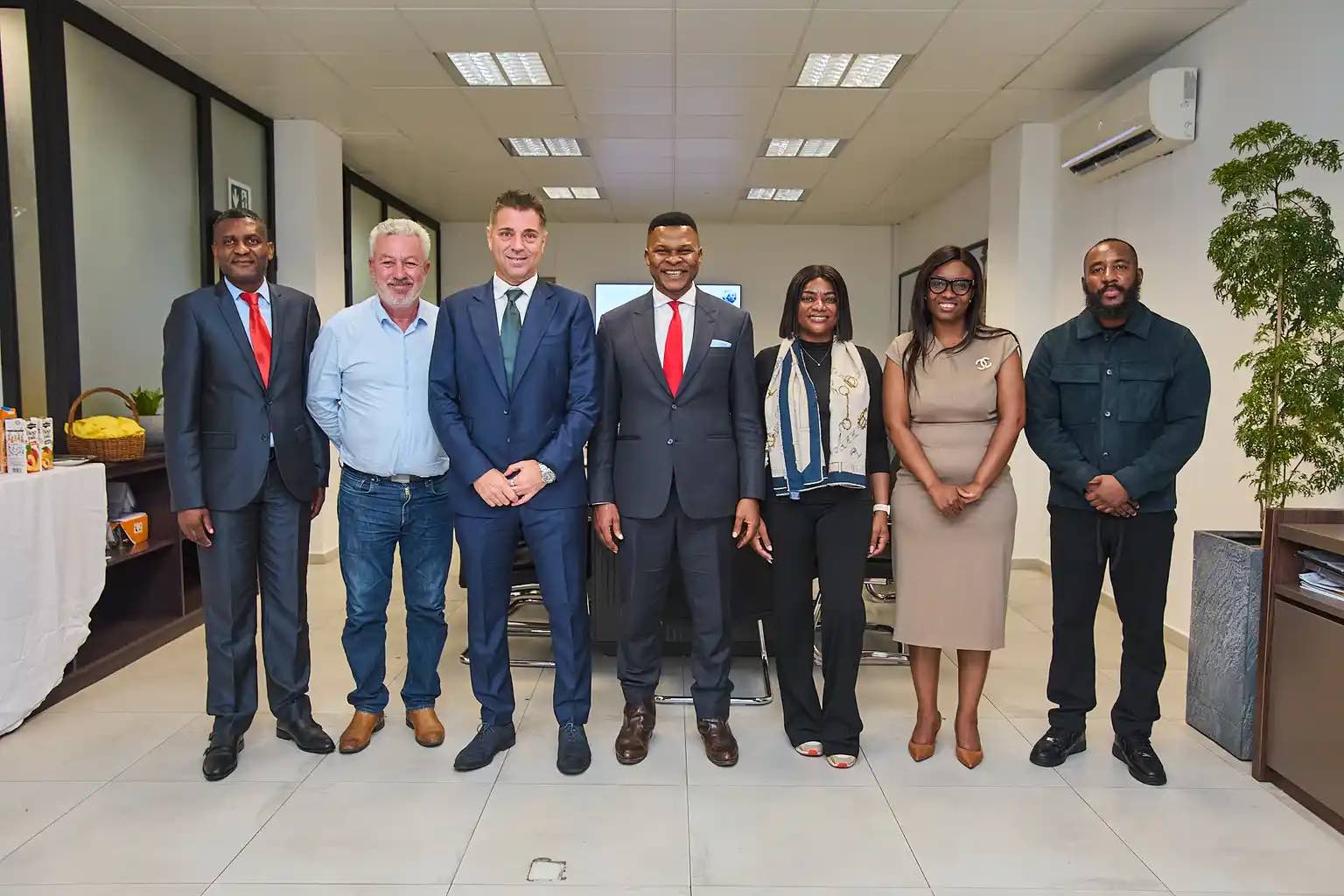

Ammat Global Resources is redefining local content in the Republic of Congo’s upstream sector by placing Congolese nationals in 80–85% of its roles, including senior management, engineering, and asset leadership positions across its offshore operations.
The independent hydrocarbons producer, which operates the mature Loango and Zatchi fields in shallow waters off Pointe-Noire, has built its model around deep domestic participation rather than meeting minimum regulatory thresholds. From platform upgrades to daily production decisions, Congolese professionals now lead technical and operational functions in assets that were previously typical of expatriate-heavy management structures common in parts of Central Africa.
This approach has coincided with tangible results. In 2024–2025, Ammat modernised production platforms and increased output at Loango and Zatchi by around 75%, lifting combined capacity from roughly 4,000 to 7,000 barrels per day through workovers, subsea upgrades, and improved reservoir management.
In many African oil-producing nations, local content policies have focused heavily on employment percentages and supplier preferences. Congo’s regulations set ambitious targets, including progressive nationalisation of roles over time. Ammat’s model goes further by embedding local expertise at the highest levels of decision-making, reducing reliance on international contractors for core technical authority.
The strategy delivers several operational advantages. By minimising expatriate rotations, the company lowers costs, accelerates response times on maintenance and optimisation, and builds institutional knowledge that stays within the country. It also strengthens relationships with regulators and communities, creating a more stable operating environment in a sector where trust and alignment often determine project longevity.
NJ Ayuk, Executive Chairman of the African Energy Chamber, praised the approach: “Local content is about transferring real control, real expertise and real value creation to African professionals. What Ammat Global Resources is demonstrating in Congo is that when nationals are trusted with full operational responsibility, the result is not just compliance, but stronger assets, better decision-making, and long-term sustainability.”
The localisation push also supports broader ESG objectives. Having decision-makers embedded locally improves responsiveness to environmental risks, maintenance needs, and community expectations. Ammat has expanded associated gas utilisation for power generation, helping reduce flaring and diesel dependency at the Loango hub.
For a country whose economy remains heavily dependent on oil revenues, such models carry strategic weight. As Congo seeks to extend the life of maturing fields while navigating energy transition pressures, operators that combine production growth with genuine capability building are likely to find stronger policy and social support.
Ammat’s experience adds to a growing conversation across Africa about what effective local content looks like in practice. While many international operators meet quota requirements through junior roles or short-term training, fewer have demonstrated the confidence to hand over substantial technical and managerial control to national teams in complex offshore environments.
Challenges remain, including the need for continuous skills development, access to advanced training, and managing the risks that come with any rapid localisation drive. Yet Ammat’s results suggest that when executed with clear operational discipline, deep localisation can function as a genuine competitive advantage rather than a cost centre.
As the Republic of Congo continues to develop its hydrocarbons sector and explore new opportunities, companies like Ammat are positioning themselves as test cases for a more integrated approach to resource development one where national talent drives both performance and long-term value retention. The coming years will show whether this model can be scaled further while sustaining the production momentum already achieved in Loango and Zatchi.

 English
  简体中文
简体中文  Čeština
  Deutsch (Sie)
  Français


