



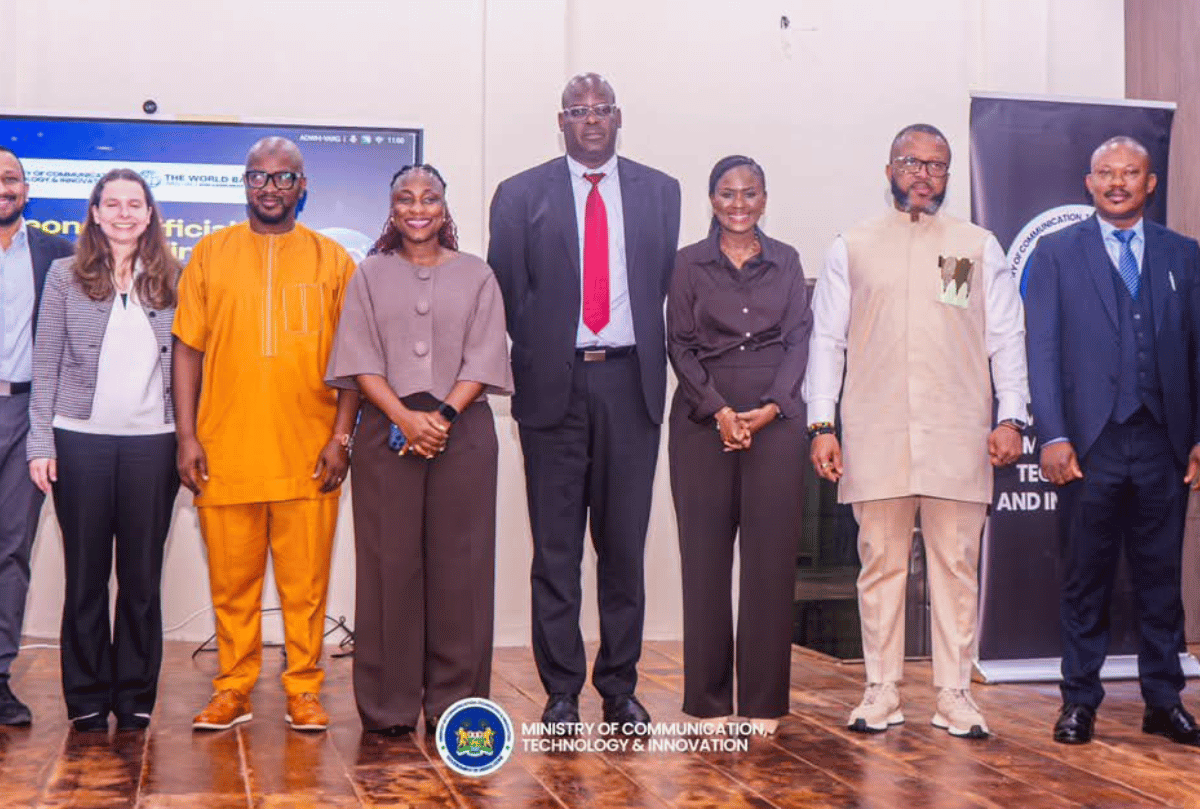

Sierra Leone has launched a comprehensive national Artificial Intelligence agenda aimed at positioning the country as a competitive player in the emerging digital economy and expanding opportunities for its youthful population.
The initiative, driven by the Ministry of Information and Communications, seeks to integrate AI across key sectors including agriculture, healthcare, education, and public administration. It forms part of Sierra Leone’s broader digital transformation strategy, which prioritises technology as a tool for inclusive economic growth and improved governance.
Key components of the agenda include the establishment of an AI Innovation Hub in Freetown, development of AI-focused curricula in tertiary institutions, and partnerships with international technology organisations for capacity building. The government is also exploring AI applications for improving agricultural productivity, enhancing disease surveillance, and streamlining government service delivery.
With over 60% of its population under the age of 25, Sierra Leone sees AI as a pathway to create new jobs and reduce youth unemployment. The strategy emphasises local talent development through training programmes, coding bootcamps, and collaboration with the private sector and diaspora networks.
Officials highlighted that the agenda will promote responsible AI use, with strong emphasis on ethics, data protection, and inclusion to ensure marginalised communities are not left behind. This comes as African nations increasingly compete to attract investment in digital infrastructure and innovation.
The move builds on recent progress in digital infrastructure, including expanded mobile and broadband coverage. Sierra Leone has been working with regional and global partners, including the African Union’s digital transformation strategy and initiatives from organisations such as the World Bank and UNDP, to strengthen its technology ecosystem.
By advancing AI, the government aims to modernise public services, improve decision-making through data analytics, and create an enabling environment for tech startups and entrepreneurs. Early focus areas include AI-driven solutions for climate-resilient agriculture and efficient healthcare resource allocation.
As implementation begins, success will depend on sustained investment in infrastructure, electricity reliability, and digital skills training. The coming years will test Sierra Leone’s ability to translate policy ambition into tangible economic and social outcomes in the fast-evolving AI landscape.
This national push signals growing determination among smaller African economies to participate meaningfully in the global artificial intelligence revolution rather than remain passive consumers of the technology.


 English
  简体中文
简体中文  Čeština
  Deutsch (Sie)
  Français


