


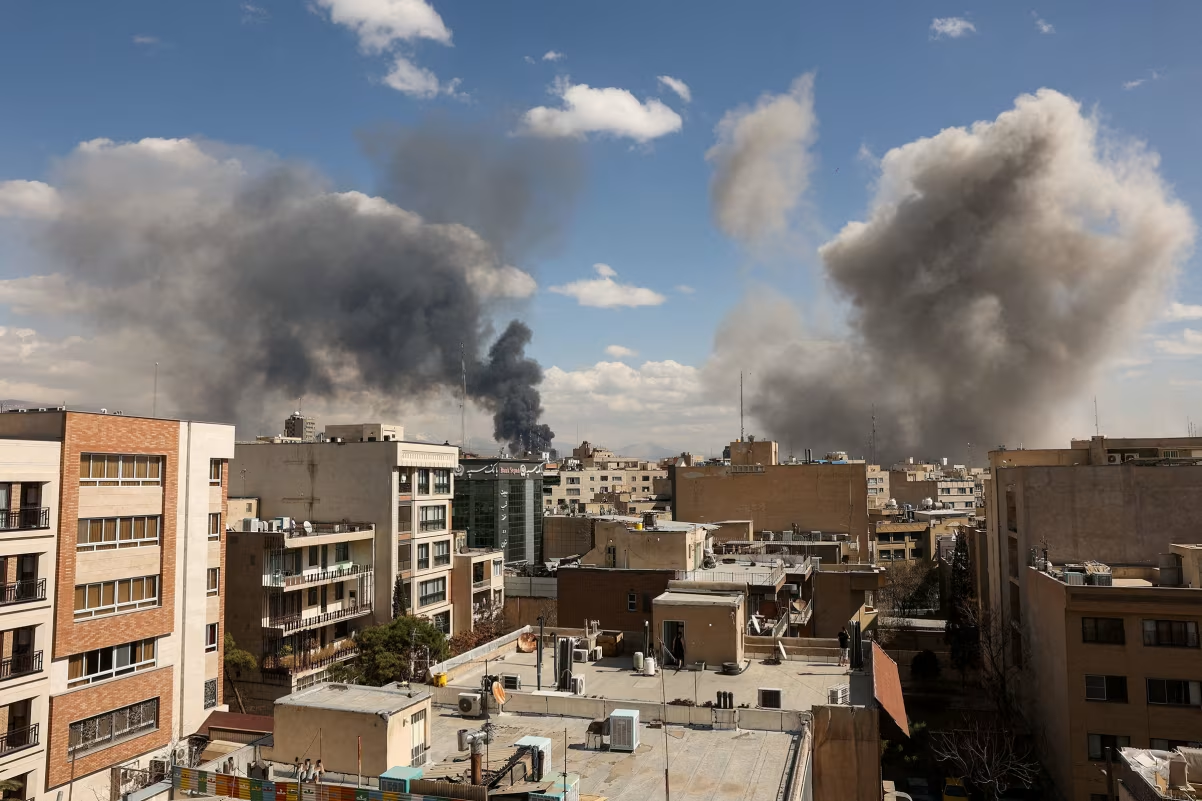

Missile alerts have become routine for Bella, a Nigerian software engineer living in Qatar. When Iran launched strikes on the country in early March 2026, her first instinct was to sleep. “It’s not the first time,” she told Techpoint Africa in a recent interview. “We’ve had alerts before. Life goes on.”
Bella is part of a growing community of Nigerian tech professionals in Qatar who are opting to remain despite the escalating conflict between the United States, Israel, and Iran, now in its third week. The war has disrupted airspace, grounded flights, spiked oil prices, and drawn in Gulf states hosting U.S. military bases. Yet many Nigerian expatriates in the tech sector are choosing stability over evacuation.
Qatar has long been a magnet for African talent, particularly in tech, finance, and engineering. Expatriates make up nearly 90% of the population, and Nigerian professionals have found competitive salaries (often 3–5 times what they earn at home), tax-free income, modern infrastructure, and relative safety compared to Nigeria’s economic volatility. For Bella and others, the calculus hasn’t changed: the risks of staying are outweighed by the economic realities of leaving.
“Back home, I’d be earning a fraction of what I make here,” Bella explained. “Even with the alerts, the job security, the lifestyle, the savings, it’s still better.” Many in her circle have family depending on remittances, Nigeria’s diaspora in the Gulf sends home billions annually, a lifeline for households amid naira depreciation and high unemployment. Returning to Nigeria’s challenges feels riskier than weathering occasional sirens.
The conflict has created real disruptions. Airspace closures stranded thousands, including transit passengers at Hamad International Airport. Nigerian authorities have urged citizens in the region to register and follow safety advisories, with the Nigerians in Diaspora Commission (NiDCOM) monitoring the situation and releasing emergency hotlines (e.g., Nigerian Embassy in Doha: +974 30197102). Evacuation plans exist but depend on safe airspace, something not yet guaranteed. Some Nigerians have voiced frustration online about delays, but tech workers like Bella report no immediate plans to leave.
Qatar’s response has helped. The government’s civil defense system is highly coordinated, with shelters, alerts, and support for residents. Expatriates praise the efficiency: “They take care of people here,” Khadijah Amusat, a Nigerian startup founder in Doha, said. “We trust the system more than in many other places.” Many Nigerians in tech roles work for multinational firms or local startups with strong security protocols, including work-from-home options during alerts.
This resilience reflects broader trends. Nigerian tech talent has been migrating to the Gulf for years, drawn by better pay, professional growth, and quality of life. The war hasn’t reversed that pull. Instead, many see it as temporary noise against long-term opportunity. Qatar’s stable environment, compared to conflict zones like Iran or Lebanon, and its distance from direct strike targets have kept most expats calm.
The stakes are high. Nigeria’s diaspora in the Gulf sends home billions in remittances annually, critical foreign exchange. If the conflict drags on or worsens, economic pressure could build. For now, professionals like Bella are betting on containment. “We’re not blind to the risks,” she said. “But we’ve built lives here. We’re staying.”
As the Gulf conflict enters its next phase, the decision to remain speaks to deeper calculations: opportunity versus uncertainty, stability abroad versus challenges at home. For Nigeria’s tech workers in Qatar, the choice is clear, for now.






 English
  简体中文
简体中文  Čeština
  Deutsch (Sie)
  Français


