



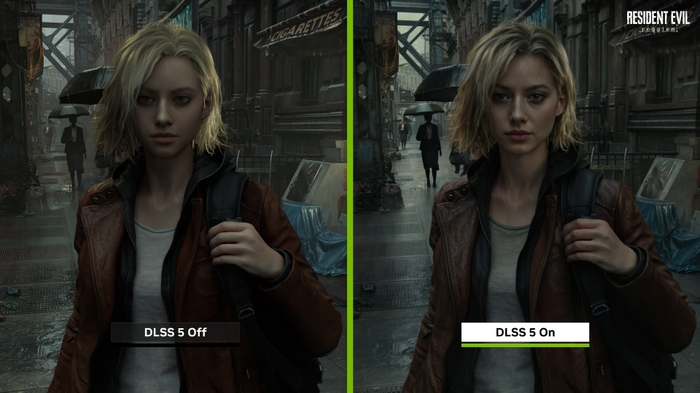

NVIDIA just dropped one of its biggest graphics announcements in years. At GTC 2026 on March 16, the company unveiled DLSS 5, calling it the most significant breakthrough in computer graphics since real-time ray tracing debuted in 2018. Unlike incremental updates, DLSS 5 introduces a full real-time neural rendering model that infuses every pixel with photorealistic lighting and materials, the kind of visual fidelity previously reserved for offline Hollywood VFX renders.
The technology arrives this fall (targeted for September–November 2026) and is designed to run efficiently on GeForce RTX 50-series GPUs. NVIDIA describes it as the “GPT moment for graphics,” blending traditional rendering with generative AI to close the gap between real-time game visuals and cinematic reality.
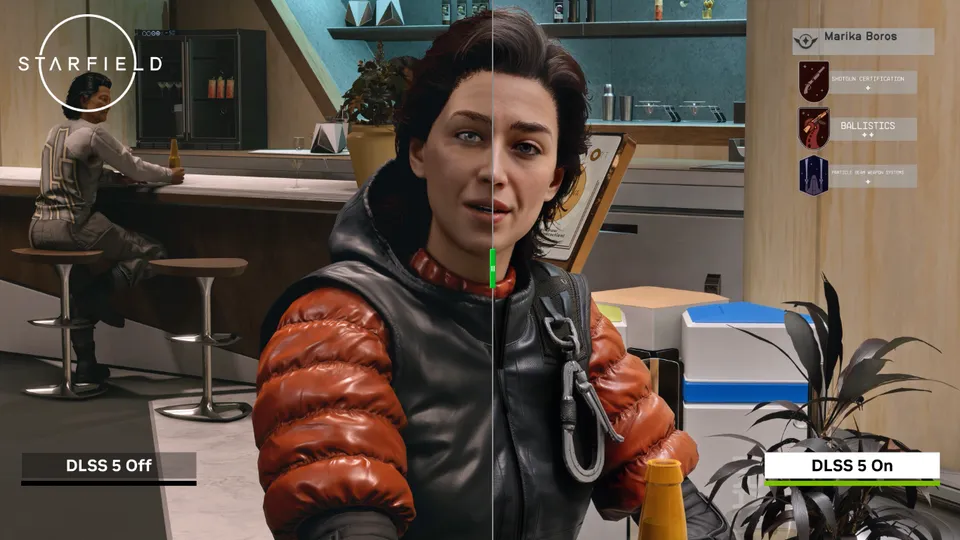
What DLSS 5 Actually Does
Traditional DLSS versions (including the recent DLSS 4 and 4.5) focused primarily on super-resolution upscaling and frame generation to boost performance while maintaining or improving image quality. DLSS 5 goes further by adding a dedicated neural rendering layer.
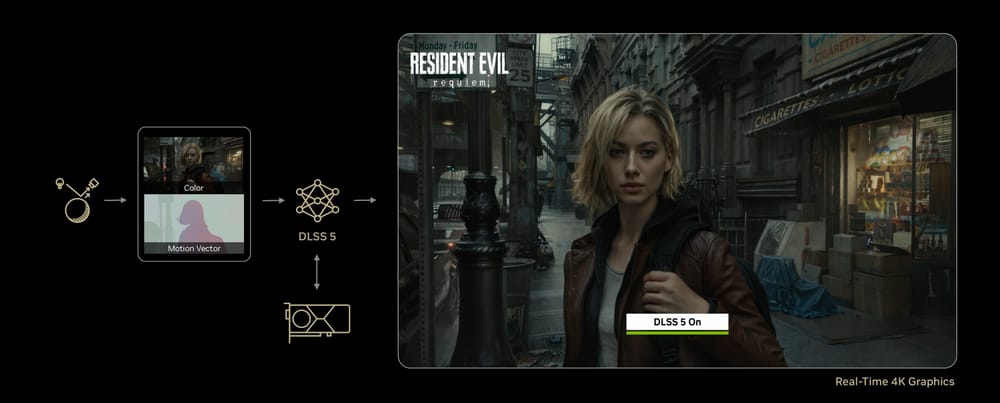
- It takes the game’s existing color buffers and motion vectors as input.
- The AI model then intelligently adds or enhances lighting, shadows, reflections, and material properties in real time.
- The result: more accurate global illumination, softer indirect lighting, richer material responses (think realistic metal, fabric, skin, and subsurface scattering), all without the heavy computational cost of full path tracing.
Early hands-on previews from Digital Foundry and others highlight noticeably more lifelike scenes, especially in complex indoor or outdoor environments with mixed lighting. NVIDIA emphasizes that developers retain full artistic control, per-scene tuning ensures the AI enhances rather than overrides the intended look.
Importantly, DLSS 5 is optimized to run on a single GPU at launch and targets smooth 4K gameplay with ray tracing enabled. It builds on the transformer-based architecture refined in DLSS 4.5 but shifts into true end-to-end neural scene understanding.
How It Compares to DLSS 4 / 4.5
- DLSS 4.5 (rolled out earlier in 2026): Improved super-resolution in linear space, reduced artifacts, and introduced 6x Multi Frame Generation + Dynamic Multi Frame Generation for RTX 50-series cards. It’s still primarily an upscaler/frame generator.
- DLSS 5: Adds the neural rendering model on top. Expect it to complement (and in many cases enhance) existing DLSS features rather than replace them. Games will likely offer combined DLSS 5 + Multi Frame Generation modes for maximum performance and visuals.
In short, DLSS 4.5 made games run smoother and look sharper. DLSS 5 aims to make them look dramatically more real.
Launch Timeline and Initial Support
- Release window: Fall 2026 (no exact date yet; NVIDIA says “this fall”).
- First wave of supported titles includes major releases such as Aion 2, Resident Evil Requiem, and several Ubisoft projects. NVIDIA has confirmed at least 16 games in development with DLSS 5 integration at launch.
- Developers can begin implementing it now through updated SDKs, with broader engine support (Unreal Engine, Unity, and custom engines) expected to follow quickly.
Existing RTX 50-series owners should get the update via a future GeForce driver and NVIDIA App. Older RTX 40-series cards may see limited or no support for the full neural rendering features due to the increased AI compute demands.
Why This Matters for Gamers and Developers
For players, DLSS 5 promises higher visual quality at playable frame rates, especially in demanding path-traced or heavily ray-traced titles. It could make max-settings 4K gaming more accessible without requiring the absolute highest-end hardware.
For developers, it lowers the barrier to photoreal graphics. Instead of hand-crafting every light bounce or material interaction, teams can lean on the AI model while preserving creative intent. This is particularly valuable for open-world, narrative-driven, or visually ambitious games.
NVIDIA is positioning DLSS 5 as the next step in its long-term vision: using AI not just to upscale or generate frames, but to fundamentally reinvent real-time rendering pipelines.
Potential Concerns and Early Reactions
As with any big AI graphics leap, reactions are mixed. Some gamers worry about “AI slop” or loss of artistic fidelity, while others are excited about the visual jump. NVIDIA has stressed per-game and per-scene controls to mitigate over-processing. Performance impact will vary by title and settings, expect initial benchmarks once the first games ship.
There’s also the usual hardware reality: the fullest experience will be locked behind RTX 50-series GPUs, continuing NVIDIA’s strategy of tying major DLSS advances to new silicon.
Also read: GTC 2026 Live Updates
What to Watch For Next
- Exact launch date and driver rollout later this year.
- First gameplay comparisons in supported titles (especially Resident Evil Requiem previews).
- Broader adoption across more games and engines in 2027.
- Potential integration with future RTX hardware features.
DLSS 5 won’t instantly turn every game into a Pixar movie, but it represents a clear evolution in how AI can enhance, rather than just accelerate, real-time graphics. If the early demos hold up in shipping titles, fall 2026 could mark a genuine visual inflection point for PC gaming.
Stay tuned as more details, benchmarks, and supported games emerge over the coming months. For now, DLSS 5 looks like NVIDIA’s most ambitious swing yet at making games not just faster, but strikingly more believable.


 English
  简体中文
简体中文  Čeština
  Deutsch (Sie)
  Français


