



In Benin City, Gideon fires up his generator at 8 p.m. and keeps it running until 7 a.m. He does it again in the afternoon for Zoom calls. According to a recent Techpoint Africa investigation. The fuel alone sets him back between ₦10,000 and ₦13,000 a day. That works out to ₦300,000–₦390,000 every month, before he even pays for internet or the occasional co-working space.
Gideon develops digital games. His laptop can handle light admin work on battery during the day, but anything intensive, rendering, testing, deep coding, has to wait for stable power. “During the day, I focus on lighter tasks because my laptop battery can last through meetings and admin work,” he told Techpoint Africa. “I avoid heavy or deep work during that time and reserve more intensive tasks for periods when I have stable power.”
He is not an outlier. Across Lagos, Abuja, and secondary cities, remote tech workers, animators, marketers, developers, freelancers chasing dollar-paying clients, are turning what used to be a monthly utility bill into a second rent.
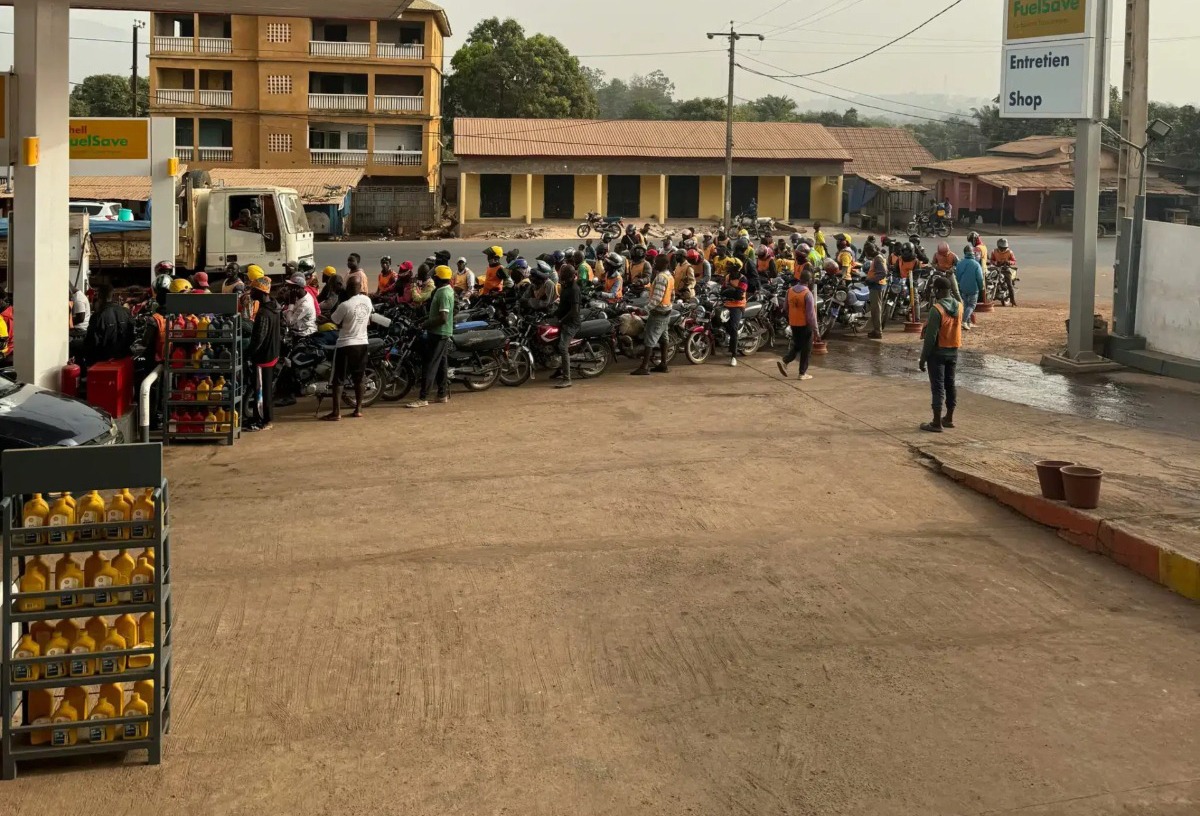
The numbers are brutal. Petrol now sells for as much as ₦1,300 a litre in some places, up sharply after successive hikes at the Dangote Refinery. A digital animator in Lagos named Ayodeji recently paid ₦54,000 for two 25-litre jerrycans, the same volume that cost him ₦40,000 in February. That fuel lasts him a week of heavy use or up to two if the grid flickers on and off. His 4KVA generator and inverter with four batteries are supposed to be the safety net. They are not.
Ayodeji’s neighbourhood, supplied by Ikeja Electric, can go nine straight days without power. Or it can blink on and off six times in an hour. “Electricity in this area has been unpredictably epileptic to put it mildly,” he said. The noise from the generator makes focused creative work almost impossible. Deadlines slip. Clients leave. “I have actually lost a client or two for not being able to meet deadlines due to poor electricity and constant struggles for petrol.”
Nigeria’s national grid has collapsed 244 times between 2010 and 2025. Gas shortages keep forcing plants offline. Average generation hovers around 4,000 MW against an installed capacity that looks impressive on paper but rarely delivers more than a third of it in practice. The service-band tariff system, Band A promising 20+ hours a day, down to Band E, has become more theory than reality for most urban households. Eighty-four percent of them already run generators as backup.
Remote work was supposed to be Nigeria’s quiet export advantage. Seventeen percent of jobs are already fully remote, and projections suggest the share could climb toward 50 percent in the next decade. Tech talent in Lagos and beyond has been plugging into global opportunities, Upwork gigs, contract roles with European and American studios, product roles at distributed startups. None of that works without reliable electricity and internet.
The cost is not just financial. Daniel, a digital marketer and brand manager, spends chunks of his workday hunting for petrol or negotiating desk space at cafés. Productivity evaporates. Deadlines get compressed. Clients who once tolerated the occasional outage now expect the same uptime they get from workers in Nairobi, Accra, or Eastern Europe.
Employers rarely reimburse power or data costs for contractors. The risk sits squarely on the individual. “Not everyone can afford to work from cafés or pay for constant alternative power,” Gideon noted. “It definitely affects how accessible remote work can be for many people.”
Some workers are adapting in small ways, restructuring their days around whatever power windows appear, shifting heavy tasks to midnight, keeping multiple devices charged in rotation. A few have started exploring solar, though upfront costs remain high and the article’s subjects were still leaning on generators and inverters. Hotels and co-working spaces have become temporary offices when the grid disappears for days.
The federal government announced full subscription of a ₦501 billion bond to clear arrears owed to generators and expects the Ajaokuta-Kaduna gas pipeline to come online later this year. Those moves are real, but they do not flip the switch today. Grid stability is measured in years, not weeks.
Meanwhile, the economic drag is obvious. Unreliable power already costs the broader economy billions annually in lost output; for the remote tech segment, the penalty is more personal and immediate. Missed contracts, eroded trust with international clients, and talent that quietly relocates or gives up on remote work altogether.
Nigeria’s digital economy push, smart cities, fintech unicorns, creative-tech studios, rests on the assumption that young, skilled workers can plug in and deliver from anywhere in the country. Right now, that assumption is running on petrol at ₦1,300 a litre, and the tank is emptying faster than the grid can refill it.
The workers themselves are not waiting for perfect policy. They are rationing focus, budgeting fuel like food, and still showing up. But showing up is no longer enough when the lights keep going out. For Nigeria’s remote tech ecosystem, the real question is how long talent can keep absorbing a cost that was never supposed to be part of the job description.





 English
  简体中文
简体中文  Čeština
  Deutsch (Sie)
  Français


