



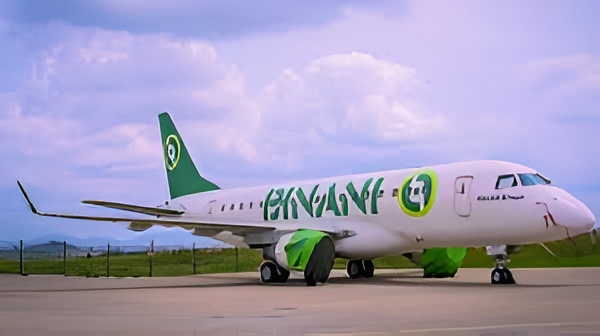

Nigeria’s aviation sector has recorded a major milestone with the launch of Binani Air, described as the country’s first fully female-owned airline to commence scheduled commercial flight operations.
The airline officially began operations on May 11, 2026, with inaugural flights connecting Abuja and Lagos, marking its transition from a charter aviation provider to a full-service domestic carrier.
Founded by entrepreneur Aishatu Dahiru Binani and led by Chief Executive Officer Aminatu Dahiru Chiroma, the airline positions itself as a new entrant in Nigeria’s competitive domestic aviation market while also highlighting female leadership within the industry.
Speaking on the airline’s launch, CEO Aminatu Dahiru Chiroma described the development as a significant moment for women in Nigerian aviation, stating that the company aims to demonstrate the growing role of female leadership across critical sectors of the economy.
Binani Air is headquartered at Murtala Muhammed International Airport and currently operates a fleet that includes Embraer E170 regional jets for domestic scheduled services, alongside a Hawker 800XP aircraft for private charter operations.
Following the commencement of flights between Lagos and Abuja, the airline disclosed plans to expand its route network to additional Nigerian cities including Yola, Kano, Maiduguri, Port Harcourt, and Awka.
The airline said the expansion strategy is intended to strengthen domestic connectivity and improve travel options across key commercial and regional destinations within Nigeria.
According to the statement, the Nigerian Civil Aviation Authority certified the airline after completing regulatory and safety assessments required for scheduled commercial operations.
Director-General of the NCAA, Chris Najomo, reportedly commended the airline for meeting regulatory and operational requirements necessary for certification.
The launch comes at a time when Nigeria’s aviation industry continues to face increasing demand for improved domestic air connectivity, fleet expansion, and operational reliability amid broader sector reforms and investment activity.


 English
  简体中文
简体中文  Čeština
  Deutsch (Sie)
  Français


