



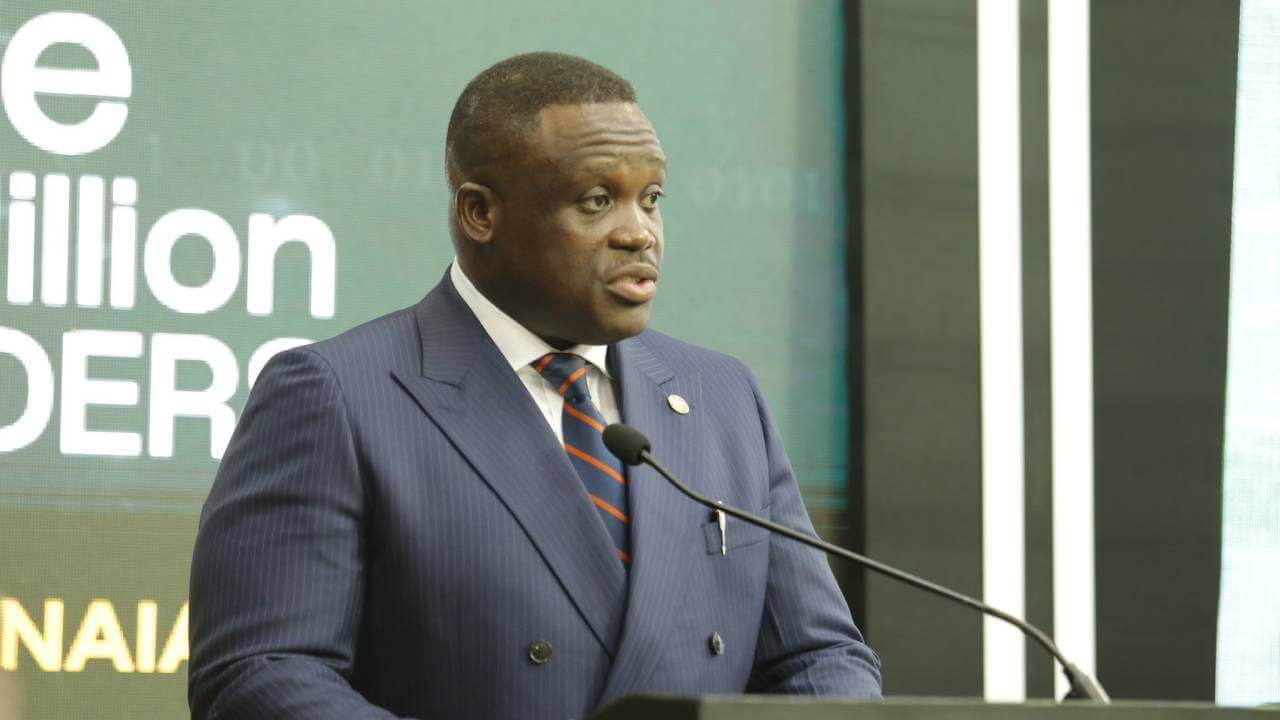

Ghana’s Minister for Communication, Digital Technology and Innovations, Samuel Nartey George, has called for urgent and deliberate policy measures to strengthen Africa’s position in the rapidly evolving global artificial intelligence landscape, warning that the window of opportunity is narrowing.
Speaking at a recent business roundtable organised by Ishmael Yamson & Associates, the minister stressed that Africa must move beyond fragmented initiatives to develop cohesive strategies that harness AI for economic transformation, youth employment, and global competitiveness. He emphasised the need for strong data governance, infrastructure investment, and skills development to avoid being marginalised in an AI-driven future.
“Africa’s opportunity to shape its place in the AI-driven global economy is narrowing and requires coordinated, forward-looking interventions,” George said, highlighting the importance of deliberate policy direction to ensure African countries are not left behind.
The minister’s remarks come weeks after Ghana launched its National Artificial Intelligence Strategy (2025–2035) in April 2026 under President John Dramani Mahama. The strategy, backed by a proposed National AI Fund and plans for a $250 million national AI computing centre, aims to position Ghana as a leading AI hub in West Africa through ethical AI adoption, research, and sector-wide integration.
George has consistently framed AI not merely as a technology issue but as a pathway for national development, particularly in agriculture, healthcare, education, and public service delivery. The strategy focuses on eight pillars, including workforce readiness, infrastructure expansion, and responsible innovation.
The call for urgent action reflects a broader realisation across Africa that individual national efforts may be insufficient against the pace of global AI advancement dominated by the United States, China, and Europe. George advocated for stronger intra-African collaboration, knowledge sharing, and harmonised regulatory approaches to maximise collective bargaining power and innovation capacity.
This stance aligns with ongoing discussions at the African Union level on digital transformation and AI governance. Several countries, including Rwanda, Kenya, and Egypt, have also advanced national AI strategies, but implementation gaps and infrastructure deficits remain significant challenges continent-wide.
Despite growing policy attention, Africa faces steep hurdles: limited high-performance computing infrastructure, unreliable electricity, fragmented data ecosystems, and a shortage of specialised AI talent. George’s emphasis on urgency underscores the risk that delayed action could widen the existing technology divide.
For Ghana, successful execution of its AI strategy could create new economic opportunities in a country where youth unemployment remains a pressing concern. The minister has prioritised public sector AI integration to improve efficiency and citizen-centred services.
As global competition in artificial intelligence accelerates, George’s intervention adds to the growing chorus of African leaders pushing for proactive rather than reactive approaches. The coming years will test whether national strategies translate into tangible gains in productivity, innovation, and inclusive growth across the continent.


 English
  简体中文
简体中文  Čeština
  Deutsch (Sie)
  Français


