

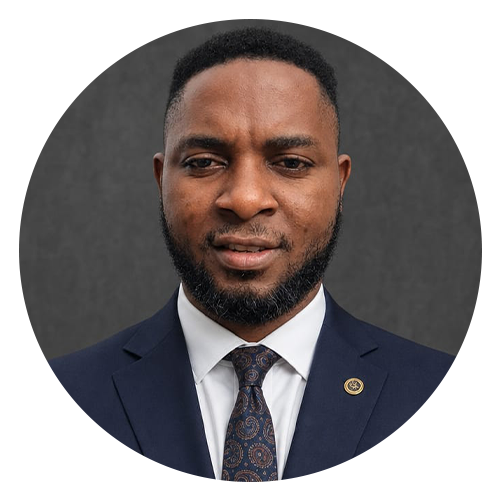
The death of Leonid Radvinsky at 43 marks a rare moment of uncertainty for one of the internet’s most profitable, and controversial, platforms. For a company that has largely operated under a single, low-profile owner, the question now isn’t just about leadership succession. It’s about whether OnlyFans can evolve beyond the model that made it a multibillion-dollar business in the first place.
Radvinsky’s passing follows a prolonged battle with cancer, confirmed by the company this week . He had owned a majority stake in OnlyFans since acquiring its parent company, Fenix International, in 2018, a move that would ultimately reshape the economics of online adult content. Under his leadership, OnlyFans grew into a platform with hundreds of millions of users and over $1 billion in annual revenue, driven largely by its subscription-based creator model .
But structurally, the company had already begun preparing for a future without him.
A company built to outlive its founder
By 2024, Radvinsky had transferred his ownership into a trust, a move that now looks less like estate planning and more like corporate continuity strategy . That detail matters. It suggests that control of OnlyFans won’t suddenly shift into chaos, at least not immediately.
Still, ownership and leadership are not the same thing.
OnlyFans has historically operated with minimal public-facing executives and a deliberately opaque governance structure. Unlike typical Silicon Valley companies, it doesn’t rely on a visible founder-CEO persona to drive narrative or investor confidence. That has been both a strength and a risk.
In the near term, the platform is likely to continue operating without disruption. The bigger question is what happens next: does the trust maintain long-term control, or does it accelerate an exit?
The sale question just got more urgent
Before Radvinsky’s death, OnlyFans was already exploring a potential sale. Reports earlier this year suggested discussions around selling a majority stake at a valuation of roughly $5–8 billion .
That context changes everything.
With the founder gone, the likelihood of a sale, partial or full, increases significantly. Trust-controlled assets often lean toward liquidity events, especially when there is no single operator-founder actively steering long-term strategy.
Potential buyers, however, face a complicated asset.
OnlyFans is immensely profitable, taking a 20% cut of creator earnings . But it also carries reputational, regulatory, and content moderation risks that have historically limited institutional investor appetite.
That tension, high margins versus high controversy, has always defined the company. Now it becomes central to its future.
Can OnlyFans become more than adult content?
For years, OnlyFans has tried, and largely failed, to diversify beyond adult content.
The platform hosts fitness trainers, musicians, influencers, and even celebrities. But its brand remains overwhelmingly tied to pornography, a positioning that has made it culturally dominant but strategically constrained.
Attempts to pivot have been inconsistent. In 2021, OnlyFans briefly announced a ban on explicit content before reversing course after backlash, a moment that exposed how dependent the platform is on its core creator base.
That dependency hasn’t changed.
If anything, Radvinsky’s leadership reinforced a clear thesis: lean into what works. And what works, commercially, is adult content.
Without him, a new ownership structure might revisit diversification, especially if a buyer is looking to “clean up” the brand for broader monetization. But that path is risky. Any aggressive shift away from adult creators could undermine the very ecosystem that generates its revenue.
Regulatory pressure isn’t going away
Even before this transition, OnlyFans faced ongoing scrutiny.
Investigations and reports have raised concerns about content moderation, including issues around coercion and illegal material appearing on the platform . Regulators in multiple jurisdictions have increasingly focused on platforms that host user-generated adult content, particularly around verification and safety standards.
That pressure will likely intensify in a post-Radvinsky era.
Founder-led companies often navigate regulatory gray areas through strong internal alignment. Without that central figure, decision-making can become more cautious, or more fragmented.
Either way, OnlyFans may find itself needing to formalize governance, transparency, and compliance in ways it has historically avoided.
The creator economy test case
Zooming out, OnlyFans sits at the center of a much larger shift: the monetization of individual creators.
It proved that millions of people are willing to pay directly for conten, bypassing advertisers, platforms, and intermediaries. That model has since influenced everything from Patreon to Substack to TikTok’s evolving monetization features.
But OnlyFans remains the most extreme, and most profitable, version of that model.
What happens next will be closely watched across the creator economy.
If the platform successfully transitions ownership while maintaining growth, it reinforces the idea that creator-led subscription businesses can scale independently of founders.
If it struggles, through regulatory pressure, brand challenges, or strategic missteps, it could expose the limits of platforms built around highly sensitive content categories.
An inflection point, not an endpoint
Radvinsky was never a public-facing tech icon. He rarely gave interviews, avoided media attention, and built OnlyFans into a global business largely out of sight.
That makes this moment unusual. The company is now entering its most visible phase precisely because its most private figure is gone.
The future of OnlyFans will likely be shaped less by legacy and more by structure: who controls the trust, whether a sale materializes, and how aggressively new leadership attempts to redefine the platform.
For now, the fundamentals remain intact, a massive user base, strong revenues, and a deeply embedded creator ecosystem.
But for the first time since 2018, OnlyFans is no longer a founder-controlled company in practice.
And that changes the calculus entirely

 English
  简体中文
简体中文  Čeština
  Deutsch (Sie)
  Français


