


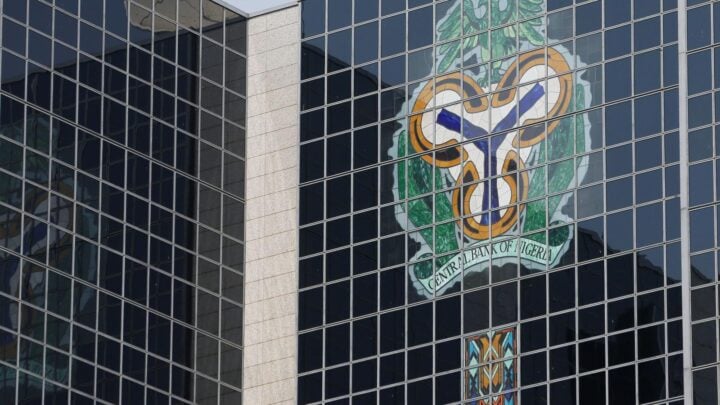

The Central Bank of Nigeria (CBN) has issued new baseline standards that explicitly require financial institutions to deploy automated anti-money laundering (AML) systems, with artificial intelligence, machine learning, and predictive analytics now built directly into the regulatory framework. The circular, dated March 10, 2026, and titled “Baseline Standards for Automated Anti-Money Laundering (AML) Solutions for Financial Institutions in Nigeria,” marks the first time the CBN has mandated the use of advanced technologies like AI for real-time transaction monitoring and suspicious activity detection across the sector.
The policy applies to deposit money banks (DMBs), mobile money operators, international money transfer operators, payment service providers, and other regulated entities. It sets minimum technical, governance, and operational requirements for automated AML tools, emphasizing real-time monitoring, behavioral analysis, sanctions screening, and automated reporting to improve detection of money laundering, terrorism financing, and proliferation financing.
A key innovation is the explicit encouragement, and in practice, effective requirement, of emerging technologies. The framework allows and promotes AI, machine learning, predictive analytics, and behavioral monitoring to identify unusual patterns that manual processes often miss. Institutions using AI-based models must conduct periodic validation, including accuracy checks, fairness audits, bias testing, and independent annual reviews to ensure reliability and prevent discriminatory outcomes.
Implementation timelines are staggered: full compliance for DMBs is required within 18 months (by September 2027), while other financial institutions have 24 months (by March 2028). All must submit detailed implementation roadmaps within three months of issuance. The standards take effect immediately from March 10, 2026, with the CBN overseeing compliance through regular audits and monthly reporting (due by the 5th of each month). Non-compliance will trigger penalties under existing AML/CFT laws.
This isn’t a complete overhaul of Nigeria’s AML regime, core obligations under the Money Laundering (Prevention and Prohibition) Act 2022 remain unchanged, but it represents a significant regulatory pivot toward technology-driven enforcement. The CBN’s move aligns with global trends where regulators (e.g., MAS in Singapore, FCA in the UK) have pushed for AI in AML, but Nigeria’s explicit inclusion of AI/ML in baseline standards for all regulated institutions is notable in the African context. It comes as digital transactions explode, fintechs proliferate, and the country works to exit the FATF grey list by demonstrating stronger preventive controls.
For banks and fintechs, the directive means upgrading legacy systems or procuring enterprise-grade AML platforms capable of handling high-volume, real-time data. Smaller players may face higher costs and integration challenges, while larger institutions with existing AI tools could gain a compliance edge. The emphasis on bias testing and fairness audits also signals the CBN’s awareness of AI risks in a diverse market like Nigeria, where algorithmic decisions could inadvertently affect underserved populations.
The policy arrives amid Nigeria’s broader digital finance push. With mobile money and agent banking driving inclusion, the CBN is betting that automated, intelligent monitoring can keep pace with innovation without stifling it. Early feedback from industry groups suggests support for the direction, though questions linger about timelines, vendor readiness, and enforcement capacity in a resource-constrained regulator.
Whether this becomes the model for other African central banks remains to be seen. For now, it’s a clear signal from the CBN: in Nigeria’s fight against financial crime, the future is automated, and increasingly powered by AI.





 English
  简体中文
简体中文  Čeština
  Deutsch (Sie)
  Français


