

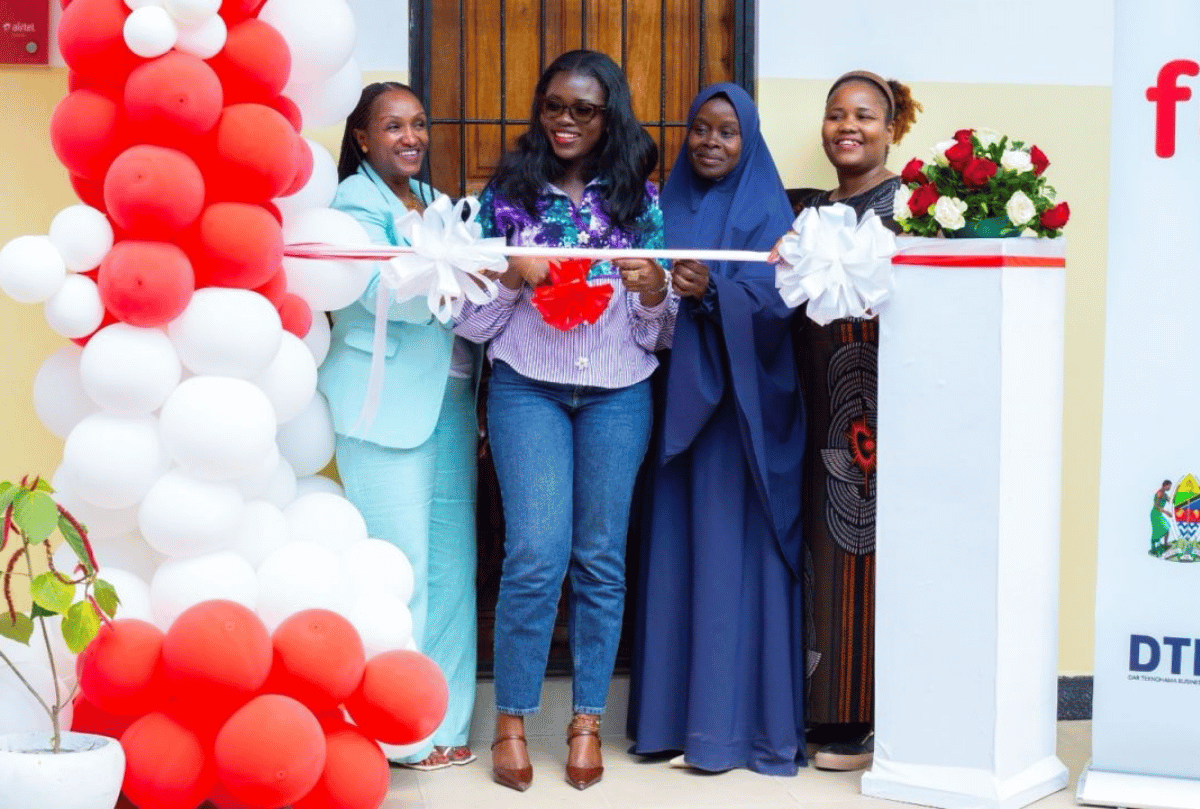
Airtel Tanzania’s Fursa Lab programme continues to expand access to practical digital skills for students and young people, with its flagship facility at Kijitonyama Secondary School in Kinondoni Municipality serving as a key hub for hands-on training in coding, robotics, design and entrepreneurship. Operated in partnership with the Dar Teknohama Business Incubator (DTBi), the initiative provides free or low-barrier access to computers, internet connectivity and structured courses that address gaps between classroom learning and the demands of the digital economy.
Launched in 2017 under DTBi in collaboration with Airtel Tanzania, the Fursa Lab was initially established at Kijitonyama Primary School and later transitioned to the secondary school as the institution evolved. The facility can accommodate at least 50 learners per session and offers training ranging from basic computer literacy to advanced modules in programming languages such as Python and Java, robotics platforms including Arduino and Lego Mindstorms, web development, graphic and 3D design, digital marketing, and introductory AI and IoT applications.
According to DTBi data, the programme has reached more than 4,000 beneficiaries since inception. This includes over 2,500 pupils and students, hundreds of primary and secondary teachers, youth and women entrepreneurs, and members of vulnerable groups. Gender participation has been relatively balanced, with strong representation of women among entrepreneur trainees. In 2025 alone, DTBi conducted digital literacy training for hundreds of participants, including dedicated sessions for girls in STEM.
Students at Kijitonyama have applied skills gained in the lab to practical projects, including prototypes such as solar-powered solutions, smart irrigation systems and assistive devices. Teachers report that the lab has shifted the school’s approach toward innovation and income-generating ideas, helping learners move from theoretical knowledge to applied problem-solving.
Airtel positions Fursa Lab as a complement to other education initiatives, including the zero-rated Airtel SmartWASOMI platform that provides curriculum-aligned content in partnership with UNICEF and the Tanzania Institute of Education. The lab has also supported outreach beyond Dar es Salaam, including training activities in regions such as Kagera, and recent women-focused accelerators that combine digital tools with financial inclusion and business skills.
Officials from Airtel and DTBi emphasise that the programme responds to a persistent skills mismatch: many young Tanzanians leave school with limited practical digital experience, while employers and the wider economy require competencies in coding, design, data and innovation. By offering free access to equipment, connectivity and mentorship, Fursa Lab aims to lower barriers for public-school students and out-of-school youth.
As Tanzania advances its digital transformation agenda, initiatives such as Fursa Lab illustrate how private-sector connectivity and public-private partnerships can translate infrastructure into tangible skills development. Continued expansion of training opportunities and deeper integration with vocational pathways will determine how effectively these programmes scale impact for the next generation of learners and innovators.