


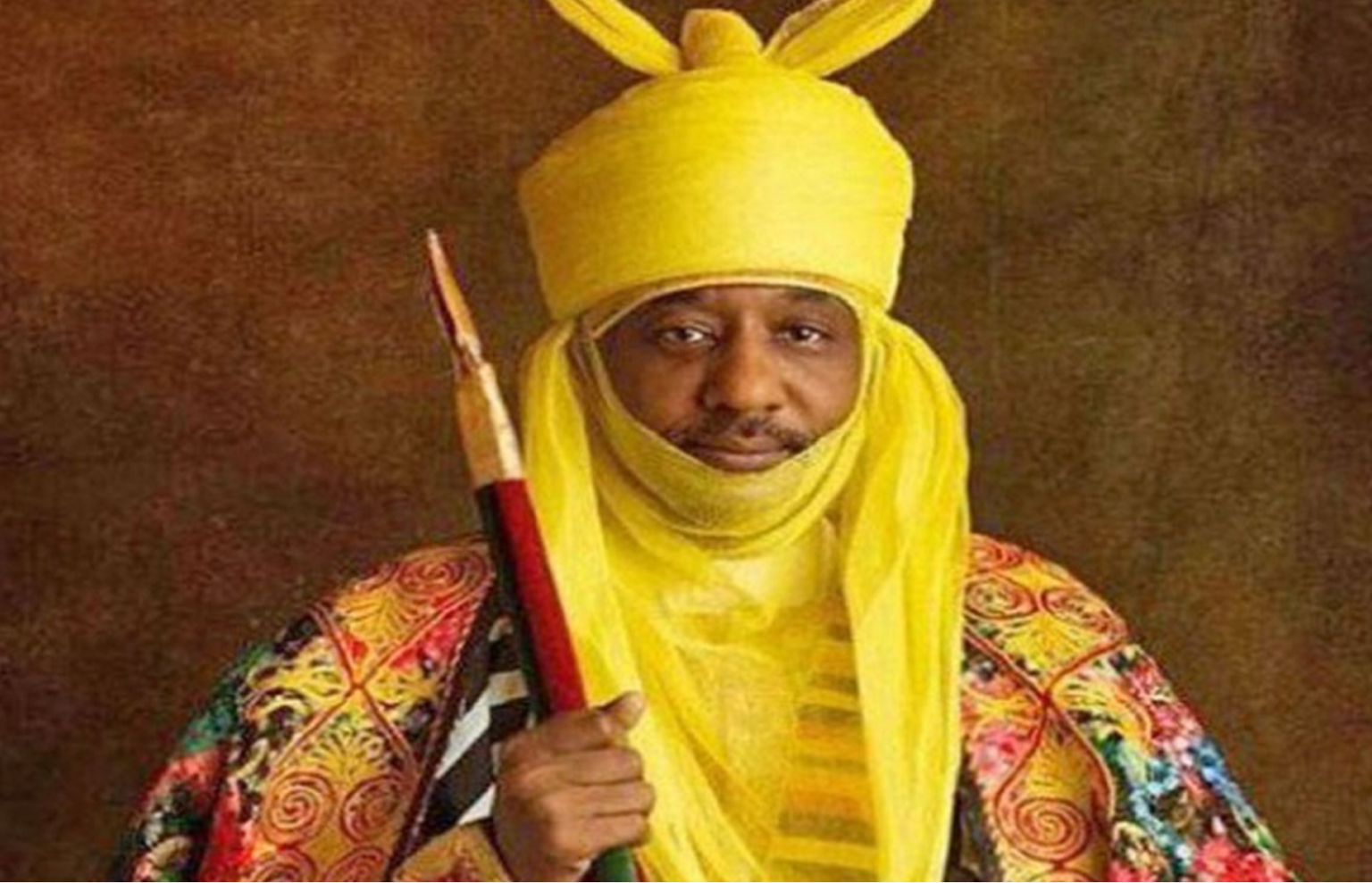

It’s not often that a traditional ruler in northern Nigeria becomes the subject of a financial disclosure tied to a publicly listed telecom giant. But a recent report that Lamido Sanusi, the Emir of Kano, received N442 million (approximately $324,000) from MTN Group in the 2025 fiscal year is drawing attention, not just for the amount, but for what it reveals about the intersection of corporate governance, influence, and public perception in Nigeria.
The figure reportedly appears in MTN Group’s financial disclosures, where companies typically outline payments made to directors and key stakeholders. Sanusi, a former central bank governor and now a prominent traditional ruler, has served in various advisory and non-executive capacities in the corporate world over the years. His association with MTN is not new, but the scale of the reported compensation has triggered renewed scrutiny.
What the payment represents, salary, board fees, allowances, or a combination of all three, is critical context that has not been fully clarified in public reporting. Large multinationals like MTN often compensate non-executive directors and board members in ways that reflect both their strategic value and the complexity of operating across multiple African markets. In that sense, the number, while eye-catching, is not necessarily outside the bounds of global corporate practice.
Still, this is Nigeria, where the lines between public influence and private sector roles are frequently debated.
Sanusi occupies a unique position. Before ascending the throne in Kano, he built a reputation as a reformist central banker, known for outspoken views on financial governance and systemic risk. That legacy has followed him into his current role, where he remains one of the most visible and intellectually engaged traditional rulers in the country. His presence on the board of a major telecom operator like MTN can be read as part of a broader pattern: companies seeking individuals with deep regulatory insight and socio-political capital to navigate complex operating environments.
MTN, for its part, operates in a market where regulatory relationships, public trust, and local legitimacy are not abstract concerns. Nigeria is its largest and most strategically important market. Over the past decade, the company has faced everything from hefty regulatory fines to currency volatility and shifting policy frameworks. Having figures with strong institutional knowledge and credibility is, from a corporate standpoint, a rational hedge.
Also Read: Big payday for people with MTN shares
But the optics are harder to manage.
Traditional rulers in Nigeria do not hold formal executive power, yet they wield significant cultural and political influence. When such figures receive substantial payments from private corporations, it inevitably raises questions, about independence, about potential conflicts of interest, and about how influence is exercised in a system where formal and informal power structures often overlap.
It’s also worth noting that transparency around executive and board compensation is still evolving across African markets. While MTN Group, as a South Africa-listed company, adheres to relatively stringent disclosure standards, public understanding of these disclosures can lag behind. Numbers get reported; context often doesn’t.
So the headline, N442 million paid to the Emir of Kano, travels faster than the footnotes explaining how and why.
There is, as of now, no indication of wrongdoing. The payment, based on available information, appears to be part of formal corporate compensation structures. But the conversation it has sparked points to something deeper: a growing expectation that both corporations and public figures operate with a level of transparency that matches their influence.
In a country where trust in institutions is uneven, these moments tend to resonate beyond the balance sheet.
For MTN, the challenge is reputational as much as operational, ensuring that its governance practices are not only compliant but also clearly understood. For Sanusi, it’s another reminder that his dual identity, as both a traditional ruler and a globally recognized economic figure, will continue to attract scrutiny in ways few others experience.
And for observers of Nigeria’s evolving corporate landscape, it’s a case study in how power, money, and perception intersect in one of Africa’s most complex markets.


 English
  简体中文
简体中文  Čeština
  Deutsch (Sie)
  Français


