



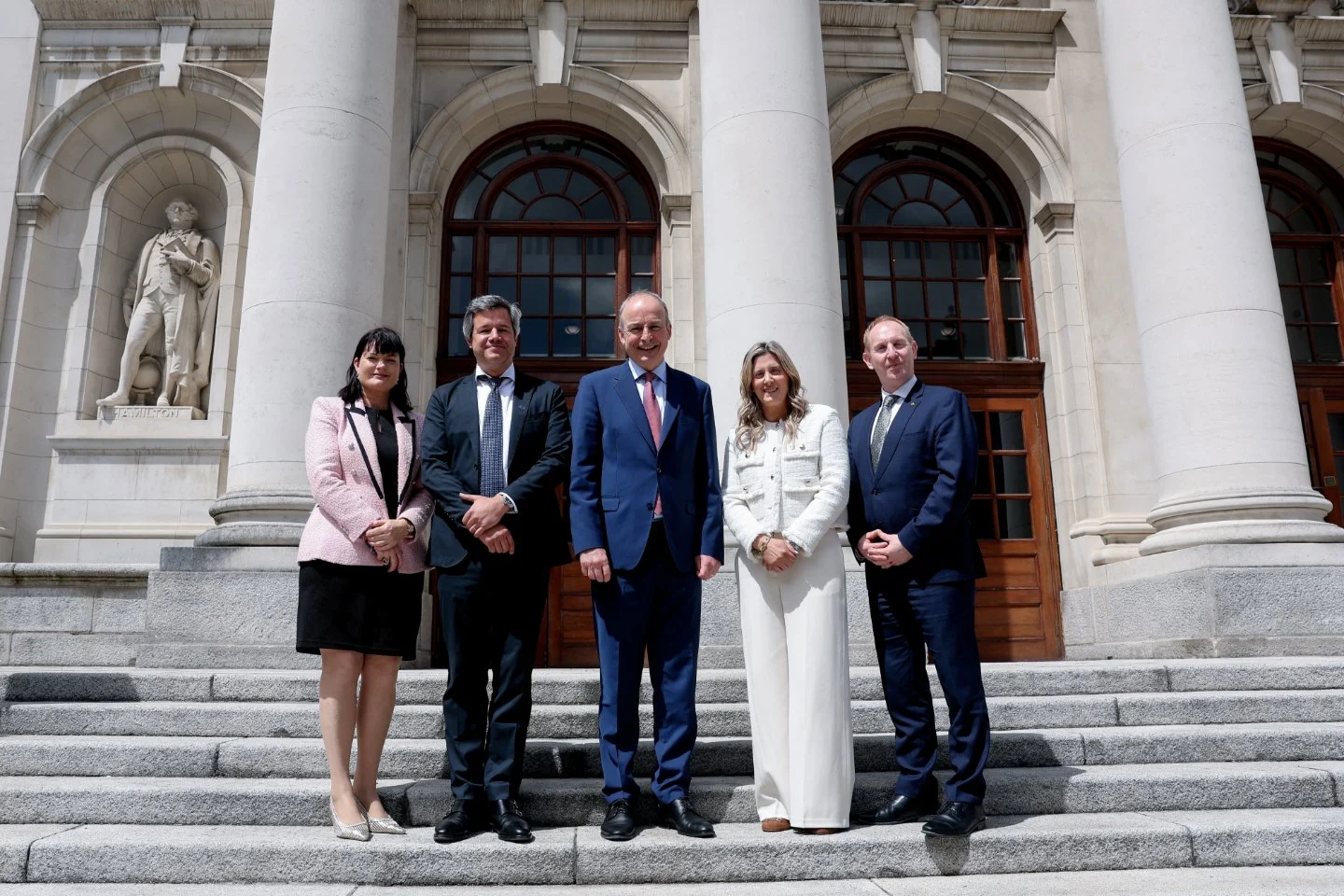

OpenAI is making its biggest commitment yet to Europe, announcing plans to more than triple the size of its workforce at its European headquarters in Dublin as competition in the artificial intelligence industry shifts beyond building powerful models to securing talent, infrastructure and closer ties with governments and businesses.
The company said it will hire 250 additional employees over the next two years, increasing its Dublin workforce from just over 100 to about 350. It has also leased an 88,000 square foot office at the Tropical Fruit Warehouse in Dublin’s Silicon Docks, a district that has become home to the European headquarters of some of the world’s largest technology companies.
On the surface, the announcement is about new jobs and office space. The bigger story, however, is what it reveals about OpenAI’s long term strategy.
When OpenAI established its European headquarters in Dublin in 2023, the company was still riding the explosive success of ChatGPT, which had sparked the fastest consumer technology adoption in history. Three years later, the conversation has changed. AI companies are no longer competing solely on model performance. They are racing to strengthen their presence in key global markets where regulation, enterprise adoption and public policy are becoming just as important as technical breakthroughs.
Europe has emerged as one of those strategic markets.
The European Union has taken a leading role in regulating artificial intelligence through the AI Act, creating a framework that companies developing and deploying advanced AI systems must navigate. At the same time, businesses across the region are accelerating investment in generative AI tools, creating fresh demand for engineering, customer support, legal and privacy expertise.
OpenAI’s hiring plans reflect that shift. The company said the new roles will span engineering, sales, finance, legal, privacy, human resources and customer operations, signalling that its European ambitions now extend well beyond research and product development.
The decision also reinforces Dublin’s status as one of Europe’s most influential technology hubs.
For more than two decades, Ireland has attracted major multinational technology companies with its highly skilled workforce, business friendly environment and access to the European market. Google, Microsoft and Meta all operate major European headquarters from Dublin, while pharmaceutical companies have also built significant operations in the country. Foreign multinationals now account for roughly 11 percent of employment in Ireland, making overseas investment a critical part of the country’s economy.
OpenAI’s expansion is particularly notable because it comes at a time when parts of Ireland’s technology sector have been experiencing workforce reductions. Companies including Meta and TikTok have announced job cuts in recent years as the industry adjusted after rapid pandemic era hiring. Against that backdrop, OpenAI’s expansion offers a rare signal that investment in artificial intelligence continues to generate new employment even as other areas of the technology industry remain under pressure.
The move also fits into a broader pattern.
Earlier this year, OpenAI announced plans to make London its largest research hub outside the United States, highlighting the company’s intention to deepen its footprint across Europe. Together, the London research expansion and the growth of its Dublin headquarters suggest OpenAI is building a stronger operational network across the region rather than relying on a single location.
For businesses, startups and policymakers, the announcement carries implications that extend beyond Ireland.
As AI adoption accelerates, companies are increasingly looking for local expertise to help customers deploy AI systems, comply with evolving regulations and integrate new technologies into existing operations. Expanding engineering and customer facing teams in Europe could allow OpenAI to respond more quickly to regional market needs while strengthening relationships with governments and enterprise clients.
For Africa, the development is also worth watching. Many African startups, developers and businesses rely on AI tools developed by companies such as OpenAI. A larger European operation could improve support for customers across the Europe, Middle East and Africa region while creating new opportunities for partnerships and enterprise adoption.
OpenAI has not disclosed the financial value of the investment, and the company has not announced plans for additional European offices. Even so, the expansion offers another indication that the global AI race is entering a new phase, one where winning will depend not only on building more capable models, but also on establishing the people, infrastructure and regional presence needed to support them.
For now, Dublin is becoming one of the clearest signs of where that next chapter is taking shape.

 English
  简体中文
简体中文  Čeština
  Deutsch (Sie)
  Français


