


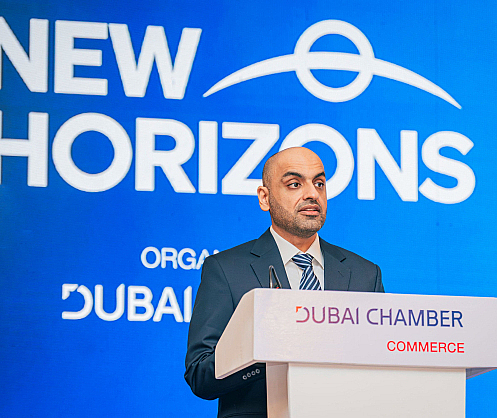
The Dubai Chamber of Commerce has wrapped up a high-intensity trade mission to Ethiopia, culminating in a record 510 bilateral business-to-business meetings between Dubai-based companies and their Ethiopian counterparts.
The meetings, described as the highest number achieved under the chamber’s “New Horizons” initiative since its 2023 launch, took place during the Ethiopia leg of a broader mission that also visited Ghana. They focused on forging partnerships across priority sectors including logistics, agriculture, manufacturing, tourism, and renewable energy.
The mission featured the “Dubai–Ethiopia Business Connect” forum, organised in partnership with the UAE Embassy in Addis Ababa, the Ethiopian Chamber of Commerce and Sectoral Associations, the Addis Ababa Chamber of Commerce, and the Ethiopian Investment Commission. Senior officials from both sides attended, highlighting Ethiopia’s strategic position as a gateway to East Africa.
Mohammad Ali Rashed Lootah, President and CEO of Dubai Chambers, emphasised Ethiopia’s growing importance as a trade and investment destination. He encouraged Emirati businesses to capitalise on the country’s improving investment climate and market potential.
The mission’s scale reflects accelerating economic ties. Dubai’s non-oil trade with Ethiopia reached AED 22.3 billion in 2025, marking a striking 236.6% year-on-year increase. This growth comes as Ethiopian authorities pursue economic liberalisation, including currency reforms and efforts to attract foreign direct investment after years of political and security challenges.
Dubai Chamber has maintained a representative office in Addis Ababa since 2013, serving as a long-standing bridge for UAE businesses into the African market. The current push aligns with Dubai’s broader strategy of diversifying partnerships beyond traditional Gulf and Asian markets toward high-growth African economies.
Ethiopia, with a population exceeding 120 million and ambitious industrialisation goals under its Homegrown Economic Reform Agenda, offers opportunities in agro-processing, textiles, pharmaceuticals, and infrastructure development. For Dubai firms, the country represents both a consumer market and a potential manufacturing base with access to the African Continental Free Trade Area (AfCFTA).
The record number of meetings signals maturing business interest from the UAE in Ethiopia, part of a wider pattern of Gulf capital flowing into East Africa. UAE entities have invested in Ethiopian ports, logistics, and agriculture in recent years, viewing the Horn of Africa as critical for trade routes and food security.
For Ethiopia, such missions provide vital capital and expertise at a time when the government is keen to boost exports, reduce trade imbalances, and create jobs. Success will hinge on translating initial meetings into firm commitments, navigating regulatory hurdles, and addressing infrastructure gaps in power, transport, and logistics.
Participants explored not only immediate trade deals but also longer-term joint ventures that could anchor supply chains linking Dubai’s global logistics hub with Ethiopian production capacity.
With the mission concluded, attention now turns to follow-up mechanisms that convert discussions into contracts and investments. Dubai Chamber officials indicated plans to track outcomes and support implementation through its Addis office.
As Ethiopia stabilises politically and pursues reforms, and as Dubai continues positioning itself as a global connector, this latest trade mission could mark another step in deepening Gulf-Africa commercial corridors. The coming months will reveal whether the record engagement in Addis Ababa yields measurable gains in bilateral trade and investment flows.