



Nigerian agribusiness startup Tomato Jos has secured a $2 million investment from Sabou Capital in a move aimed at accelerating local tomato processing and strengthening Nigeria’s push to reduce dependence on imported tomato paste.
The investment comes at a critical moment for Nigeria’s agricultural and food manufacturing sectors, as policymakers intensify efforts to curb food imports and boost domestic production capacity.
Founded by American-Nigerian entrepreneur Mira Mehta, Tomato Jos has spent the last decade building an integrated tomato farming and processing business designed to solve one of Nigeria’s biggest agricultural paradoxes: despite being one of Africa’s largest producers of fresh tomatoes, the country still imports hundreds of millions of dollars worth of tomato paste annually.
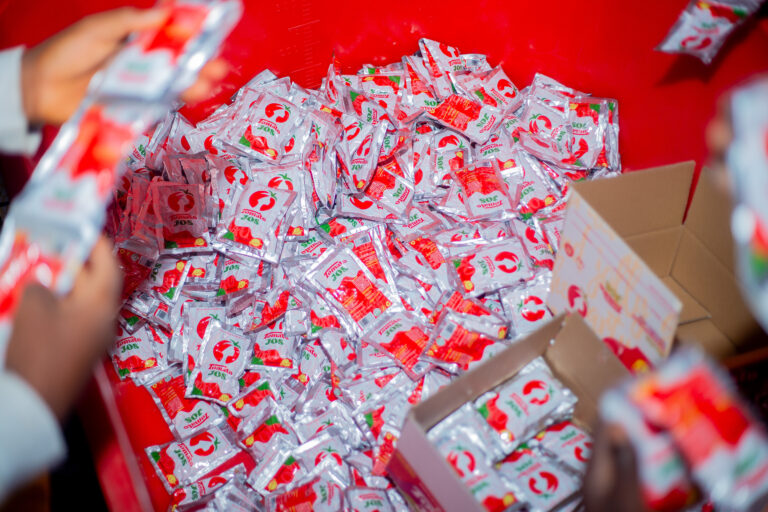
According to industry estimates, Nigeria spends more than $400 million every year importing tomato paste due to weak processing infrastructure, poor storage systems, and massive post-harvest losses. Experts estimate that between 40% and 50% of locally grown tomatoes are lost before reaching consumers or processors.
Sabou Capital said the investment will support Tomato Jos in expanding its processing operations, increasing local sourcing from smallholder farmers, and scaling production of locally made tomato products.
The funding also reflects growing investor interest in companies positioned around import substitution and food security in Africa’s largest economy.
Building a Local Alternative to Imported Tomato Paste
Tomato Jos was founded in 2014 with a business model focused on local production for local consumption. The company operates commercial farms in Kaduna State while partnering with thousands of smallholder farmers to improve tomato yields and guarantee market access.
Over the years, the company has invested heavily in irrigation systems, processing infrastructure, and farmer training programmes aimed at reducing waste and improving supply consistency.
In 2020, Tomato Jos commissioned a multi-billion-naira tomato processing facility in Kaduna with support from the Central Bank of Nigeria and First City Monument Bank under the Real Sector Support Facility initiative. The company said the facility was designed to process fresh tomatoes into locally manufactured tomato paste and packaged food products.
Tomato Jos later launched its first consumer tomato paste product in sachet form, positioning itself as one of the few Nigerian companies producing tomato paste directly from locally grown fresh tomatoes rather than imported concentrate.
The company says its long-term ambition is to rebuild Nigeria’s tomato value chain by reducing waste, improving farmer productivity, and replacing imported tomato products with locally manufactured alternatives.
Nigeria’s Push for Import Substitution
The latest investment also aligns with Nigeria’s broader industrial and food security agenda.
For years, successive governments have attempted to reduce dependence on imported food products by supporting local agriculture and restricting certain imports. Tomato paste has remained a major focus because of Nigeria’s unusually high reliance on imported concentrates despite large-scale domestic tomato cultivation.
Industry stakeholders argue that the challenge is not tomato production itself, but processing capacity and logistics infrastructure.
While Nigeria produces millions of tonnes of tomatoes annually, limited cold-chain systems, weak transportation networks, and inadequate processing facilities continue to prevent the country from converting enough fresh produce into shelf-stable consumer products.
Analysts say companies like Tomato Jos could play a key role in addressing that gap by building vertically integrated agricultural businesses capable of connecting farmers directly to processors and retail markets.

Investor Confidence in Agricultural Infrastructure
The investment from Sabou Capital also highlights a growing shift among African-focused investors toward agricultural infrastructure and value-chain businesses.
Sabou Capital, which focuses on early- and growth-stage businesses across West and Central Africa, described Tomato Jos as a company rebuilding Nigeria’s food systems “from the ground up.”
The firm said Tomato Jos fits its broader investment strategy of backing businesses capable of creating jobs, improving local manufacturing capacity, and strengthening regional supply chains.
The investment comes as food inflation, foreign exchange pressure, and rising import costs continue to force renewed attention on local production across Nigeria’s consumer goods sector.
For Tomato Jos, the latest funding may represent more than just growth capital.
It is another step in a longer effort to prove that locally produced food products can compete with imports in one of Africa’s most challenging manufacturing environments.