



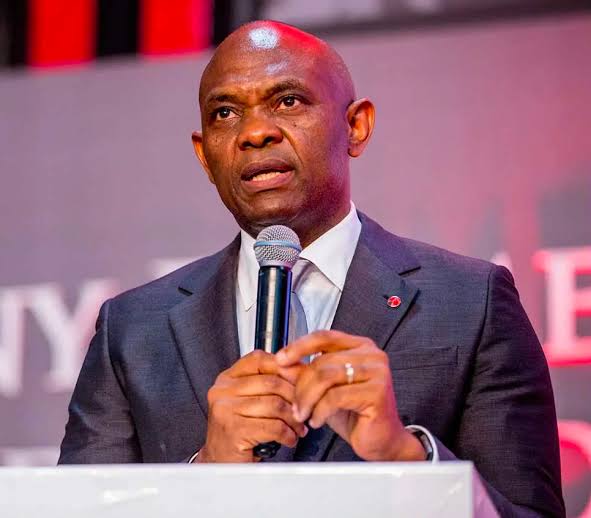

Nigerian billionaire Tony Elumelu’s investment in Seplat Energy has rapidly appreciated, with his stake now valued above $800 million as the company’s shares continue to benefit from higher oil prices, robust operational performance, and renewed investor confidence in indigenous African energy plays.
The surge follows a landmark late-2025 transaction in which Elumelu’s Heirs Energies acquired a 20.07% stake in Seplat Energy from French firm Maurel & Prom for approximately $496–500 million. The deal, completed around December 30, 2025, instantly made Heirs Energies the single largest shareholder in one of Nigeria’s leading independent oil and gas producers and marked a significant milestone for local capital in the country’s upstream sector.
Seplat Energy’s shares on the London Stock Exchange have risen sharply since the announcement, with reports indicating gains of over 57% in the early months following the transaction. This performance has pushed the company’s market capitalization to around £2.98 billion (approximately $3.8 billion at current exchange rates). The rally has been fueled by a combination of stronger-than-expected 2025 financial results, improved production figures, and broader market optimism around West African energy assets amid global supply uncertainties.
Seplat delivered blockbuster numbers for the full year 2025. Revenue more than doubled to $2.73 billion (up 144% from $1.12 billion in 2024), driven largely by a full year of contribution from its offshore assets acquired in the prior ExxonMobil divestment deal. Working interest production jumped 148% year-on-year to an average of 131.5 thousand barrels of oil equivalent per day. Adjusted EBITDA reached $1.275 billion, while cash flow from operations strengthened significantly and net debt declined, reflecting better operational efficiency and financial discipline.
These results came despite a softer average realised oil price of $70.3 per barrel compared to the previous year. The company also declared a record dividend of 25 US cents per share for the full year, up 52% from 2024.
Elumelu joined Seplat’s board as a non-executive director in January 2026, further cementing his strategic influence over the company’s direction. In public statements around the acquisition, he described the move as a long-term bet on Africa’s ability to own, develop, and responsibly manage its strategic energy resources.
For Heirs Energies and Elumelu, the paper gains have been substantial. Early estimates in February 2026 already showed unrealised profits of around $186 million on the stake within weeks of closing. Continued share price appreciation since then has lifted the total value of the 20.07% holding well above the original $500 million investment, comfortably crossing the $800 million mark as of recent trading levels.
The transaction and subsequent rally highlight a broader shift in Nigeria’s oil and gas industry. As international oil majors continue to divest onshore and shallow-water assets, indigenous players backed by strong local capital such as Heirs Energies are stepping in aggressively. Seplat itself has grown through strategic acquisitions, including the landmark takeover of ExxonMobil’s Nigerian operations in 2024.
Analysts see the Elumelu stake as a vote of confidence that could attract more institutional interest in Seplat and similar assets. Improved credit ratings (with upgrades from Moody’s, Fitch, and S&P in late 2025) and stronger cash generation have also made the company more attractive to investors seeking exposure to Nigerian energy with better governance and growth prospects.
Still, risks remain. Oil price volatility, security concerns in the Niger Delta, regulatory uncertainties, and foreign exchange challenges continue to shape the operating environment. Seplat’s ability to sustain production growth, manage costs on its offshore assets, and deliver consistent dividends will determine whether the current rally proves sustainable.
For Tony Elumelu, whose business empire spans banking (United Bank for Africa), power, hospitality, and now deeper upstream energy exposure, the Seplat investment adds another high-profile pillar. It aligns with his long-standing advocacy for African entrepreneurship and intra-African investment, a philosophy he has championed through the Tony Elumelu Foundation and his “Africapitalism” vision.
As global energy markets navigate geopolitical tensions and shifting demand dynamics, Seplat’s strong 2025 performance and Elumelu’s enlarged role position the company as one of the more compelling indigenous success stories in West African oil and gas. Whether the share price momentum continues into 2026 will depend on execution, commodity prices, and broader macroeconomic stability in Nigeria.
For now, the rapid appreciation of Elumelu’s stake serves as a clear illustration of both the risks and rewards in Africa’s energy sector and the growing clout of local champions in reshaping ownership of the continent’s strategic resources.


 English
  简体中文
简体中文  Čeština
  Deutsch (Sie)
  Français


