


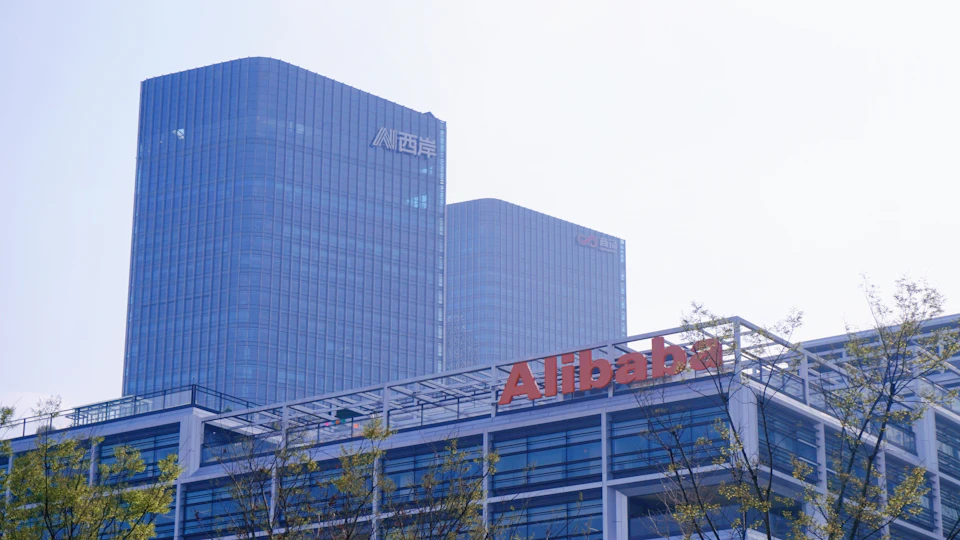

In the span of a single trading day, China’s two tech titans watched more than $66 billion evaporate from their combined market value. Tencent, the country’s most valuable company, shed roughly $43 billion on Thursday. Alibaba’s U.S.-listed shares dropped enough overnight to wipe out another $23 billion, while its Hong Kong listing fell as much as 7.3 percent Friday morning.
The trigger was straightforward, if familiar: quarterly results and the conference calls that followed failed to answer the one question investors have been asking all year. How exactly do these massive AI bets turn into revenue, soon?
Both companies had ridden a brief wave of optimism earlier in March. Viral agentic AI apps, think OpenClaw-style tools that handle everything from travel bookings to email triage, had sent shares climbing as much as 10 percent in places. Chinese users, flush with Lunar New Year coupons from Alibaba, Tencent, ByteDance and others, were downloading these assistants in droves. The narrative felt momentarily convincing: China’s consumer internet giants, armed with vast user data and WeChat-level distribution, might finally have an edge in the agent era.
Then reality hit the earnings tapes.
Alibaba’s December-quarter revenue rose a modest 2 percent to 284.8 billion yuan, missing analyst targets. Non-GAAP net income plunged 67 percent to about 16.7 billion yuan. Cloud Intelligence Group revenue did jump 36 percent to 43.3 billion yuan, with AI-related products posting triple-digit growth for the tenth straight quarter. CEO Wu Yongming pointed to that momentum and laid out an ambitious goal: more than $100 billion in combined cloud and AI revenue within five years. The company has already pledged over $53 billion in AI-related capital spending across the coming years and raised prices on some cloud services by as much as 34 percent to capture demand.
Yet executives offered few specifics on the path from triple-digit AI product growth today to that $100 billion run rate tomorrow. No detailed product roadmaps, no granular timelines, no clear explanation of how Wukong, the new enterprise agent platform that integrates with Slack and Teams, would scale beyond early adopters. The market, having just celebrated the agent hype, decided it had heard enough.
Tencent’s story followed a similar script. The company signaled plans to at least double its AI investment to more than 36 billion yuan ($5.2 billion) in 2026. Sales grew 13 percent, but post-earnings commentary left analysts hunting for concrete monetization signals. Morgan Stanley cut its price target by 11 percent the next day. Barclays analysts noted the market now has “no room for anything less than perfect” when it comes to Alibaba’s cloud ambitions, and the same skepticism applied across the board.
Bloomberg Intelligence analyst Catherine Lim put it plainly: investors are not pushing back on AI spending itself. They are demanding near-term visibility on when that spending starts driving measurable revenue, whether through cloud, advertising, or transaction lift. Until the companies can show that inflection, caution will rule.
The spending numbers themselves are eye-popping by Chinese standards but still modest next to the U.S. hyperscalers. Meta, Amazon, Google and Microsoft are collectively on track to burn through roughly $650 billion in capex this year alone. Alibaba and Tencent’s outlays remain a fraction of that total. Yet the timing could hardly be worse. A prolonged consumer slowdown in China is already squeezing margins; Alibaba’s international commerce arm is still posting negative EBITA in places, and quick-commerce bets are prioritizing user growth over unit economics. When core businesses are under pressure, every yuan poured into uncertain AI infrastructure feels heavier.
This week’s selloff echoes the exact tension playing out in Silicon Valley. American investors have watched hyperscalers pour hundreds of billions into data centers and chips while fretting that monetization, especially for consumer-facing agents, remains years away. In China the stakes feel even more acute. The government’s push for technological self-reliance has turned AI into a national priority, yet private-sector giants must still deliver returns in an economy where domestic demand is soft and regulatory scrutiny never fully recedes.
For now, the message from the market is measured but unmistakable. Heavy investment in models, talent and infrastructure is table stakes; investors simply want proof that the agents will eventually pay the bills. Until Alibaba and Tencent can bridge that gap with something more concrete than five-year targets and price hikes, the $66 billion haircut may be remembered less as a one-day panic and more as the moment the Chinese AI trade shifted from hype to homework.






 English
  简体中文
简体中文  Čeština
  Deutsch (Sie)
  Français


