

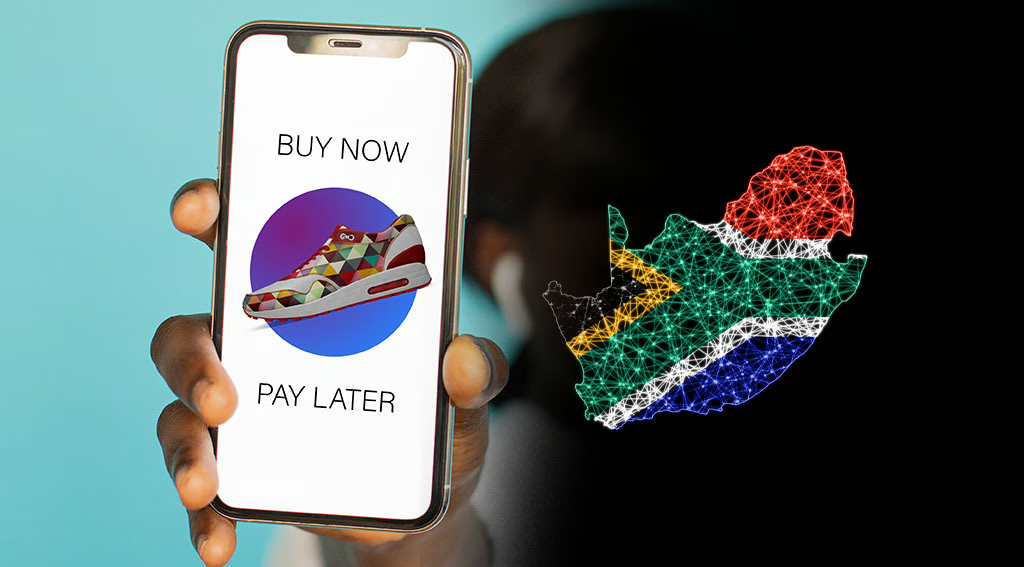

Buy Now, Pay Later (BNPL) has become one of the fastest-growing fintech categories in South Africa over the last five years. With high interest rates, rising living costs and limited access to traditional credit for many consumers, BNPL services allow shoppers to split purchases into interest-free or low-interest instalments, usually over 3–6 months. Three players currently dominate the market: PayJustNow, Payflex and the newer Happy Pay.
1. PayJustNow
PayJustNow is widely regarded as South Africa’s largest BNPL provider by number of active merchants and transaction volume.
- Founded in 2019
- Partners with over 6,500 merchants (online + in-store) as of early 2026
- Available at major retailers including Superbalist, Takealot, Makro, Incredible Connection, Sportsmans Warehouse, Studio 88, and hundreds of smaller fashion, beauty and electronics stores
- Typical plan: 4 interest-free payments over 6 weeks
- No late fees on the first missed payment (encourages responsible use)
- Maximum purchase limit usually R8,000–R15,000 depending on credit profile
- Soft credit check at signup → quick approval (often under 60 seconds)
Why consumers love it PayJustNow is accepted almost everywhere BNPL is offered in South Africa, making it the default “go-to” option for many shoppers.
2. Payflex
Payflex (owned by Network International since 2022) is the second most recognised BNPL brand.
- Launched in South Africa in 2019
- Accepted by more than 4,000 merchants
- Key partners: Woolworths, Checkers Sixty60, Bash, Clicks, Dis-Chem, Zando, Shein, Mr Price, Sportscene
- Standard split: 4 interest-free payments over 6 weeks
- Maximum limit typically R5,000–R10,000
- Late fees apply after grace period (R35–R75 depending on amount)
Also Read: Cape Town Fintech Happy Pay Raises $5 Million to Scale Ad-Subsidised Buy Now, Pay Later Platform
Why consumers love it Payflex enjoys very high brand awareness and is trusted because it is backed by a large international payments group. It is also one of the few BNPL providers accepted at several large grocery chains via Sixty60.
3. Happy Pay
Happy Pay is the newest major player and the most disruptive.
- Founded in 2023 in Cape Town
- Raised $5 million in seed funding in February 2026 (led by Knife Capital, with 4Di Capital, HAVAÍC and notable angels)
- Merchants pay a fee + advertising revenue subsidises the consumer offer → zero interest and zero fees for most users
- Over 1,200 merchants and R500 million+ in cumulative transaction value by early 2026
- Instalment plans usually 3–6 months
- In-app brand ads and rewards program to drive repeat usage
Why consumers love it Happy Pay often feels “cheapest” because many purchases are genuinely free of fees and interest for the buyer. The model appeals to price-sensitive shoppers and merchants who dislike high merchant service fees.
Quick Comparison Table (early 2026)
| Provider | Merchants (approx.) | Interest | Typical Plan | Late Fees? | Standout Feature |
|---|---|---|---|---|---|
| PayJustNow | 6,500+ | 0% | 4× over 6 weeks | Grace period | Widest acceptance |
| Payflex | 4,000+ | 0% | 4× over 6 weeks | Yes after grace | Strong brand & grocery partnerships |
| Happy Pay | 1,200+ | 0% | 3–6 months | Minimal / none | Ad-subsidised → lowest consumer cost |
Making Life Easier
For millions of South Africans, BNPL has become a lifeline in a high-cost environment:
- Young professionals can buy laptops, phones or appliances without maxing out credit cards
- Parents can spread school-uniform and back-to-school costs
- Online shoppers can access fashion and electronics from brands that do not offer in-house credit
- Merchants (especially SMEs) can increase basket size and conversion rates without carrying the credit risk themselves
The three leading providers together cover the vast majority of BNPL transactions in South Africa and continue to expand merchant networks aggressively.
South Africa’s BNPL market is still young but growing fast. Competition between PayJustNow, Payflex and Happy Pay is fierce, and consumers are the biggest winners, more choice, wider acceptance and lower effective costs than ever before.






 English
  简体中文
简体中文  Čeština
  Deutsch (Sie)
  Français


