


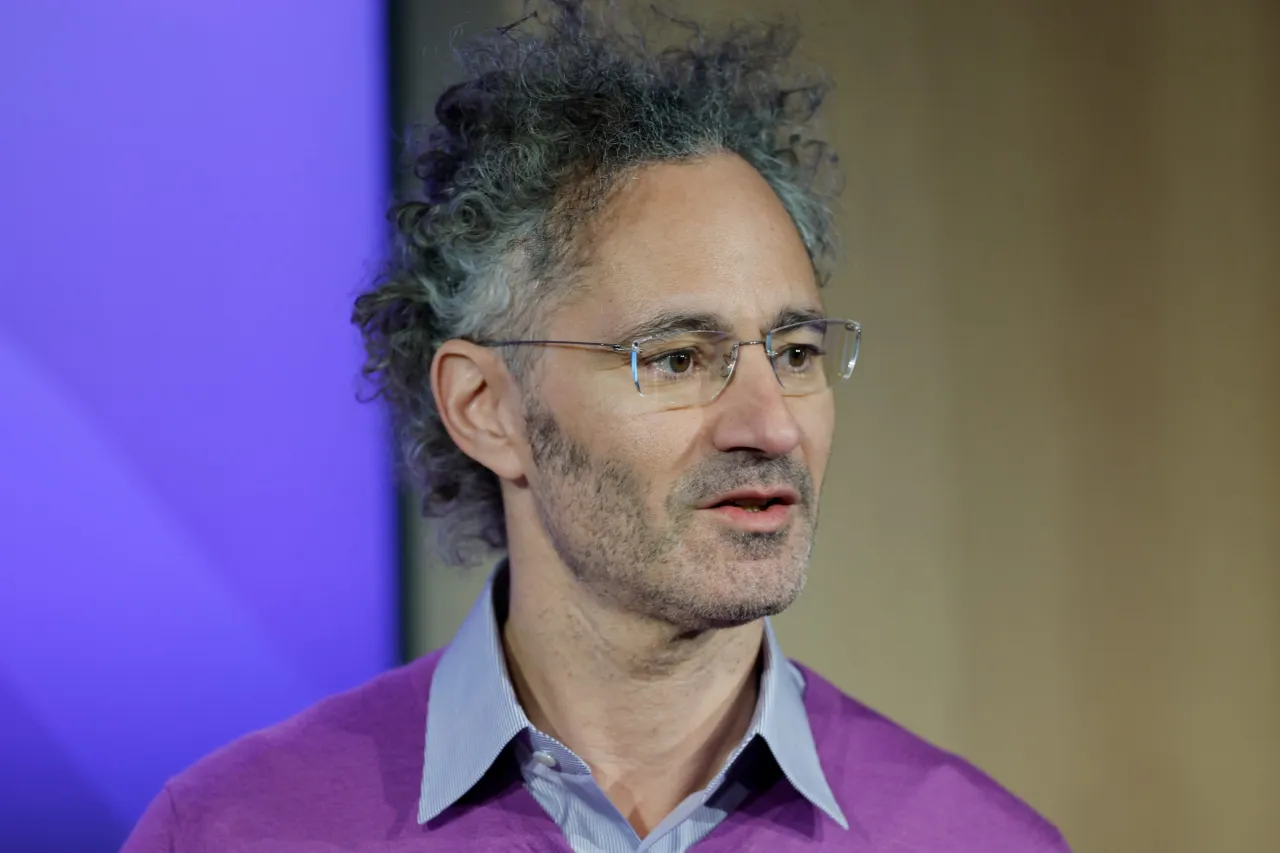

As artificial intelligence reshapes the job market, Palantir CEO Alex Karp is making a provocative claim: most conventional career paths are losing ground, while two distinct groups are poised to gain an edge.
In a recent livestream on TBPN with hosts John Coogan and Jordi Hays, Karp laid out a straightforward outlook. “There are basically two ways to know you have a future,” he said. “One, you have some vocational training. Or two, you’re neurodivergent.”
Karp argues that AI is rapidly handling routine cognitive work, basic coding, standard legal tasks, and even everyday reading and writing, effectively inverting the traditional value of many white-collar skills. What once counted as “precious” expertise is becoming commoditized. In its place, he sees rising demand for hands-on vocational abilities (think electricians, technicians, and tradespeople needed to build and maintain AI infrastructure) and for people who think differently.
Drawing from his own experience with dyslexia, Karp suggested that neurodivergent individuals often bring advantages in pattern recognition, creative problem-solving, and viewing challenges from unconventional angles. “Everybody with like the normal-shaped skills are dyslexics,” he remarked, meaning traits once seen as limitations may become strengths when AI takes over standardized tasks.
Palantir is already acting on this belief. The company launched a Neurodivergent Fellowship to recruit exceptional talent that approaches problems in non-traditional ways. The program’s description states that neurodivergent individuals “will play a disproportionate role in shaping the future of America and the West” because they “see past performative ideologies and perceive beauty in the world that still exists.”
Karp’s views extend to education. Despite holding a JD from Stanford and a PhD in philosophy from Goethe University, he has been openly skeptical of traditional humanities degrees. At the World Economic Forum in Davos earlier this year, he stated that AI “will destroy humanities jobs,” advising that those with elite academic backgrounds should have additional marketable skills.
Not everyone shares his binary perspective. Microsoft Chief Scientist Jaime Teevan has argued that liberal arts education will grow in importance, emphasizing “metacognitive skills” such as flexibility, critical thinking, adaptability, and the ability to challenge assumptions, qualities that require deep friction and hard thinking.
Similarly, Anthropic co-founder and president Daniela Amodei, who majored in literature, believes humanities training will become “more important than ever.” She points out that while AI excels at STEM tasks, uniquely human qualities, emotional intelligence, communication, curiosity, compassion, and understanding what makes people tick, will matter more, not less, in the future.
A Gartner prediction adds some data to the discussion: by 2027, roughly 20% of sales organizations in Fortune 500 companies are expected to actively recruit neurodivergent talent to boost performance and innovation.
Karp’s blunt message is generating debate. Some see it as a realistic wake-up call for an AI-driven economy that will reward practical builders and unconventional thinkers. Others worry it undervalues the hybrid human-AI skills that will likely define most future roles.
Either way, his comments highlight a broader shift: success in the coming years may depend less on following traditional academic routes and more on developing hard-to-automate expertise, whether through skilled trades or distinctive ways of thinking.






 English
  简体中文
简体中文  Čeština
  Deutsch (Sie)
  Français


