


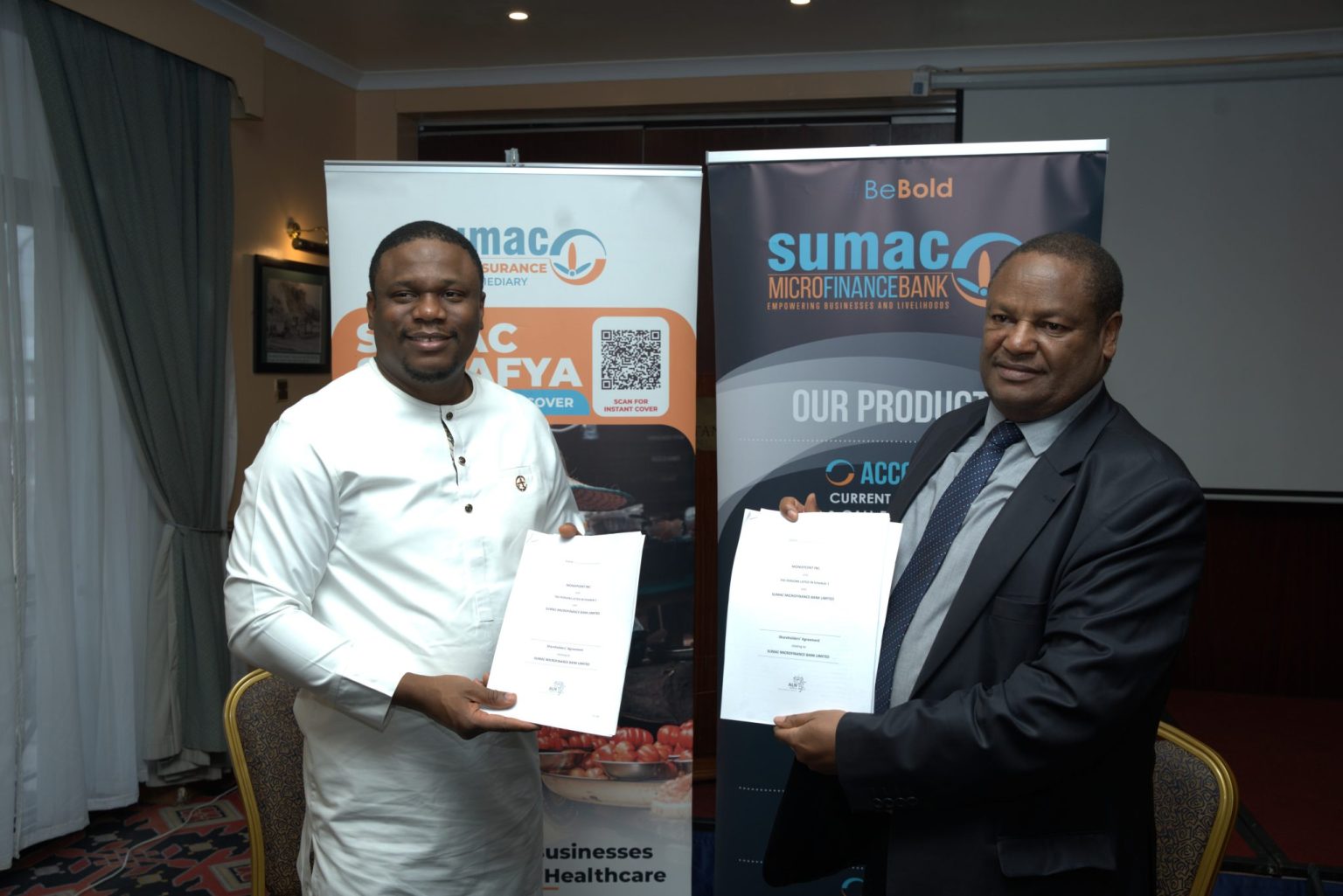

After more than two years of false starts, Nigerian fintech Moniepoint has secured its first major foothold in East Africa. On Thursday, the company completed its acquisition of a 78% stake in Kenya’s Sumac Microfinance Bank, a licensed deposit-taking institution that has operated in the market since the early 2000s. The deal, which received unconditional approval from the Competition Authority of Kenya last year, gives Moniepoint immediate access to a regulated banking license at a time when fresh ones have become nearly impossible to obtain.
The move ends a frustrating chapter for Moniepoint. In 2023, the company had won regulatory clearance to buy payments and credit provider Kopo Kopo outright. That transaction never closed. Kopo Kopo later brought in new leadership and the deal quietly faded. Kenya’s market, dominated by Safaricom’s M-Pesa and a handful of entrenched players, proved tougher to enter through pure fintech routes than Moniepoint’s executives had anticipated. Acquiring Sumac, a smaller but established tier-three microfinance bank with branches in Nairobi, Kiambu, and Nakuru, offers a different path: an existing customer base, a deposit-taking charter, and a physical network that can be layered with Moniepoint’s digital infrastructure.
Sumac was founded in 2002 by a group of 14 investors who started as a savings club before opening to the public in 2004 as Sumac Credit Ltd. It received its microfinance banking license from the Central Bank of Kenya in 2012. The bank focuses on small and medium-sized businesses that often fall outside the risk appetite of larger commercial lenders. Its product suite includes business loans, trade finance, forex services, bancassurance, and basic deposit accounts, services that align closely with Moniepoint’s core offering in Nigeria.
Moniepoint itself has grown rapidly by targeting precisely that segment. Launched in 2015 as a payments infrastructure provider (originally under the TeamApt name), it pivoted into full business banking and credit. By late 2024 it had raised $110 million in a Series C round led by Development Partners International, with participation from Google’s Africa Investment Fund, Verod Capital, and Lightrock. The round pushed its valuation above $1 billion, making it one of Africa’s newest unicorns. The company processes billions of transactions annually and has built a reputation for high-volume, credit-led services aimed at SMEs and informal businesses, exactly the kind of customers that struggle for capital in both Nigeria and Kenya.
The timing is notable. Moniepoint closed the Sumac deal just days after announcing its acquisition of Orda, a Nigerian restaurant and vendor management software platform. Together, the two moves signal a broader strategy: bundling operational tools with financial services rather than competing solely on payments. In Nigeria, where fintechs have begun to unbundle and then re-bundle to defend margins, Moniepoint is betting that deeper integration wins loyalty. Bringing that playbook to Kenya, where mobile money penetration is already near-universal but SME credit remains scarce, could prove powerful, if the company can navigate local nuances.
Kenya’s fintech environment is different from Nigeria’s in important ways. M-Pesa’s dominance means payments are largely solved; the real battle is around credit, savings, and more complex financial products. Regulators have taken a cautious approach to digital lending, and new banking licenses have been frozen for years. By buying into an existing institution, Moniepoint sidesteps much of that friction. The CAK’s review found no competition or public-interest concerns, clearing the path quickly.
For the wider African tech ecosystem, the deal is another data point in a slow but steady shift. Nigerian fintechs, flush with capital and battle-tested models, are increasingly looking across borders rather than fighting for ever-smaller slices of their home market. Moniepoint’s success, or struggles, in Kenya will be watched closely. East Africa has long been a proving ground for mobile-first innovation; if a Nigerian player can translate its credit-heavy model here without alienating incumbents or running afoul of regulators, it could open the door for more intra-African expansion.
No financial terms of the Sumac transaction were disclosed. Moniepoint has said only that the acquisition is now complete and that further integration details will follow. In the meantime, the company’s executives were reportedly in Nairobi this week marking the occasion. After years of trying, they finally have a license, a network, and a local partner. The harder part, making the model work in a market that has rejected them once before, starts now.






 English
  简体中文
简体中文  Čeština
  Deutsch (Sie)
  Français


