


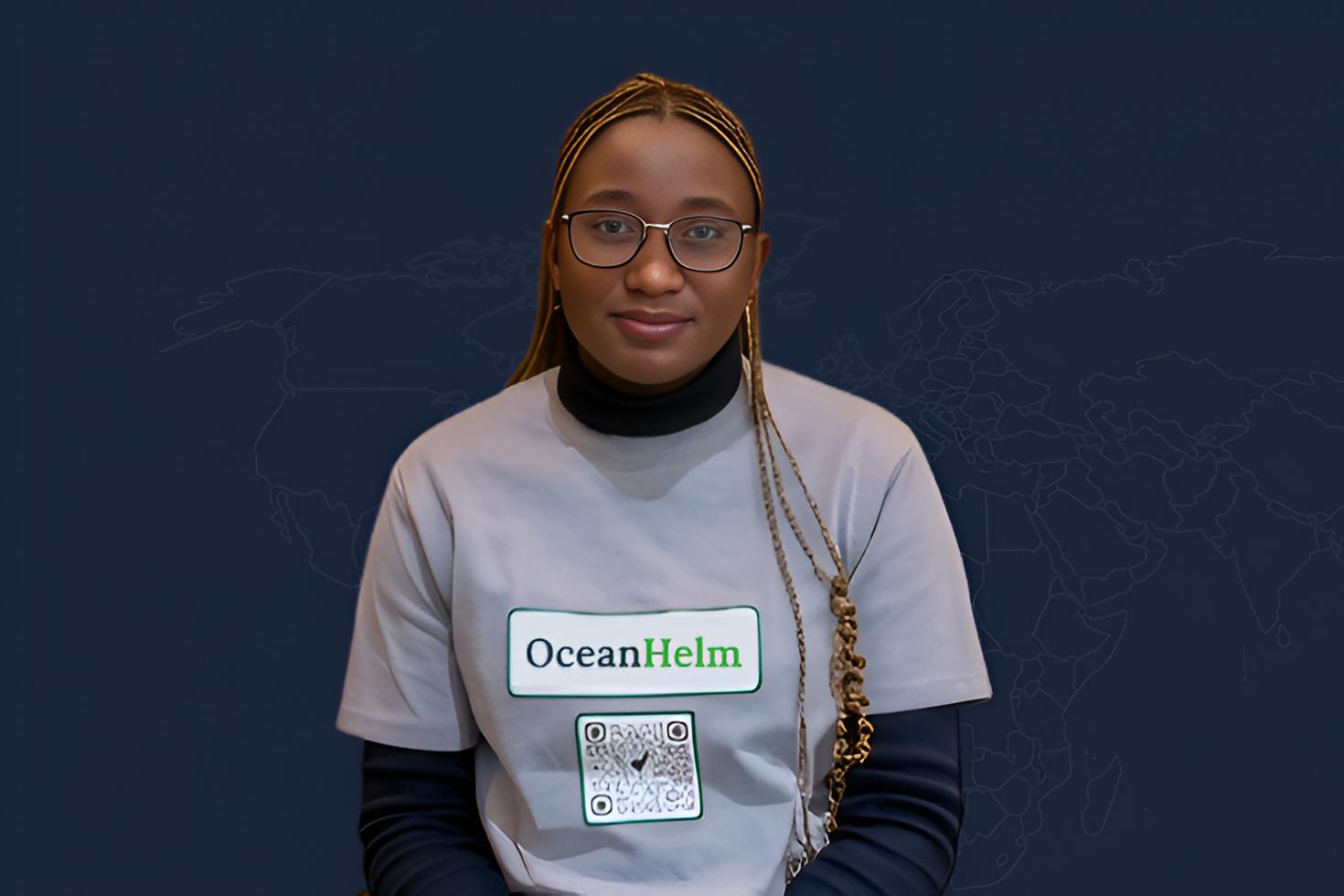

A few months after launching with the aim of digitising maritime operations, OceanHelm is repositioning itself around a more ambitious thesis: Africa doesn’t just lack software for shipping, it lacks the underlying intelligence layer that makes modern maritime systems work.
Founded by marine engineers Ugochi Ukpai, the startup initially set out to build a SaaS platform for maritime operators. But early testing with users exposed a deeper structural issue. Across African ports and coastal trade routes, data exists in fragments, spread across AIS signals, port authority records, customs logs, satellite feeds, and manual reports, with little coordination or standardisation.
The result, OceanHelm argues, is an ecosystem where critical decisions are often made with incomplete visibility.
Despite the scale of activity across the continent’s maritime corridors, digital infrastructure has lagged behind. Ships move daily between hubs like Lagos, Tema, and Abidjan, yet operators often lack real-time insight into congestion, delays, or routing conditions beyond their immediate environment. Insurers and financiers, in turn, rely on outdated or partial data to assess risk.
The economic implications are significant, though not always precisely quantified. OceanHelm points to estimates suggesting that Nigeria loses between ₦1.2 trillion and ₦1.8 trillion annually to inefficiencies tied to cargo dwell time, including demurrage and storage costs. It also cites roughly $500 million in yearly losses linked to ship brokerage inefficiencies. These figures are not independently verified, but they reflect widely acknowledged bottlenecks in port operations across parts of West Africa.
Confronted with this fragmentation, the company has shifted away from building standalone tools to focusing on infrastructure. Instead of layering applications on top of unreliable data, OceanHelm is attempting to unify that data first.
Its platform aggregates multiple inputs, ranging from vessel tracking signals to weather data and port records, into a single system designed to clean, standardise, and interpret maritime information across borders. The company says this allows users not only to monitor activity in real time but also to understand patterns and anticipate disruptions.
In practical terms, that could mean a port operator tracking vessel traffic across multiple regions, a logistics company rerouting shipments based on predicted delays, or regulators identifying unusual vessel behaviour earlier. The company is also positioning its platform as a foundation for other businesses, offering APIs for developers and embeddable tools for non-technical users.
This infrastructure-first approach mirrors a broader pattern in African tech, where startups are increasingly addressing foundational gaps, payments, identity, logistics, rather than building consumer-facing products in isolation. Maritime, however, presents a particularly complex challenge given the number of stakeholders involved and the uneven accessibility of data across jurisdictions.
OceanHelm’s emphasis on openness is central to its positioning. The company argues that high-quality maritime intelligence has historically been both expensive and geographically skewed, limiting access for smaller operators and regional firms. By lowering barriers through developer tools and integrations with no-code platforms, it is aiming to widen participation in the ecosystem.
Still, significant challenges remain. Building a reliable, continent-wide data layer requires sustained access to diverse data sources, regulatory alignment, and consistent data quality, areas where execution risk is high. The company has not disclosed details about traction, partnerships, or revenue, making it difficult to assess how far along it is beyond early-stage deployment.
What is clearer is the problem it is targeting. Africa’s maritime sector underpins a substantial share of the continent’s trade, yet much of its operational layer remains opaque. If OceanHelm succeeds in making that system more visible and predictable, the impact could extend well beyond shipping, touching supply chains, trade efficiency, and cost structures across multiple industries.
For now, the startup is betting that the next phase of maritime growth in Africa will be driven less by physical expansion and more by data, specifically, by turning fragmented signals into something closer to a shared source of truth.
Learn More:
Website: www.oceanhelmtech.com
Email: info@oceanhelmtech.com


 English
  简体中文
简体中文  Čeština
  Deutsch (Sie)
  Français


