




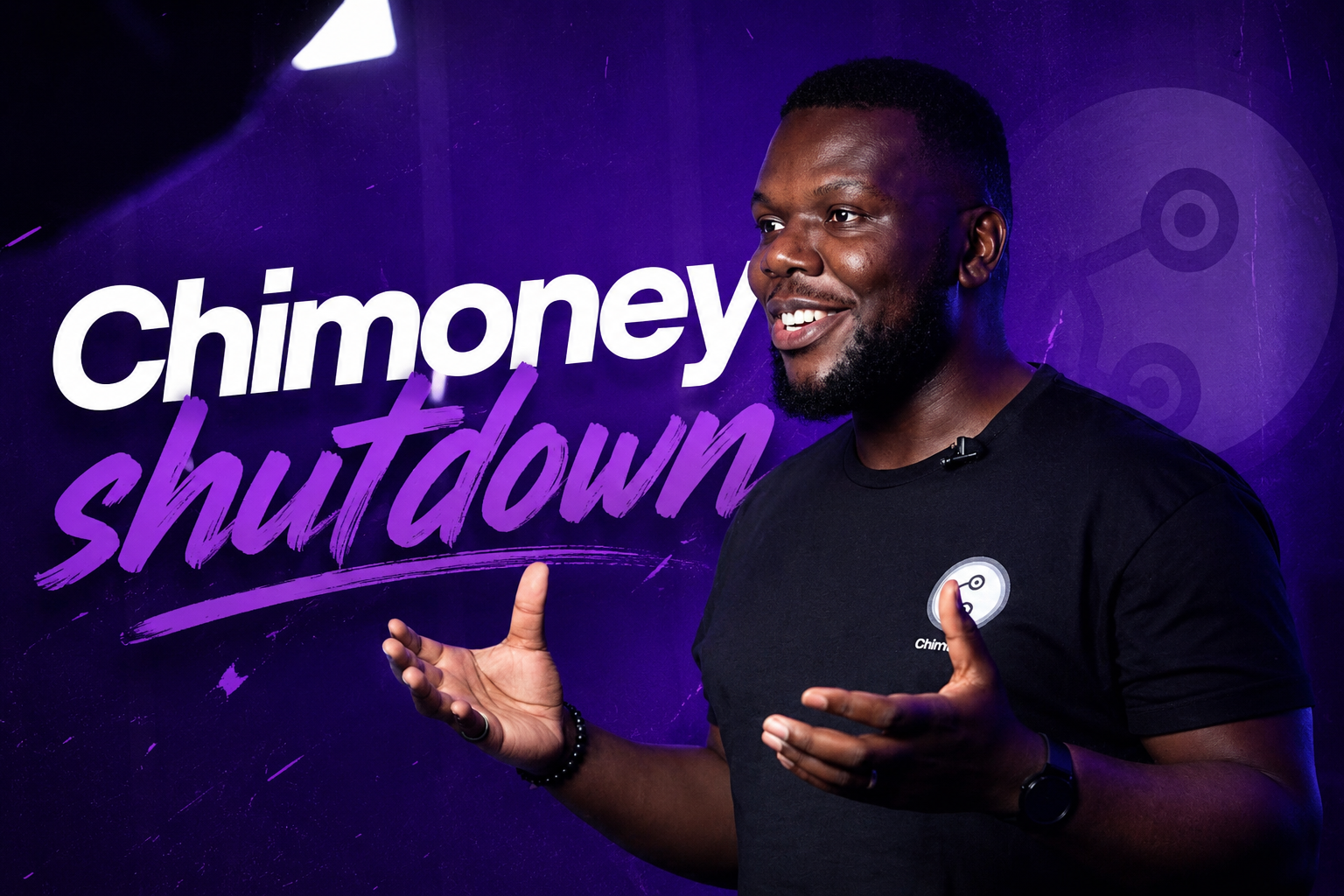

Chimoney’s shutdown in May 2026 rocked Nigeria’s fintech ecosystem. The startup, founded by Uchi Uchibeke and backed by Techstars, raised under $1 million but delivered a slick cross-border payment API linking Africa, Latin America, and North America. Yet Uchibeke’s candid LinkedIn post revealed the real killer: “We nailed the product, but distribution killed us.” Beyond the funding shortage, Chimoney shutdown distribution failures—rampant customer acquisition costs and marketing neglect—proved fatal. This commentary argues that in Africa’s cutthroat fintech space, go-to-market execution trumps cash reserves every time.
Chimoney’s Promise vs. Reality
Launched in 2022, Chimoney promised seamless payouts for global businesses into emerging markets. Its API handled virtual accounts, mass payments, and compliance across jurisdictions, boasting early wins like 4,500% transaction growth in Q1 2023. Techstars acceleration and grants fueled the build, positioning it as a “passport for AI and payments.”Reality hit hard. Despite a functional product, user adoption stalled. Competitors like Flutterwave and Paystack grabbed market share through aggressive sales teams and partnerships. Chimoney’s focus stayed inward—iterating code over chasing clients—leaving revenue flat amid soaring ops costs. By 2026, new transactions halted on May 1, with refunds promised through August.
The Distribution Dilemma
Distribution wasn’t a side issue; it was Chimoney’s Achilles’ heel. Founder Uchibeke admitted over-investing in engineering while skimping on sales and marketing. Customer acquisition costs (CAC) ballooned to 60% of limited funds, as leads dried up without targeted campaigns or ecosystem integrations.High structural barriers amplified the pain. Cross-border fintech demands pre-funded corridors and reserves, $1-10 million per route—plus endless audits. Chimoney juggled North America, Africa, and LATAM licenses, burning cash on compliance without proportional user inflows.
No acquisitions materialized to salvage the PSP license or tech stack. Uchibeke’s lesson: “Build in public, but sell louder.”
Funding in Context
Sure, funding mattered, under $1 million total couldn’t sustain a global fintech. EMI fees alone hit €500k-€1.2M in Europe, while U.S. and African regs piled on. Uchibeke urged founders: “Raise VC-scale or bootstrap profitably.” Chimoney tried a hybrid, achieving neither.Yet funding excuses mask the core flaw. Plenty of African fintechs bootstrap early (e.g., Paga’s steady grind). Chimoney’s thin capital exposed distribution weaknesses—without users, revenue couldn’t justify investor pitches. It’s a classic bootstrapping trap: great tech, zero traction.
Lessons for African Fintechs
Chimoney’s fall echoes broader Canada-Africa fintech woes, with two shutdowns in two years questioning corridor economics. Founders must flip the script: Validate distribution pre-product polish. Tactics include:
- Partner-first growth: Embed in platforms like Shopify or AWS for instant users.
- CAC optimization: Target niches (e.g., AI firms paying gig workers abroad).Lean scaling: Bootstrap corridors one market at a time, not three.
Successful peers like LemFi thrive by nailing go-to-market before global dreams. For Nigeria’s next wave, Uchibeke’s PSP license sits preserved—proof execution, not ideas, builds empires.


 English
  简体中文
简体中文  Čeština
  Deutsch (Sie)
  Français


