

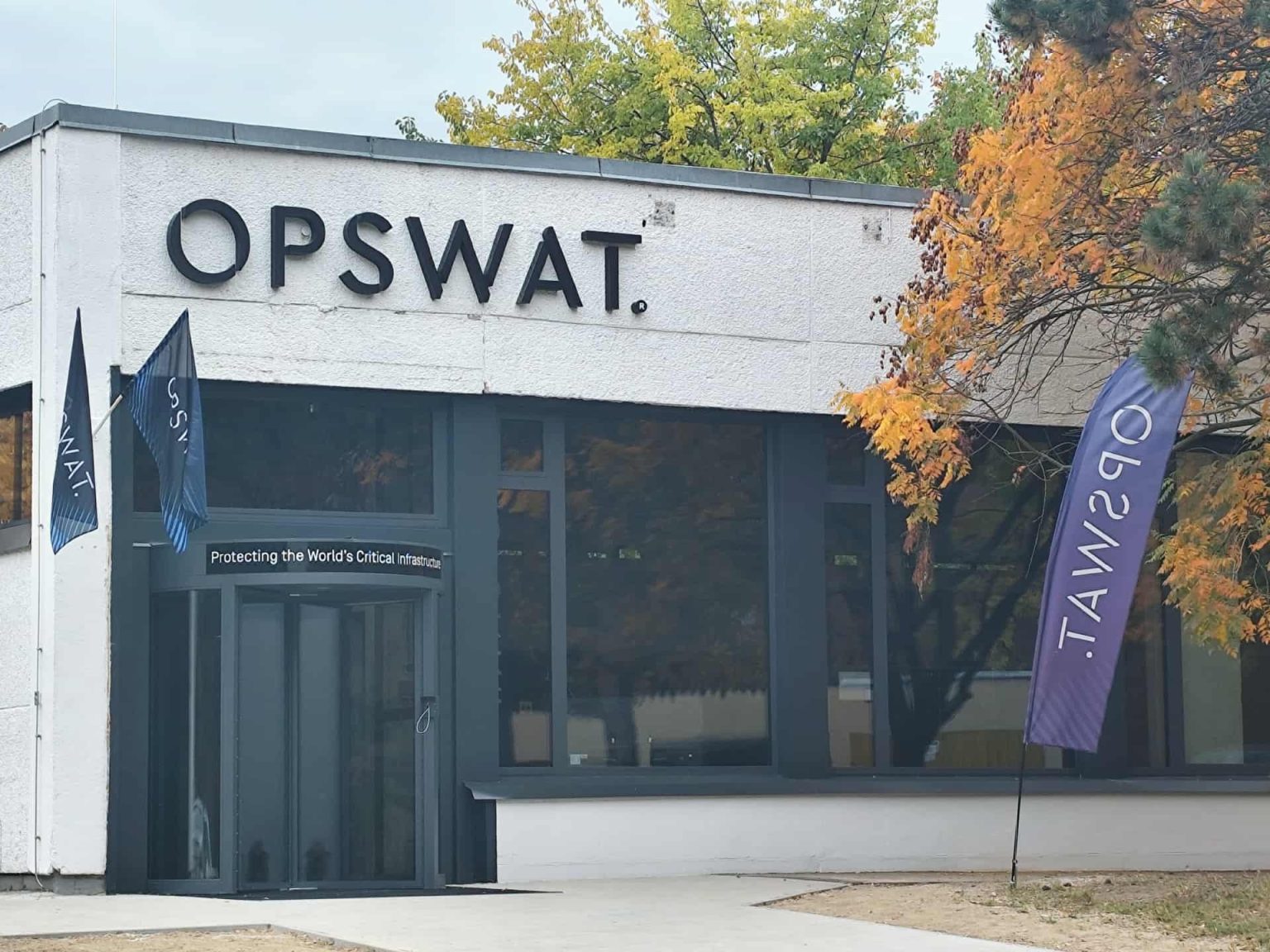

On March 10, OPSWAT rolled out MetaDefender Aether, an AI-native decision engine that promises to change how organizations inspect files at the network perimeter before anything slips inside.
The company, long focused on protecting critical infrastructure from file-borne threats, is positioning Aether as more than just another sandbox. It’s a unified pipeline that combines threat reputation checks, adaptive emulation-based analysis, machine-learning scoring, and similarity-driven hunting into one automated flow. The goal: deliver a single, confidence-scored verdict per file fast enough for high-volume entry points like email attachments, cloud syncs, removable media, and web uploads, without grinding business operations to a halt.
Traditional sandboxing has always struggled at the perimeter. Virtual-machine approaches are resource-heavy, easy for sophisticated malware to fingerprint and evade, and often spit out raw telemetry instead of clear answers. Analysts end up drowning in alerts while queues build. OPSWAT’s pitch is different: Aether was built from the ground up for perimeter-scale decisions in an era when attackers use AI to churn out evasive variants daily.
Here’s how the engine actually works. Every incoming file hits four layered stages, each escalating only if needed.
First comes threat reputation, pulling from OPSWAT’s global intelligence feeds. According to the company’s internal benchmarks, this step alone resolves nearly half of threats immediately, blocking the known-bad and fast-tracking the obviously clean. That leaves capacity for everything else.
Files that survive move to dynamic analysis in an adaptive sandbox. Instead of spinning up full virtual machines, Aether relies on instruction-level CPU and OS emulation. It triggers execution paths across more than 120 file types, unpacks payloads, and surfaces behaviors that VM-aware malware typically hides. Newly discovered indicators feed back into the reputation layer in real time.
Next, multiple ML engines score the behavioral signals and anomalies, assigning weighted risk levels that cut through noise. By this point, cumulative detection reaches 99.3 percent in OPSWAT’s testing.
The final stage applies similarity search against a database of over 100 million previously analyzed samples. It clusters unknowns to known campaigns, families, and toolkits, turning even novel files into actionable intelligence that improves future models.
The result, the company claims: 99.9 percent zero-day detection efficacy with 100x better resource efficiency than conventional VM sandboxes. Files that once took minutes or hours now clear in seconds for most cases, and the output is a structured verdict ready for SIEMs, SOAR platforms, or human review.
For security operations teams, that single verdict is the real operational win. No more stitching together outputs from separate reputation feeds, sandboxes, and threat intel tools. Automation can act immediately. Analysts get context, MITRE ATT&CK mappings, unpacked artifacts, campaign links, without the usual triage marathon.
Aether isn’t a standalone island. It slots directly into OPSWAT’s broader MetaDefender platform, available as a dedicated appliance, cloud service, or embedded module inside MetaDefender Core. Deployment options cover everything from fully air-gapped industrial sites to hybrid enterprise setups. The company says it already supports compliance regimes including NERC CIP, NIS2, IEC 62443, and CMMC.
Jan Miller, OPSWAT’s global CTO, put it plainly in the announcement: “Traditional sandboxing was never built for AI-driven threats at scale. Security teams don’t need more telemetry. They need decisive answers. MetaDefender Aether delivers on what sandboxing was not designed to do: replacing isolated analysis with an AI-native pipeline that delivers a single, high-confidence verdict that SOC teams and automation platforms can act on immediately before any file reaches the network.”
The timing makes sense. Zero-day file attacks have become the default weapon for both commodity ransomware crews and nation-state actors targeting critical infrastructure. Perimeter inspection volumes are exploding as organizations move more data across cloud services and supply chains. Legacy tools that were fine for occasional deep dives now buckle under constant pressure.
OPSWAT has spent more than 20 years honing prevention-first tools for exactly these environments, governments, utilities, manufacturing, and Fortune 500 operations where downtime isn’t an option. Aether feels like the logical evolution of its earlier Adaptive Sandbox technology, now wrapped with built-in intelligence and threat hunting to close the loop.
Whether the 99.9 percent figure holds up in independent testing remains to be seen; the company notes it’s based on recent internal benchmarks. But the architectural shift, emulation over virtualization, progressive layering, and a deliberate focus on delivering decisions rather than data, addresses real pain points that security teams have complained about for years.
In an industry increasingly obsessed with AI offense, OPSWAT is betting that a tightly integrated AI defense at the very edge of the network can restore some control. For organizations that can’t afford to let unknown files inside, a faster, more decisive verdict at the perimeter isn’t just nice to have. It’s becoming table stakes.


 English
  简体中文
简体中文  Čeština
  Deutsch (Sie)
  Français


