


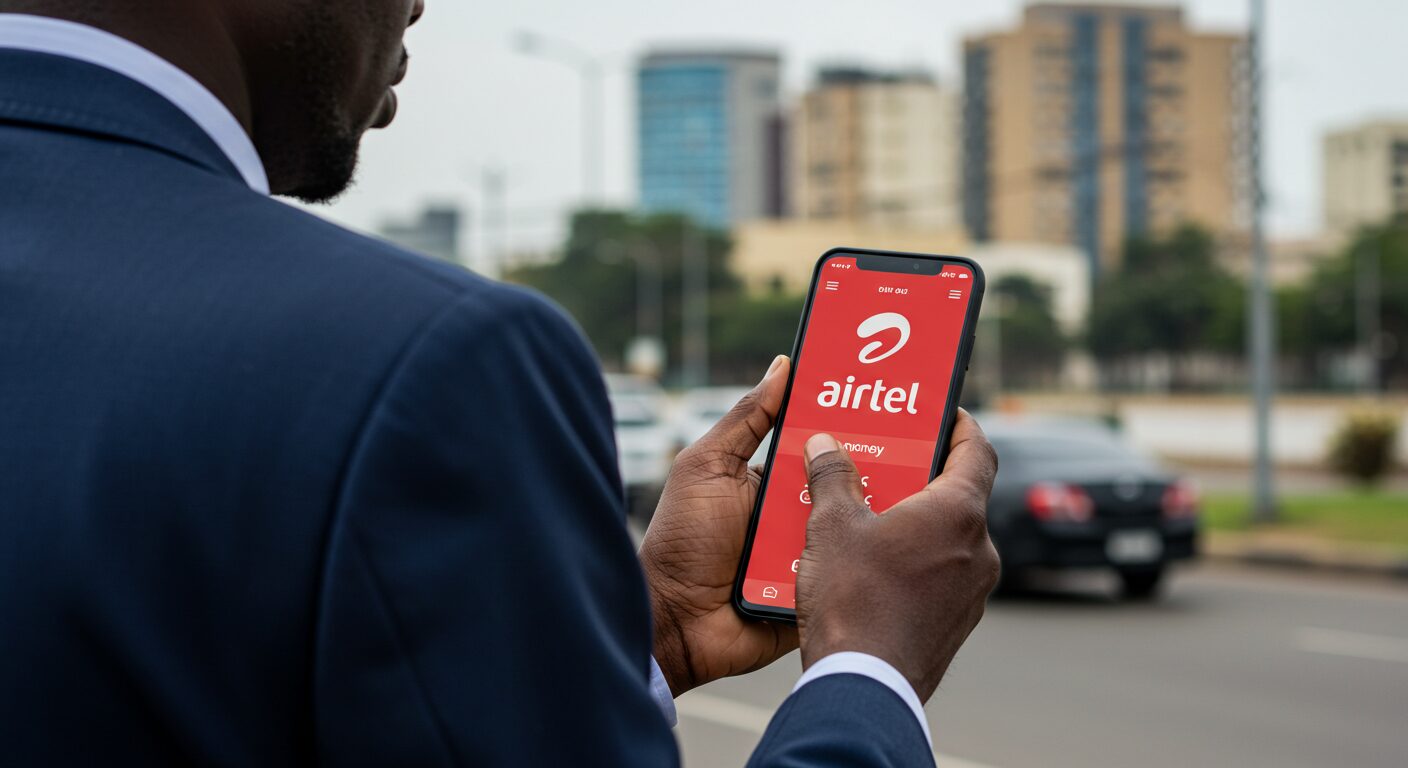
Nigeria’s two largest telecom operators, MTN and Airtel, collectively earned more than N3.6 trillion from data services alone in 2025, reflecting the country’s accelerating shift toward internet-centric consumption. The milestone, drawn from the companies’ latest financial reports and industry analysis, confirms data’s dominance over voice as the primary revenue driver in Africa’s biggest mobile market.

MTN Nigeria delivered the largest share, posting N2.8 trillion in data revenue for the full year ended December 31, 2025, a 74.5% increase from N1.6 trillion in 2024. This surge helped push total service revenue to N5.2 trillion (about $3.8 billion at average rates), the highest ever recorded by any Nigerian telecom, and delivered a full-year profit after tax of N1.1 trillion (reversing a N400 billion loss the previous year). Data now represents more than half of MTN’s service income, with active data subscribers rising 11.6% to 53.2 million and home broadband users growing 31% to 4.2 million.
Airtel Nigeria showed equally strong momentum. In the nine months to December 31, 2025, data revenue jumped 67.4% to N838.6 billion ($560 million), compared with N500.8 billion in the same period of 2024. While Airtel reports consolidated figures under Airtel Africa, Nigeria remains its largest and fastest-growing market, and full-year estimates align with the combined N3.6 trillion+ data haul when converted consistently.
The growth stems from both pricing and genuine demand. The 50% tariff adjustment implemented in early 2025 lifted average revenue per user (ARPU), but Nigerian Communications Commission (NCC) data shows consumption itself exploded: total mobile data usage reached an estimated 13.2 million terabytes for the year, up roughly 35% from 2024’s 9.76 million TB. Monthly volumes hit record peaks, exceeding 1.2 million TB in November alone, driven by short-form video, mobile money, e-commerce, streaming, and remote work.
This structural shift has been underway for years, but 2025 marked a tipping point. Voice revenue grew more modestly (e.g., 42.1% at MTN), while data exploded due to behavioral changes: Nigerians now use far more gigabytes per month thanks to cheaper bundles, wider 4G coverage, and smartphone penetration approaching 60%. Operators responded with heavy investment, MTN doubled capex to N1 trillion for network densification, while Airtel expanded fibre backhaul and secured partnerships like Direct-to-Cell with Star-link.
In Lagos, where mobile data powers ride-hailing, fintech, online education, and small business sales, the data surge reflects both resilience and dependency. Higher ARPU supports infrastructure upgrades, but sustained price pressure could challenge affordability for low-income users if consumption growth slows.
The results reinforce the data-led model for telecoms. With internet subscriptions nearing 145 million and telecom contributing 8–9% to GDP, MTN and Airtel are anchoring Nigeria’s digital economy. As 5G deployments accelerate and AI/fintech integrations deepen, the data boom is poised to continue, turning connectivity into the dominant value driver in Africa’s most populous market.